The state’s first e-bike rebate program offers some valuable lessons for future rollouts.


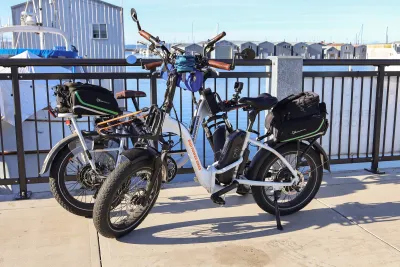
Washington’s first attempt at an e-bike voucher program revealed some key lessons for future incentives, writes Ryan Packer in The Urbanist.
The state offered two levels of rebates for residents of various income levels: a $1,200 rebate for lower-income households and a $300 rebate for those making more than 80 percent of county area median income.
Of applicants who got a $1,200 rebate, 84 percent followed through on an e-bike purchase, while just 24 percent of people who received $300 rebates redeemed theirs. “Under a legislative mandate, 40% of the total rebate funding was intended for the pool of $300 rebates, but in the end less than 13% of the total dollars handed out went to those applicants, after a sizable majority let theirs expire without buying a bike.”
Even though more than twice as many $300 rebates were offered, only 1,087 of them were redeemed, versus 1,880 of the larger rebates. “Clearly, the larger rebates provided winners with a much bigger incentive to see their purchases through,” Packer notes.
These stats reveal that a $300 rebate may not be enough to motivate people to buy an e-bike, particularly as the cost of bikes goes up due to tariffs.
The state legislature has earmarked $7 million for a second round of the program in 2026.
Read the full story: Washington’s First Try at E-bike Rebates Leaves Thousands of Vouchers Unredeemed

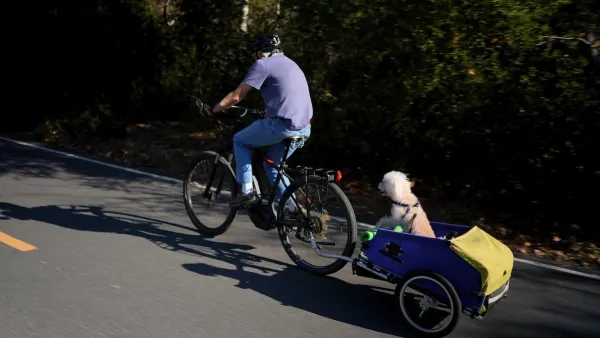
California E-Bike Rebate Demand Far Exceeds Supply
The queue to apply for California’s new e-bike incentive program, which only offered 1,500 vouchers, reached 100,000 people.
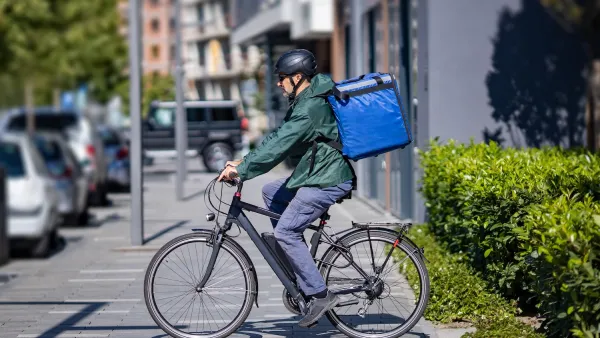
California Cuts Funding for E-bike Rebates
The state cancelled an upcoming round of applications for the wildly popular e-bike incentive program that provided up to $2,000 toward the cost of an electric bike.
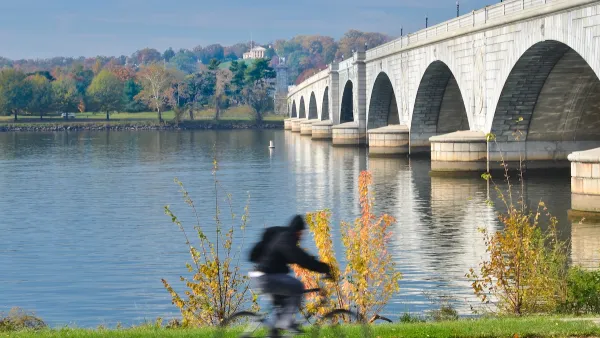
DC Launches New Round of E-Bike Rebates
District residents can apply for a subsidy of up to $1,500 to purchase e-bikes.

Planetizen Federal Action Tracker
A weekly monitor of how Trump’s orders and actions are impacting planners and planning in America.

California plans to bury El Niño’s downpour
If the state plays its cards right, it may be able to store a billion acre-feet of El Niño’s water in aquifers.

Chicago breaks ground on $3 billion megadevelopment
The new neighborhood, titled Foundry Park, will one day host 3,700 residences.

Satanic place names
From streams and lakes to valleys and canyons, I mapped more than 1,000 places named after the Devil.

California High-Speed Rail Authority CEO resigns after $600,000 scandal
Under Ian Choudri, the authority used taxpayer dollars to fund first class flights and trips to nightclubs.

Want to study the Missouri River? Soon, you may need unanimous approval from 10 states
Legislation would require 10 governors’ permission to study or build projects moving water outside the basin.

FREE Course: Walkable City 1: Why Walkability?
After describing his path towards focusing on walkability as the essence of good planning, Jeff Speck marches through his five principal reasons for making more walkable places.
Reinventing Malls: Planning Alchemy—Turning Gray Fields Into Gold
The course focuses on the opportunities and imperatives that shape reinvention of mall sites.

City of Rosemead
Rutgers University, Edward J. Bloustein School of Planning and Public Policy
One Hundred Miles
Hunter College, City University of New York (CUNY)
The Architects Foundation
University of Cincinnati Online
City of Cambridge
Montrose County
The Pocatello Development Authority