The new round of grants for buses and facility upgrades doesn’t include any for battery-electric buses, favoring instead diesel-electric hybrids and CNG buses.


The Federal Transit Administration (FTA) is awarding more than $2 billion in grants to 165 transit agencies for new buses and bus facility upgrades through a bus and bus facilities and the low-emission and zero-emission buses (“low-no”) grant programs.
According to an article by Jeff Davis for the Eno Center for Transportation, “The funding, provided by the Infrastructure Investment and Jobs Act of 2021, is the fiscal 2025 funding for the program plus another $525 million taken from the fiscal 2026 advance appropriation, which became available on October 1.”
Davis notes that while the amount for bus funding has stayed the same since the Biden administration, the emphasis of the low-no program has shifted to support hybrid vehicles over battery-electric buses. “The new grant list has, near as we can tell, zero battery-electric bus grants.” The grants were awarded to proposals for diesel-electric hybrids and compressed natural gas (CNG) buses.
FULL STORY: FTA Announces $2 Billion in New Transit Bus Grants

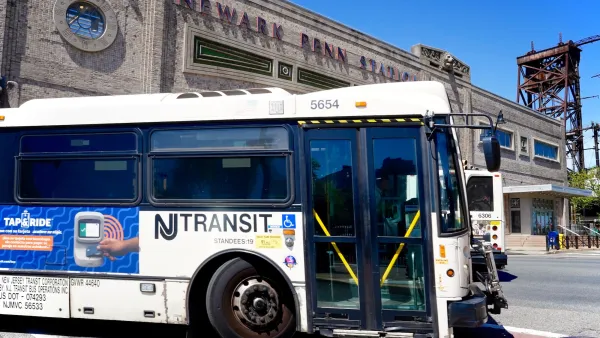
Facing Federal Funding Freeze, NJ Transit Revises Zero-emission Plan
The agency is retooling a plan to modernize its aging bus depots after the Trump administration decided to freeze nearly $324 million in grants.
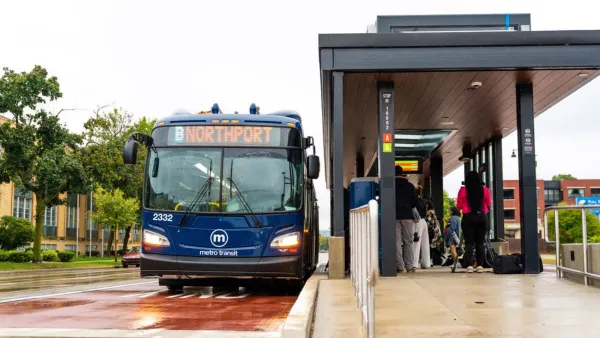
Madison’s Electric Buses Keep Running Through Brutal Freeze
A late January winter storm offered a key test for electric buses that often falter in cold temperatures.
Court unfreezes $20B in federal climate grants
A U.S. Court of Appeals ruled that the Trump administration potentially violated the Inflation Reduction Act by attempting to claw back grants awarded under the Greenhouse Gas Reduction Fund program.

Planetizen Federal Action Tracker
A weekly monitor of how Trump’s orders and actions are impacting planners and planning in America.

The state-sanctioned urbicide of Austin
People don’t kill cities. Freeways do.

US to reduce Colorado River water deliveries to Mexico
A new Colorado Treaty amendment reduces Mexico’s Colorado River water allocation by 250,000 acre feet.

5 New England states march closer to 800 megawatt wind energy project
Securing federal approval for the project may be complicated under the Trump administration, which has historically been hostile towards domestic wind power.

Baltimore to break ground on $50 million Transit Priority Project
The project will bring faster bus trips, safer streets and better bike connections to Baltimore.

Airbnb launches $250 million 'last-dollar financing' housing accelerator, makes first investment in Austin
The company will put $6.4 million towards affordable housing development in Texas’ capital.

FREE Course: Walkable City 1: Why Walkability?
After describing his path towards focusing on walkability as the essence of good planning, Jeff Speck marches through his five principal reasons for making more walkable places.
Reinventing Malls: Planning Alchemy—Turning Gray Fields Into Gold
The course focuses on the opportunities and imperatives that shape reinvention of mall sites.

Eagle County Government
Harvard University Graduate School of Design
Nashville Planning Department
The Architects Foundation
University of Cincinnati Online
The Pocatello Development Authority
The Urban Renewal Agency of the City of Pocatello
Journal of the American Planning Association