The city just broke ground on solar installations that will provide renewable energy to the surrounding communities.


Detroit is starting work on five ‘solar neighborhoods,’ vacant sites that will be repurposed with solar energy installations.
As an article in Smart Cities World explains, “The land being used for the five solar fields had been a mix of vacant land and scattered mostly vacant homes, which the city has since removed. Many areas became frequent trouble spots of illegal dumping and other illegal activity. In their place will be an attractive, well-maintained and secure solar array.”
The project is designed to make use of blighted spaces, reduce the city’s carbon footprint, and improve its climate resiliency. The solar arrays will be surrounded with trees and landscaping. “Owner-occupied homes in each Solar Neighbourhood outside of the solar arrays were eligible to receive between $15,000 and $25,000 per house for energy efficiency upgrades with the help of DTE – the amount depending on how many acres of solar their neighbourhood generates.”
Read the full story: Baltimore City might be entering its YIMBY era

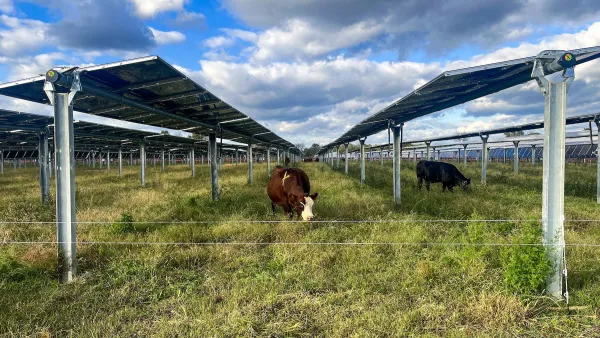
Cows at Tennessee's 'Silicon Ranch' graze under solar panels
The project aims to prove that agriculture and solar energy production can work in tandem.
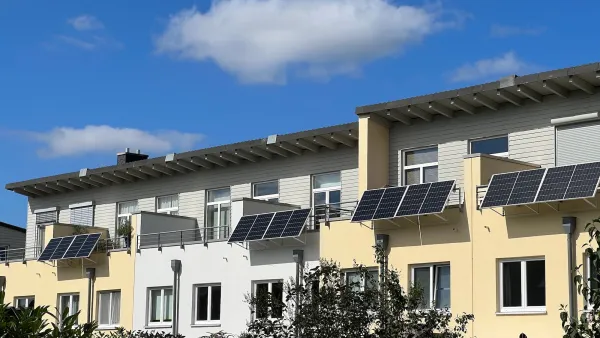
28 States and DC Could Legalize ‘Balcony Solar’
Plug-in solar panels, which are becoming popular across Europe, live in a regulatory gray area in the United States.
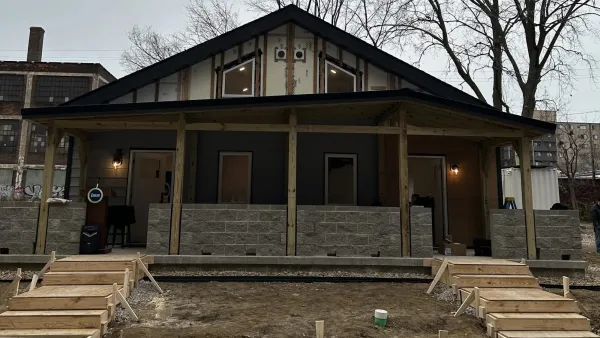
Cleveland Deploys Solar to Make Affordable Housing More Affordable
A nonprofit-backed project is bringing efficient duplexes to Cleveland.

Planetizen Federal Action Tracker
A weekly monitor of how Trump’s orders and actions are impacting planners and planning in America.
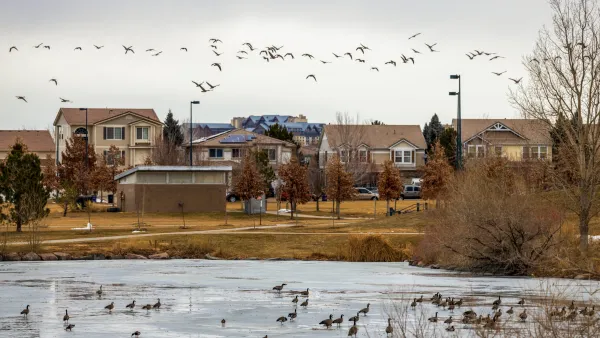
Colorado’s Largest Data Center Could Rise Next to Homes — Without a Public Hearing
The proposed campus would consume 11 times the power of Denver International Airport; as it has across the country, opposition mounts.

US to reduce Colorado River water deliveries to Mexico
A new Colorado Treaty amendment reduces Mexico’s Colorado River water allocation by 250,000 acre feet.

'This is going to be painful:’ Virginia stares down $1.7 billion funding gap for highway maintenance
The state may address the deficit by shifting $290 million from its construction budget to maintenance projects.
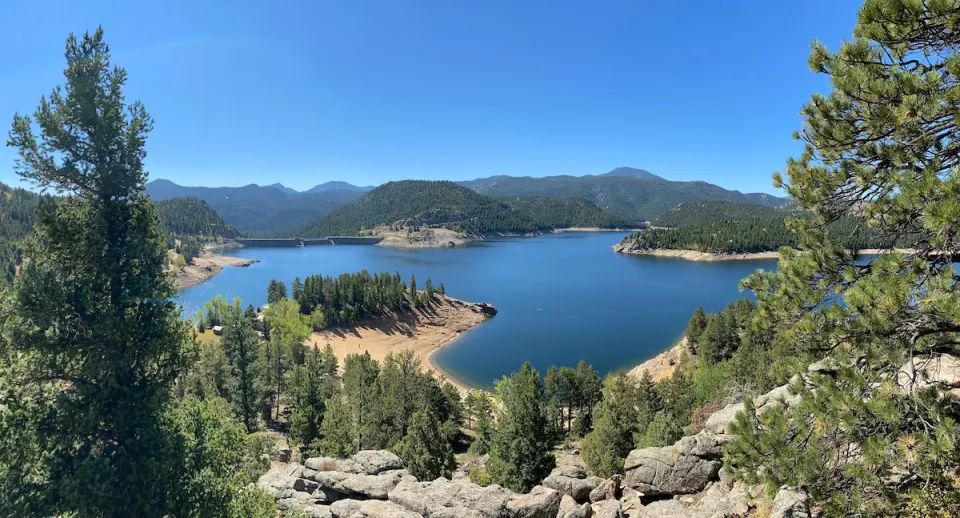
Judges permit Denver to divert 77,000 acre feet from the Colorado River for reservoir expansion
Overuse and climate change have caused the Colorado River’s water levels to plummet.

Amtrak, CN end decades-long dispute with eight-year agreement
The new operating agreement establishes an updated framework for the companies to work together, including processes to resolve disputes.

FREE Course: Walkable City 1: Why Walkability?
After describing his path towards focusing on walkability as the essence of good planning, Jeff Speck marches through his five principal reasons for making more walkable places.
Reinventing Malls: Planning Alchemy—Turning Gray Fields Into Gold
The course focuses on the opportunities and imperatives that shape reinvention of mall sites.

KFH Group Inc.
Greater Baltimore Committee
Eagle County Government
The Architects Foundation
University of Cincinnati Online
The Pocatello Development Authority
The Urban Renewal Agency of the City of Pocatello