Extreme heat can be even more dangerous in confined subway cars and stations.


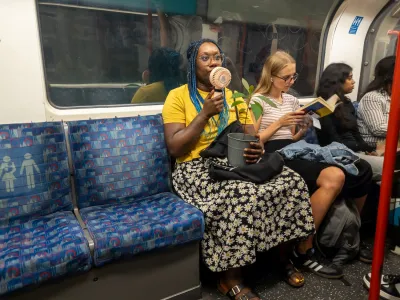
When summer temperatures soar, the interior of subway cars and underground stations can get unbearably — and dangerously — hot, writes Chris Baraniuk in Wired.
As Baraniuk explains, “Trains, being metal tubes packed with people, are hard to cool down.” U.K.-based researcher Jonathan Paul has an idea for cooling the London Tube, where he has measured temperatures of up to 107.6 Fahrenheit. “He’s working on a technology that would use groundwater at roughly 10 Celsius to ferry excessive heat away from underground stations.”
More transit agencies are adopting train cars with air conditioning, but some trains, including some in China, are so fast that HVAC systems can’t function effectively. In Egypt, trains are equipped with a special filter system to remove the sand and dust that batter trains in the desert.
Other ways to cool trains include reflective paint that keeps cars cool when exposed to sunlight and awnings to shade trains at stations. But with public transit budgets facing growing shortfalls, upgrades like air conditioning and cooling methods will likely have to wait until agencies can afford to replace their rolling stocks.
FULL STORY: How to Keep Subways and Trains Cool in an Ever Hotter World


Index Measures Impact of Heat on Pedestrian Activity
When heat and humidity are high, people are more likely to opt for cars when possible.
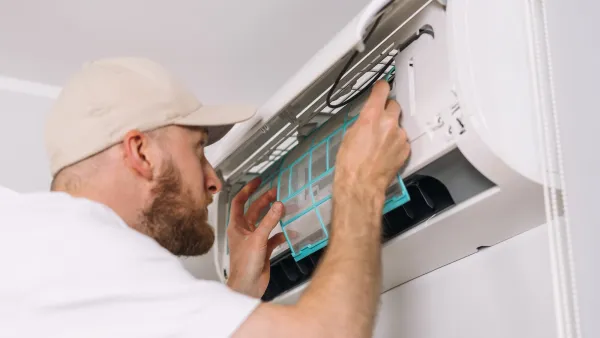
The Pacific Northwest is an unlikely front in the fight for cooling
A 2021 heat dome killed over 250 people in the Pacific Northwest, bringing into sharp focus the potential of extreme heat to have deadly consequences even in historically cool climates.
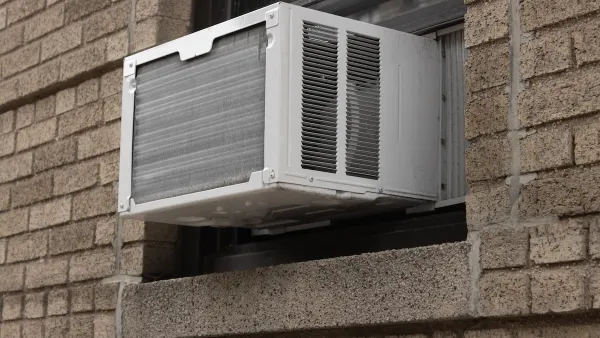
Thousands of NYC Shelter Residents Lack Air Conditioning
Even in the depths of extreme heat, many shelters prohibit residents from installing AC units.

Planetizen Federal Action Tracker
A weekly monitor of how Trump’s orders and actions are impacting planners and planning in America.

The state-sanctioned urbicide of Austin
People don’t kill cities. Freeways do.

US to reduce Colorado River water deliveries to Mexico
A new Colorado Treaty amendment reduces Mexico’s Colorado River water allocation by 250,000 acre feet.

5 New England states march closer to 800 megawatt wind energy project
Securing federal approval for the project may be complicated under the Trump administration, which has historically been hostile towards domestic wind power.

Baltimore to break ground on $50 million Transit Priority Project
The project will bring faster bus trips, safer streets and better bike connections to Baltimore.

Airbnb launches $250 million 'last-dollar financing' housing accelerator, makes first investment in Austin
The company will put $6.4 million towards affordable housing development in Texas’ capital.

FREE Course: Walkable City 1: Why Walkability?
After describing his path towards focusing on walkability as the essence of good planning, Jeff Speck marches through his five principal reasons for making more walkable places.
Reinventing Malls: Planning Alchemy—Turning Gray Fields Into Gold
The course focuses on the opportunities and imperatives that shape reinvention of mall sites.

Eagle County Government
Harvard University Graduate School of Design
Nashville Planning Department
The Architects Foundation
University of Cincinnati Online
The Pocatello Development Authority
The Urban Renewal Agency of the City of Pocatello
Journal of the American Planning Association