The world cup will bring the Garden State its first BRT line — a potential blueprint for the state’s transportation future. Will they rise to the challenge?



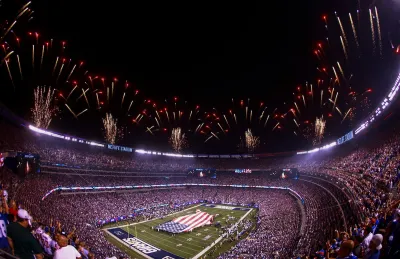
Every four years, one of the world's most important and famous sporting events occurs. Of course, I am talking about the World Cup. With the 2022 final obtaining approximately six times more global viewership than the most-watched Super Bowl LVII in 2024, (1.5 billion vs. 264.9 million), the World Cup surely knows how to put on a spectacle. For the 2026 edition, the event is happening in Mexico, Canada, and the United States. The first match is set to be played at Mexico City’s famous Azteca Stadium, and its final match is at New Jersey’s MetLife.
It is no secret that the host enjoys certain perks, and apart from their country’s national team being instantly qualified, it also enjoys significant economic benefits. Hundreds of thousands of tourists travel to the host country every four years and spend money on hotels, restaurants, and more — the World Cup is an instant economic booster. For Qatar, 2022, the World Cup roughly contributed an additional 1 percent to its GDP, and for the 2026 World Cup, the predictions for the economic benefits to the NJ/NY area are close to $3 billion.
Initially the final was supposed to be at Dallas’ AT&T stadium, but in the end it went to New Jersey’s MetLife. There were mixed feelings when the final changed states. Some talked about how the Fédération Internationale de Football Association’s (FIFA) choice was not up to par with other stadiums, yet in my opinion there is no better place to hold down a final than the likes of a place such as the MetLife. With an expected attendance of one million fans to visit the NJ-NY region, the logistics of transporting that number of people (more than the population of several U.S. States), are key to the success of the event.

In this regard, MetLife outperforms various American Stadiums. Despite American transit standards not being a high bar to pass, having a direct rail line between the stadium and NJ Transit’s Secaucus Station, and then New York City’s Penn Station in less than 15 minutes, is no small feat. And, of course, like most American stadiums, the MetLife has bus service from and to the event venue.
Additionally, its location is a factor that should not be overlooked. New Jersey is one of the most diverse states in the nation, with counties — such as Middlesex and Essex — being in the top 25 most diverse in the nation. And of course, across the Hudson, you have New York City — this city does not even need an explanation. These will make World Cup fans feel more at home than anywhere else.
Existent transit conditions have handled some events pretty well, a famous example being Taylor Swift’s Eras Tour. Back in 2023, NJ Transit was able to successfully move 80,000 fans throughout the run of three shows. Nevertheless, on other occasions it has not performed as expected. One such occasion occurred in 2019 during Wrestlemania 35, when a lack of communication between World Wrestling Entertainment (WWE) and NJ Transit about a new event’s end time (and between NJ Transit and its riders) left passengers waiting in the rain for hours on end.
Currently, NJ Transit’s rail system is estimated to move 10,000 people an hour, and while sometimes it has been effective, this event can’t be left to fate. To improve capacity, NJ Transit is planning an ambitious project: A Bus Rapid Transit System. Ambitious because it needs to be completed in a relatively small timeframe, and also because it would technically be the first in the state.
A Bus Rapid Transit system, also known as “BRT,” is a bus line with a separate and exclusive running way. This means that only buses can use it, and it is protected (usually via some sort of physical barrier) from normal traffic, almost like a subway. BRTs are popular around the world because they are cost-effective, and if done right they can rival train systems. The proposed route for the World Cup would start at NJ Transit’s Secaucus station and end at MetLife itself. This addition would let NJ Transit virtually double its hourly moving capacity, ensuring that fans will travel to and from the matches efficiently and securely.
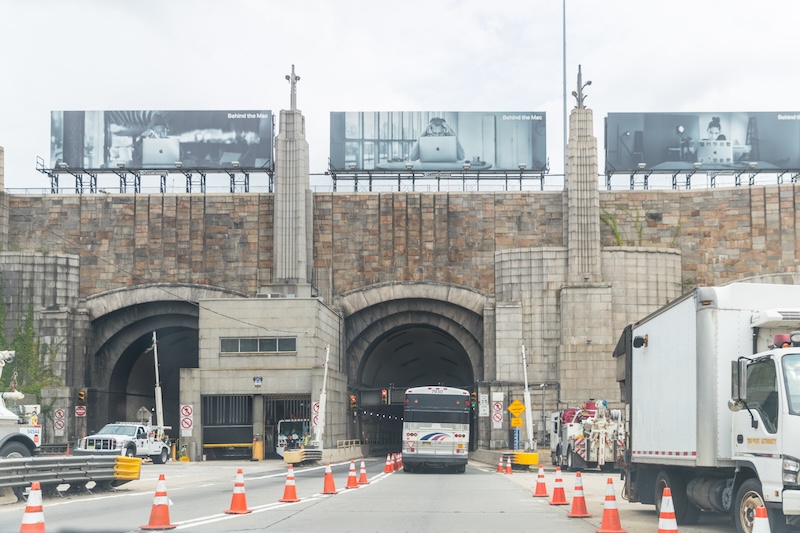
To see the success of BRT systems we don’t have to look too far: The NJ/NY Port’s Authority Exclusive Bus Lane (XBL). This 2.5-mile contra-flow bus lane along the Lincoln Tunnel, New Jersey Route 495, and New Jersey Turnpike serves as a silent but vital piece of infrastructure around the region. Moving more than 18.5 Million passengers a year, the system helps connect all the areas that the PATH Train and/or NJ Transit rail/subway lines can’t cover — improving the lives of millions of commuters annually.
The Federal Transit Administration will be funding the new BRT, which gives New Jersey an incredible opportunity. An event like this does not come every day. Many great concept projects — such as the Greater New Brunswick Transportation Study or the South Jersey Bus Rapid Transit System — languish as mere “studies” due to the lack of funds/political will. This time, that likely won’t be the case.
In June, 2024, the Regional Plan Association hosted an online panel, “Penalties and Goals: Best Practices and Pitfalls from FIFA World Cup Host Regions,” to discuss planning for the mega-event. Panelist Greg Clark stated, “We have to think about legacy as how a global event like this induces some kind of long-term change.” While the economic legacy of the World Cup is undeniable, why not create a lasting infrastructure legacy as well?
According to the U.S. Census Bureau, in 2024, the state of New Jersey — despite neighboring New York — led the Northeast region in population growth, adding more than 120,000 residents. As the Garden State’s population continues to grow, its transportation system must evolve accordingly. The 2026 World Cup presents a golden opportunity — a catalyst for transit improvements. If the BRT system proves successful during the tournament, it could serve as a model for future transit projects in the region.
With Congestion Pricing’s widespread success as shown in the 2025 June report (though still not completely safe from the current federal administration), and mega projects such as the Gateway Program, this could just help the regional effort of improving public transportation and transform it into a snowball effect. The entire world will be watching — but the entire state will be, too. This could be the chance to showcase the benefits and importance of having a comprehensive public transportation system.

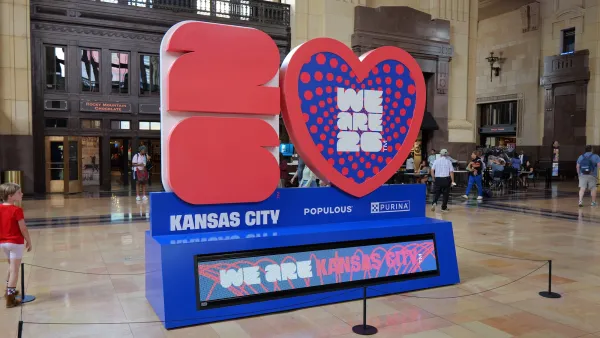
World Cup crowds offer 'stress test' for Kansas City transit planners
Transportation officials are closely monitoring travel patterns during the World Cup to understand how the city's transit system can be improved as the population grows.
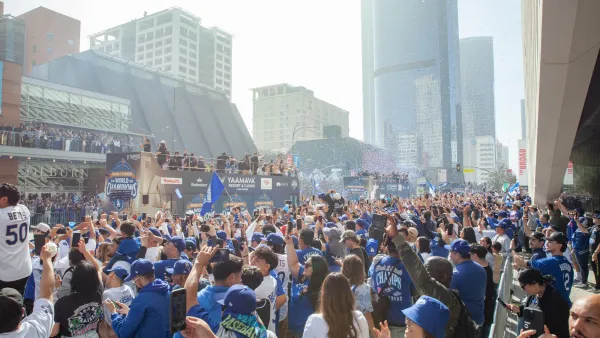
America’s urban FIFA stars won’t be stadiums — it will be our downtowns. Let’s not blow it.
When the World Cup visits cities across America this summer, it’s a rare chance to shift the perception of our downtowns on the global stage. The secret? What makes downtowns great for FIFA makes them great for everyone, all the time.
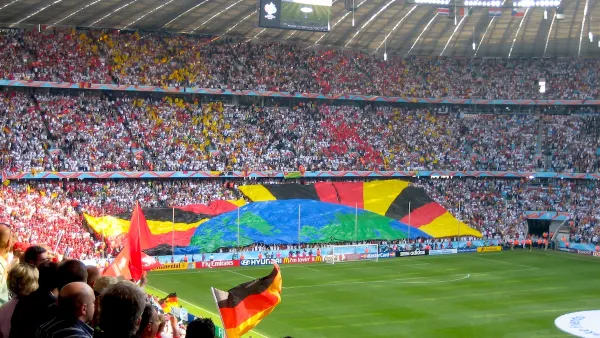
Dear Cities: Let’s Make FIFA Count
The first-ever pan-North American World Cup offers urban planners a unique opportunity: to undo the legacy of failed promises and show that mega events can actually benefit the cities they visit.

Planetizen Federal Action Tracker
A weekly monitor of how Trump’s orders and actions are impacting planners and planning in America.

The state-sanctioned urbicide of Austin
People don’t kill cities. Freeways do.

Colorado’s Largest Data Center Could Rise Next to Homes — Without a Public Hearing
The proposed campus would consume 11 times the power of Denver International Airport; as it has across the country, opposition mounts.

Judges permit Denver to divert 77,000 acre feet from the Colorado River for reservoir expansion
Overuse and climate change have caused the Colorado River’s water levels to plummet.
Amtrak, CN end decades-long dispute with eight-year agreement
The new operating agreement establishes an updated framework for the companies to work together, including processes to resolve disputes.
Raised interest rates may kill financially vulnerable construction projects
The chief economist at ConstructConnect warns that if construction project owners are negatively impacted by the raised rates, it could result in delayed payments to contractors.

FREE Course: Walkable City 1: Why Walkability?
After describing his path towards focusing on walkability as the essence of good planning, Jeff Speck marches through his five principal reasons for making more walkable places.
Reinventing Malls: Planning Alchemy—Turning Gray Fields Into Gold
The course focuses on the opportunities and imperatives that shape reinvention of mall sites.

KFH Group Inc.
Greater Baltimore Committee
Eagle County Government
The Architects Foundation
University of Cincinnati Online
The Pocatello Development Authority
The Urban Renewal Agency of the City of Pocatello

