The first-ever pan-North American World Cup offers urban planners a unique opportunity: to undo the legacy of failed promises and show that mega events can actually benefit the cities they visit.


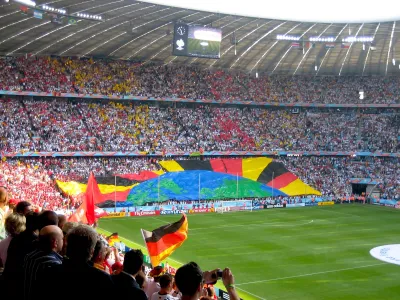
The 2026 FIFA World Cup will take place, for the first time, across three countries — the United States, Canada, and Mexico — with 48 teams competing across 80 matches in a format unprecedented in the mega-event's 96-year history. "Soccer is conquering [North] America," said FIFA President Gianni Infantino this past June, when the organization announced its 16 venue selections, 11 of which will be in American cities. "We will flip the country upside down, and then back up and back down."
This is not the first time that the mega-expectations are tied to mega-events. In fact, the promise with which many of these events are sold is often a legacy of city-building, with public dollars put to large-scale projects with the promise of transforming a city’s reputation on the global stage. However, it is not hard to notice that many fail to deliver on this promise.
The 2026 World Cup's disaggregated structure offers an unprecedented opportunity to rethink how mega-events can engage with the layered complexity of North American urban landscapes. Rather than building massive new stadiums from scratch, most venues will receive targeted upgrades and improvements — a scale that allows for more concentrated, thoughtful decision-making about infrastructure investments.
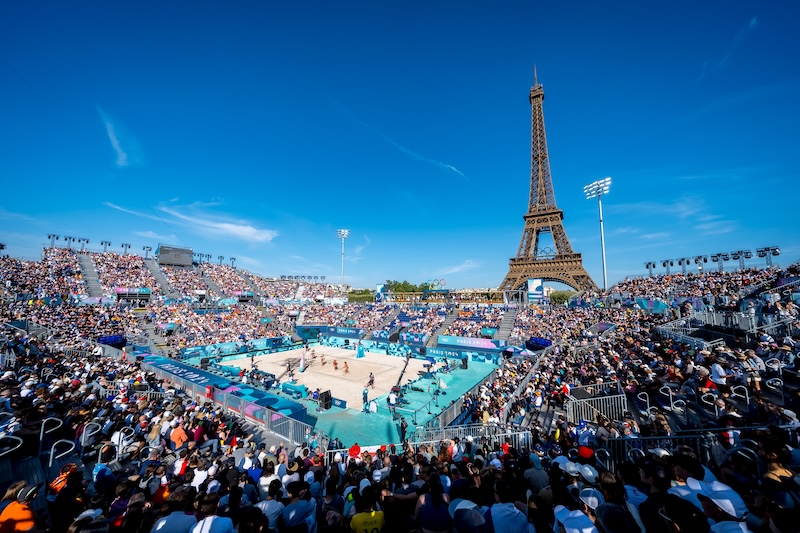
Instead of pursuing legacy, there is an opportunity to prioritize impact: the immediate, measurable benefits that begin flowing to communities from the moment planning commences. Impact thinking recognizes that the development process itself constitutes the primary community benefit, not whatever remains afterward.
The outcomes of previous events offer up some insights:
1. Repurpose rather than build anew
Our cities and communities are filled with venues that are already relatively adapted to the scale of local needs. Conversely, they are rarely able to scale up their programming to fit a brand-new massive venue. Additionally, existing venues already benefit from established infrastructure, transportation, and embodied carbon investments---by building upon these existing assets rather than starting from scratch, cities can cut down on costs while reducing their overall carbon footprint.
2. Build for the future, not just the event
The mega event will last a few weeks. The venues and associated infrastructure will last decades. Hence, the priority function is the latter. First and foremost we need to be thinking about long-term use and function — and secondly how structures can be adapted to accommodate the temporary use, which is the mega-event.
3. Think of the context, not just the venue
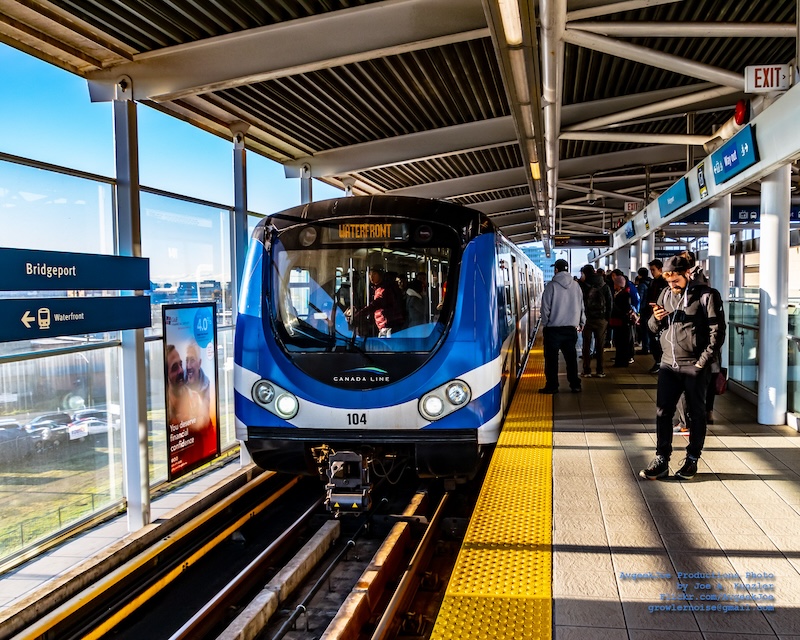
It’s not just about the venue. It’s about public transit, a mix of surrounding uses, open spaces, bike trails, stormwater management, and how all these components stitch together. For projects to be truly legacy-making, they need to be integrated with and integral to city life.
4. Impact starts even prior to the games
There is no reason why all the investments leading up to a mega-event need to have the same deadline. Venues, public transit facilities, infrastructure improvements, and social infrastructure investments can commence life in anticipation of a mega-event. In fact, there is an argument to be made for letting the kinks be worked out well before inauguration day.
5. Process builds lasting social capital
It’s not only about the bricks and mortar. We need to nurture local organizational capacity, grass-roots participation, and community socio-economic development. A large investment (with a definitive timeline) can be a powerful tool to mobilize people in a way that builds enduring social infrastructure.
This paradigm shift from outcome to process fundamentally changes how we evaluate success. Rather than asking whether a stadium becomes a community asset post-tournament, we examine how its planning and construction address immediate housing shortages, transportation gaps, or public space deficits. Impact thinking embraces the complex, unpredictable nature of urban development while maintaining focus on tangible community benefits.
The key lies in reverse engineering infrastructure investments to serve dual purposes. Instead of building expensive hotel towers that may sit vacant post-event, cities might invest in adaptive housing solutions or improve existing hospitality infrastructure. Rather than constructing isolated event facilities, they can enhance public transit networks that will serve communities long after the final goal is scored.
Toronto's approach during the 2015 Pan Am Games offers an instructive model. The city used the event as an opportunity to pilot its Open Streets program, temporarily closing roads to cars and opening them to pedestrians and cyclists. This experiment enhanced the event experience for visitors and residents alike, and the program operated after the event concluded.
Similarly, the Venice Biennale demonstrates how event infrastructure can become permanent community assets. Its pavilions and exhibition spaces serve the international art event but also function year-round as cultural venues for local communities, creating a sustainable model of cultural infrastructure that extends far beyond any single event.
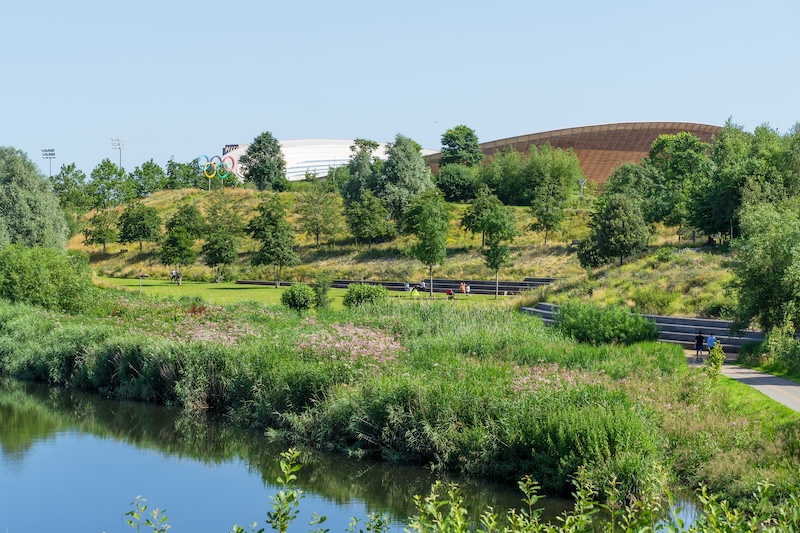
As we approach 2026, event organizers, community leaders, and public officials should embrace impact thinking that prioritizes immediate community benefits, realistic project scales, and dual-purpose infrastructure investments. By beginning now, cities can approach World Cup preparations as multi-year community development programs rather than frantic pre-event construction sprints. This timeline allows for genuine community engagement, iterative design processes, and the kind of thoughtful planning that creates lasting value.
This “beautiful game” deserves beautiful planning, a kind that treats host cities not as temporary stages for global tourism, but as living communities in need of sustainable and forward-looking development. Let's make sure the 2026 World Cup's greatest victory is measured not in stadium capacity or a four-week spectacle, but in the tangible improvements it brings to the millions of people who will call these cities home long after the world's attention moves elsewhere.
Antonio Gómez-Palacio, Chair of Toronto-based architecture firm DIALOG, is internationally recognized for creating transformational and vibrant urban spaces that support their social, economic, and environmental context. His project work has spanned communities from Nova Scotia to Mérida, Mexico. Antonio is active on several research and advocacy groups, including the Rethinking Rental Roundtable and Planning Research Advisory Committee with CMHC-SCHL and the Advisory Committee for HealthyDesign.city. He became a Fellow of the Royal Architectural Institute of Canada College in 2018, recognized for his outstanding contributions to the design community.

Stadium Renovation Prices out Brazil's Poor from its Most Revered Public Space
As Brazil prepares to host the 2014 World Cup and 2016 Olympics, renovations to the Maracana, an infamous soccer stadium in Rio de Janeiro, are pricing out the city's poor. Some say the work is killing one of the city's few egalitarian public places.
World Cup crowds offer 'stress test' for Kansas City transit planners
Transportation officials are closely monitoring travel patterns during the World Cup to understand how the city's transit system can be improved as the population grows.
World Cup renews community spirit in LA's MacArthur Park
Soccer watch parties are bringing life back to the park that was recently the target of immigration raids and police actions.

Planetizen Federal Action Tracker
A weekly monitor of how Trump’s orders and actions are impacting planners and planning in America.

Data reveals that NYC’s bet on congestion pricing has paid off
After almost two years of the program, reports show positive impacts on traffic and air quality and no disruptions to parking.

Denver is solving homelessness. Why aren't the rest of us?
Since 2023, Denver's street homeless population has decreased by 64%, proving that effective tools exist to support those in need of housing.

CA city to shut down airport, transform it into utopian park
The western side of the 200-acre park will feature a dog park, nature education center and arboretum.

NYC to vote on supporting outdoor dining, streamlining bus and bike lane creation
The city has five proposed amendments to its municipal constitution on the ballot this November.

Chicago breaks ground on $3 billion megadevelopment
The new neighborhood, titled Foundry Park, will one day host 3,700 residences.

FREE Course: Walkable City 1: Why Walkability?
After describing his path towards focusing on walkability as the essence of good planning, Jeff Speck marches through his five principal reasons for making more walkable places.
Reinventing Malls: Planning Alchemy—Turning Gray Fields Into Gold
The course focuses on the opportunities and imperatives that shape reinvention of mall sites.

City of Rosemead
Rutgers University, Edward J. Bloustein School of Planning and Public Policy
One Hundred Miles
The Architects Foundation
University of Cincinnati Online
Montrose County
Northern Illinois Transit Authority (NITA)
The Pocatello Development Authority

