High visibility gear — especially the kind worn by construction workers — may worsen the risk.


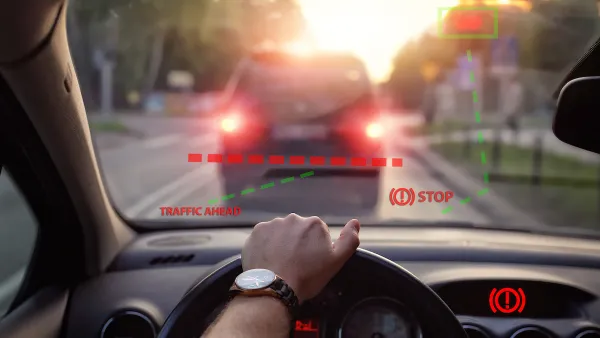
Even under “ideal conditions” and moving at only 25 miles per hour, automated emergency braking systems failed to detect an adult-sized crash test dummy about 40 percent of the time after dark, researchers at AAA found. Streetsblog reports the research, which shows that while emergency braking systems are getting better, they are far from reliable. This includes the fact that in some cases, high-visibility clothing actually makes the technology less likely to spot a pedestrian in the dark.
“Researchers say that the auto industry's slow progress is yet another reminder not to entrust our safety future solely to machines — especially when 7,318 pedestrians were killed by drivers in 2023 alone, and 77 percent of them were struck at night,” Streetsblog writes.
FULL STORY: ‘Embarrassment’: Pedestrian Automatic Emergency Braking Still Flawed at Night


Study: Auto Braking Tech Doesn’t Register Reflective Clothing
The automatic braking systems on two major car models failed to stop for pedestrians wearing reflective strips in a test.
NHTSA Finalizes Automatic Braking Rule to Advance Road Safety
New cars will be required to include automatic detection and braking technology for vehicles and pedestrians by 2029.
Did Uber Just Get Away With Manslaughter?
Remember Elaine Herzberg, the 49-year-old woman who became the first pedestrian fatality due to an autonomous vehicle when she was hit last March by an Uber with a safety driver in Tempe, Ariz.? Prosecutors found no criminal liability.

Planetizen Federal Action Tracker
A weekly monitor of how Trump’s orders and actions are impacting planners and planning in America.

The state-sanctioned urbicide of Austin
People don’t kill cities. Freeways do.

US to reduce Colorado River water deliveries to Mexico
A new Colorado Treaty amendment reduces Mexico’s Colorado River water allocation by 250,000 acre feet.

5 New England states march closer to 800 megawatt wind energy project
Securing federal approval for the project may be complicated under the Trump administration, which has historically been hostile towards domestic wind power.

Baltimore to break ground on $50 million Transit Priority Project
The project will bring faster bus trips, safer streets and better bike connections to Baltimore.

Airbnb launches $250 million 'last-dollar financing' housing accelerator, makes first investment in Austin
The company will put $6.4 million towards affordable housing development in Texas’ capital.

FREE Course: Walkable City 1: Why Walkability?
After describing his path towards focusing on walkability as the essence of good planning, Jeff Speck marches through his five principal reasons for making more walkable places.
Reinventing Malls: Planning Alchemy—Turning Gray Fields Into Gold
The course focuses on the opportunities and imperatives that shape reinvention of mall sites.


Eagle County Government
Harvard University Graduate School of Design
Nashville Planning Department
The Architects Foundation
University of Cincinnati Online
The Pocatello Development Authority
The Urban Renewal Agency of the City of Pocatello
Journal of the American Planning Association