The move risks leaving subsidized housing with no oversight just weeks after a Bronx building partially collapsed.


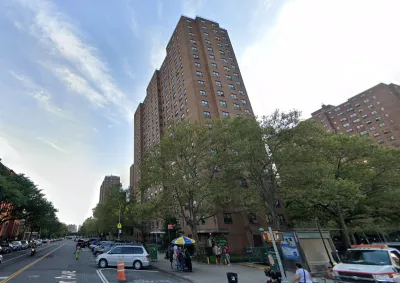
The U.S. Department of Housing and Urban Development (HUD) laid off its entire staff of building inspectors on October 10, reports Kriston Capps in Bloomberg CityLab, putting residents of subsidized housing at higher risk of dangerous conditions just weeks after a partial building collapse in the Bronx.
“Federal law requires all government-subsidized properties, including Mitchel Houses in the Bronx, to undergo inspections on an ongoing basis.” However, it’s likely that the building had not been inspected recently. “Some affordable housing properties haven’t had an inspection in more than five years, even though the maximum limit between inspections is three years, with more frequent check-ups for poor performers.”
Capps notes that “In the wake of a fire or another calamity, federal inspectors would normally pull the files on the property and begin lining up emergency assessments for buildings of similar stock or age, to rule out a systemic deficiency.” However, the staff that would do this work will lose their jobs in early December.
“Even before the reduction-in-force notices went out on Friday, public housing authorities that liaise with HUD’s inspections division expressed concerns about its staffing levels, according to Crystal Wojciechowski, deputy director of the nonprofit Public Housing Authority Directors Association, or PHADA.” Meanwhile, inspection scores, which should be public, are no longer available after a recent redesign of the HUD website.
FULL STORY: Affordable Housing Left Vulnerable After Trump Fires Building Inspectors

DC Evictions Surge to Record Levels
Washington D.C. renters are losing housing aid and pandemic-era protections, leading to a wave of evictions.
NYC mayor announces plan to repair, restore and build new public housing
Roughly 300,000 New Yorkers live in the city's public housing system.
Report: Hundreds of Vacant NYC Public Housing Units ‘Taken Over’ by Squatters
The city’s housing authority says it often takes months to renovate apartments for new tenants, leading to hundreds of empty units that pose safety risks to neighbors.

Planetizen Federal Action Tracker
A weekly monitor of how Trump’s orders and actions are impacting planners and planning in America.

The state-sanctioned urbicide of Austin
People don’t kill cities. Freeways do.

US to reduce Colorado River water deliveries to Mexico
A new Colorado Treaty amendment reduces Mexico’s Colorado River water allocation by 250,000 acre feet.

5 New England states march closer to 800 megawatt wind energy project
Securing federal approval for the project may be complicated under the Trump administration, which has historically been hostile towards domestic wind power.

Baltimore to break ground on $50 million Transit Priority Project
The project will bring faster bus trips, safer streets and better bike connections to Baltimore.

Airbnb launches $250 million 'last-dollar financing' housing accelerator, makes first investment in Austin
The company will put $6.4 million towards affordable housing development in Texas’ capital.

FREE Course: Walkable City 1: Why Walkability?
After describing his path towards focusing on walkability as the essence of good planning, Jeff Speck marches through his five principal reasons for making more walkable places.
Reinventing Malls: Planning Alchemy—Turning Gray Fields Into Gold
The course focuses on the opportunities and imperatives that shape reinvention of mall sites.

Eagle County Government
Harvard University Graduate School of Design
Nashville Planning Department
The Architects Foundation
University of Cincinnati Online
The Pocatello Development Authority
The Urban Renewal Agency of the City of Pocatello
Journal of the American Planning Association