A conversation with the American Society of Landscape Architects’ CEO Torey Carter-Conneen and board president Kona Gray.


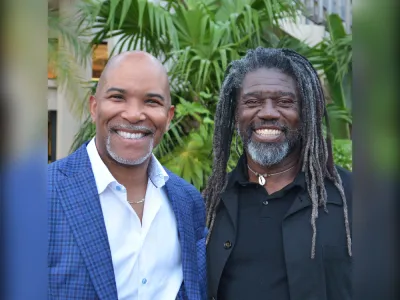
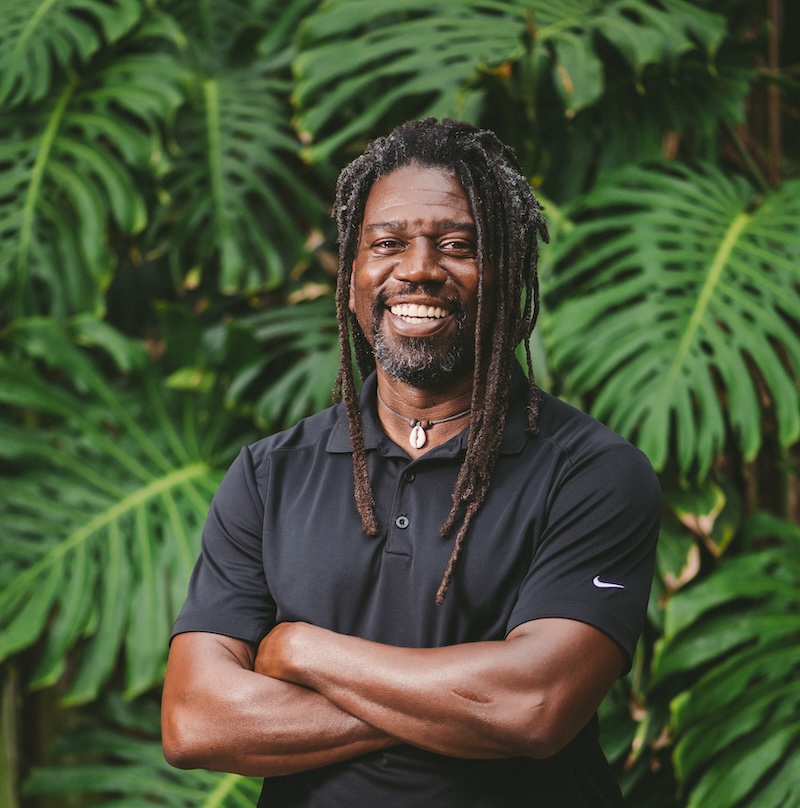
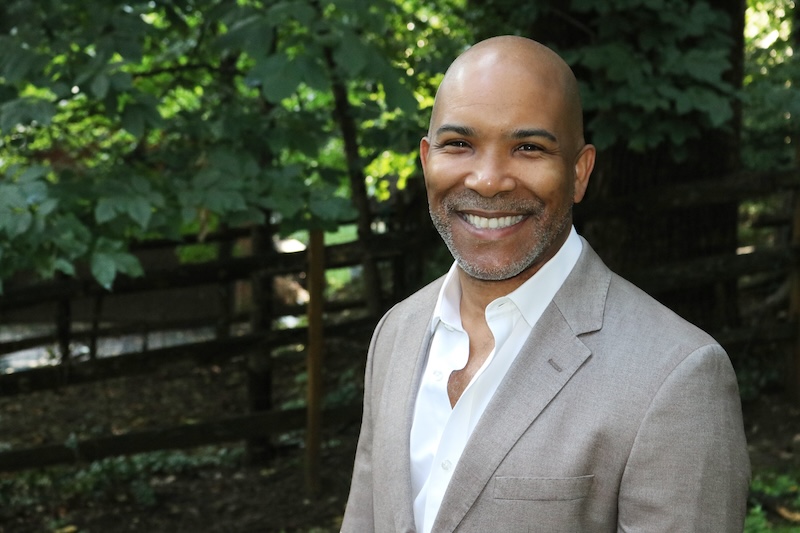
On September 23, 2025, I spoke with American Society of Landscape Architects (ASLA) CEO Torey Carter-Conneen, Hon. ASLA, CAE and Board President Kona Gray, FASLA, PLA to hear their thoughts about how landscape architecture can address global and societal challenges. What resulted was a heartfelt conversation about how living infrastructure has the power to revitalize people and places – not least of which through joy and kindness.
April Economides: You both come to landscape architecture from very different backgrounds. Torey, before becoming CEO of ASLA in 2020, you led large U.S. organizations in immigration, LGBTQ leadership, transportation, and public policy, with earlier experience as an auditor and a background in business and economics. Now that you’ve been at ASLA for more than five years, I’m curious, what aspect of the landscape architecture field most excites you?
Torey Carter-Conneen: I think the answer is the same thing that probably excites most landscape architects, which is that it’s about people. It’s about designing public space for people by integrating the built environment with the natural environment. As I listened to you mention all of the organizations I’ve worked with, if you boil it down, it's all about people. I appreciate that landscape architecture is centered around creating space for people to come together, respecting nature, advocating for nature, and the integration and sharing of space between nature and people. That's what drew me to the work and to the job.
Economides: That’s beautiful, especially because many folks just think ‘plants’ when they think about the field, not that plants aren’t incredible. Kona, you’re ASLA's board president and a principal at EDSA, and you bring more than 30 years of design experience and a very broad portfolio – from parks to hospitality to mixed use developments and much more – both within the U.S. and abroad. With that international background, as well as your upbringing in Liberia and Atlanta, how have your global experiences influenced your work?
Kona Gray: It's been pretty amazing. All of these influences and experiences have an effect on who you are as a person. It was interesting to connect the dots and realize that my purpose is to connect humanity to the environment. It's pretty straightforward. And that's why I'm a landscape architect. …One of the greatest things that helped me become a person who is tolerant of many people is that my parents instilled a Golden Rule essence in our family – always be good and always treat people the way you want to be treated. We immigrated to the U.S. in the early ’60s, went back to Liberia, and then came back to the States when I was in high school. I wasn't a white American kid or a black American kid; I was ‘the other’ from somewhere else. Being able to realize that we're all human allows you to enter any room and be with any group of people, because you are there to be kind. It's really simple when you boil it down. It helped having that foundation. That's what influenced me to be where I am today.
Economides: Despite your different backgrounds, you’re both centered around the people aspect – helping others and focusing on our common humanity. During a time when resource wars are devastating populations of people and the living systems we depend on, the phrase ‘think global, act local,’ feels more urgent than ever. For example, suburban sprawl not only fuels car dependence but also lawn culture, and both of them increase oil and chemical demand – lawns through mowers, fertilizers, plastic irrigation systems, and pesticides. How can landscape architecture help address our biggest global challenges?
Gray: This is essentially the essence of who we are. We have been trained as stewards of the land from the get-go. Anyone who comes into this profession…realizes the importance of the planet and why we need to be respectful and understanding of all the elements, because we're one giant ecosystem. And in most ecosystems, you take one little piece out, you remove a little element, something starts to fall apart. …Specifically, landscape architecture is geared towards solving the issues related to the environment and humanity. …There are many, many ways we do that and many ways we approach it, whether it's designing for resilience or understanding how sustainable practices really matter. If you were to look globally, and we're very connected as a global organization, you will find landscape architects around the world doing their little part to do the work that holds that ecosystem together. Take our colleague Kongjian Yu who developed the concept of sponge cities since flooding has become such a global challenge. He recently took it a step further and proclaimed we should have a sponge world where the entire world understands the need to work and build with water. Landscape architects around the globe, in small and mighty ways, are addressing all systems to help them be sustainable.
Carter-Conneen: Honing in on ‘think globally, act locally’ – we don't have an abundance of resources, right? There are water and flooding challenges everywhere, and everyone has a common interest in clean water, clean air, public health, and safety and welfare – wherever you are. …Those are our commonalities. How we design for and maintain these systems is different depending on where you are, the conditions local to your community. …Many design principles can be deployed globally, but specified differently in different regions. We were just at an international conference in Nantes, France, where 1,400 landscape architects from around the world came together to talk about opportunities for the profession to answer this very question you just posed. …When a U.S. landscape architect from a community suffering from drought meets someone from a part of Asia, Europe, or Africa having the same issues, they learn from each other how they are designing things differently and they share lessons learned. There is a global conversation about resources and commitments. The more landscape architects tell the stories of how we’re helping solve problems locally for people living their everyday lives, the more those design principles can be deployed and we can actually solve the problems that are not just here in the U.S. but common across the world.
Gray: We have so many shared interests as humans, as a species, and what we should be focused on is how do we all come together and realize that we need this one vessel to be solid, protected and healthy for many future generations. The planet will keep on going once we're gone. For landscape architects, the Earth is our client. If we don't do it right, we're in big trouble.
Economides: Isn't it funny how humans often forget we're part of Earth, not separate? Indigenous people from around the world have always understood this. …Landscape architects are helping restore degraded land, regenerate native ecosystems, and redesign cities to be walkable and bikeable and integrate nature more – actions that support biodiversity, cooling, carbon sequestration, and healthier water, air, and soil. I find it often overlooked that this also results in healthier humans – physically, mentally, and emotionally. Do you see policymakers and planners increasingly recognizing the strong relationship between land use and public health, or are the fields still very siloed?
Gray: It varies from place to place. There are folks who have moved past older conventions and are looking at the wider system. But there are many places where you can find extremely outdated policies that are not helping us at all. There are many cases where we see land use being completely misinterpreted and misunderstood. That's where planners and landscape architects really should come together, in organizations and municipalities, to understand all of the different elements and the perceived and real outcomes. We're moving in the right direction, but it's still a challenge.
Carter-Conneen: I'm an optimist, but I'm also pragmatic. There's a saying in the U.S. that we eventually do the right thing after trying the wrong thing repeatedly. But I have hope, and we're seeing more municipalities understand that we have to design communities differently. We're seeing more frequent and intense environmental disasters, which come with human cost, biodiversity loss, and economic loss. Communities are displaced. Local and state governments are starting to realize they can't just replace and rebuild in the same way, especially places experiencing repeated disasters. In Atlanta, Rodney Cook Sr. Park used to flood repeatedly, along with neighboring houses, displacing people and destroying homes. The park was finally redesigned to capture stormwater differently and better integrate with nature. We're seeing more examples like this. The light bulb is starting to go on for developers and others that, ‘Wait, if I call the landscape architect or planner early in the process, this property I'm developing might actually be more marketable, maintainable, and sustainable in the long run.’ There's an appeal and demand for these projects, and they solve multiple problems. We have to do a better job of telling success stories and showing the connections between sustainable and resilient design and the economic benefits.
Economides: Absolutely. And it’s especially timely – this week marks one year since Hurricane Helene devastated parts of Western North Carolina – and 20 years after Hurricane Katrina struck New Orleans.
Gray: There are areas in some cities that really should have never been developed. Some of those areas should have just been left alone for nature, because water needs somewhere to go, and it will find a way eventually. It always does. So what do you do about that? I think what you do is ask professionals to hold the line and say, we know this is what you want to do, but we really disagree for these reasons. It absolutely has to do with public health, safety, and welfare. It's that simple. There should be a lot more pre-disaster work to help make places a lot more resilient; as well as work after the storm, being there as what we call a ‘second responder,’ where, once things are settled and people are safe, to help assess and say, those trees are still good, that area needs to be protected, we need to stay out of this space, and don't build your house right back where it floated away just because that's the property you own – find a way to mitigate the situation so we don't continue to do the same thing over and over again.

Economides: It’s essential. Something not much talked about is that there’s often trauma experienced by disaster survivors. Solastalgia, a term describing the loss we feel when losing a beloved place, is very real. The places we walk, the old woman we pass daily on our way to work, the shopkeepers we say hello to – we sometimes take these places and people for granted, until they’re gone. The culture of a place becomes forever changed after a disaster. When I think of New Orleans, the location of your upcoming annual conference, the first thing I think about is culture. How do you view the intersection of landscape architecture and culture? How do you view landscape architecture as culturally significant?
Gray: I think they're very, very connected. I leaned into this five years ago and started a side business called Land and Culture. Culture and history tell stories. People need stories and to understand how things occurred. This plays a pivotal role in design. In many of our efforts, we don't even begin to think about the pen stroke until we have fully delved into the history of a place. We're working with the city of Savannah right now, and we're having some amazing conversations about the history. It’s one of the most well-planned cities in the world, in my opinion, including the purpose and reason why the lots and blocks are the size they are and their cultural significance. And that’s where design and culture completely collide and come together seamlessly. I know that placemaking is a big deal in many parts of our lexicon, but flipping that a bit to the idea of placekeeping and looking at places for what they are, and enhancing that if you need to. And sometimes you really don't. Just letting it be is sort of the ethos of ‘do no harm,’ which is an oath we consider as landscape architects and designers, because culture really matters. …New Orleans, yes, they have one overall culture, but it's intertwined with all the different cultures from around the world, from Africa to the Caribbean to Europe. I mean, it's incredible. That's what makes it so cool. And when you pull out that, what do you have? So you don't want to mess with that.
Carter-Conneen: Absolutely. …Landscape architecture’s connection to culture is where life happens. All of the things you mentioned, the culture of New Orleans, the history of Asheville, the lady you pass when you're walking to work, the person at this shop, and this, that, and the other – all of that, our connection to place, it’s because that’s where life happens and where life and memories are created. …You're connected to that space, and you remember elements of design that you might not realize were intentionally designed and planned for you. But that's what landscape architecture is.
Economides: Landscape architects also play an important role in helping design spaces for democracy and civic life. In this time of screen addiction and imported food dependence, to me, this includes designing outdoor places that support social connection, exercise, and food and medicinal herb gardens – places that empower people and give us more agency over our bodies. How do you see outdoor places strengthening civic life and democracy?
Carter-Conneen: I was recently part of the celebration of the Anne Spencer garden in Lynchburg, Virginia. This woman was part of the Harlem Renaissance, and I learned so much about her and the connection to the vernacular landscape. She created the garden at her home and it hosted the city’s first NAACP meeting where the charter was established. So many civil rights leaders came through, strategizing about the movement at this garden in Lynchburg, where she designed it to be both welcoming and provide privacy in the middle of the city. It was a safe place for people to go and have deep and intense conversations. There are countless examples of these sorts of stories, and we can draw inspiration from them for future design. The more we tell these stories, the more we help people understand their connection to history and the natural environment. It also helps policy makers make better informed decisions on behalf of their constituents.
Gray: Telling these stories helps heal people that have dealt with trauma in many different ways. Unfortunately, some very difficult things have happened in the landscape as well. You have wonderful places of celebration, and also places of horror, fear, and damage. People know the difference. I believe more people are going to see the opportunity to find solace and safety and love in the landscape. You see it every day with weddings or other celebrations that happen on the land. …As this profession has matured, it hasn't always been just about creating a place of beauty, but also creating places of meaning or drawing out the meaning that's already there and sharing it with more people.
Economides: In regards to celebration, this brings up a central point: you’re also designing for joy – places where individuals and groups can find joy. Beautiful things can happen when people come together.
Carter-Conneen: Absolutely. One of the things that still brings us together is sports. Sports brings together people who are completely opposite in many ways, with different worldviews. Some of our members design stadiums and arenas, which are some of the main centers of joy. (Disappointment in some cases! But mostly joy.) And after any championship, where do people gather to celebrate? In the city plaza and town centers. When society is divided and polarized, it’s important to talk about common experiences that Americans or others around the world have around common interests, including common areas where we can all come together. Helping design public spaces to accommodate gathering is one of the ways landscape architects support creating joy.
Gray: It's one of the reasons we do what we do. During my first project as a young designer, a woman in the plaza we designed came over and hugged me. She said ‘thank you so much for creating a space for us to get outside – to have our lunch and have conversation’. We have wonderful weather in South Florida, but they used to eat in their cubicles inside with the fluorescent lights. Now they could be outside. A big light bulb went on for me, and I realized the impact we can have in creating spaces for people to find joy, in whatever way they do, small or large, just hanging out in the park with their family, or sitting on a bench with their sweetheart. It's really straightforward but sometimes misunderstood. We need to help people remember how important these spaces are.
Economides: Those seemingly ‘small’ moments can be the most profound in our lives – lifting our spirits, creating special memories, meeting wonderful new people. This doesn’t happen when we’re inside all the time.
Gray: And it can save someone's life. There are situations where someone's having a very hard time and getting out to nature helps them settle and continue forward. It's these intangibles that we don't always calculate.
Economides: Like eye contact when you're walking down the street and someone passing actually looks up, makes eye contact, and says hello.
Gray: I did a test. I was like, I'm going to be a little more intentional about it. I smile a lot, and I realized, if I smile at people, they smile back.
Carter-Conneen: Funny how that works!
Gray: Ha, yes. …I have hope for the future. We’re starting to work with a client who does regenerative farming, and they're getting away from the commercial, commoditized way of delivering food toward a healthier, more sustainable way. That ties into climate health, because they’re utilizing bioswales, rain gardens, and other design techniques to help manage water on farms. At the ASLA conference, we’re launching our Climate Action Plan 2.0. The climate, biodiversity, resilience, and inclusive design all anchor our work. We're talking about people and wellness. We need to find more ways to support health and mental well-being and give people many avenues to live the most incredible life they possibly can. And we’re leaning further into biophilia, because nature is the greatest designer. …Landscape architecture is probably one of the best kept secrets in the world in terms of disciplines. We want to change that, especially before someone decides to pursue a development that may have a negative effect on nature. Landscape architects have been very quiet, very humble. We've sort of sat in the background and let the starchitects step forward and talk about their amazing objects. But, there would be no objects, no roads, no anything, without the land that landscape architects are positioned to protect and steward. Land is an unbelievable resource that we take for granted. That is our hope for the future – that more people are aware of landscape architecture and all it can do.

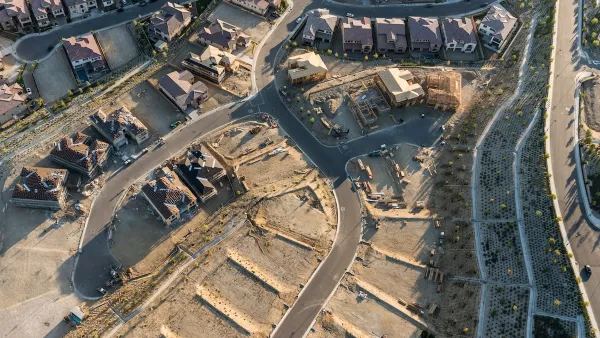
Report Outlines Strategies for Resilient Wildfire Recovery in LA
Project Recovery offers a roadmap for rebuilding more sustainable and climate-resilient communities after wildfires and other disasters.
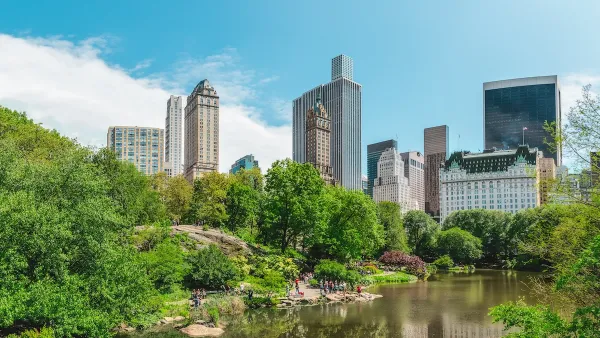
Public Parks as Climate Resilience Tools
Designed with green infrastructure, parks can mitigate flooding, reduce urban heat, and enhance climate resilience, offering cost-effective solutions to environmental challenges while benefiting communities.

Rebuilding After Disaster: The Role of Social Connections in Resilience
Dr. Lucy Jones emphasizes that resilience in the face of climate-driven disasters like wildfires relies on building strong social connections, which empower communities to recover and adapt to an increasingly challenging future.

The state-sanctioned urbicide of Austin
People don’t kill cities. Freeways do.

US to reduce Colorado River water deliveries to Mexico
A new Colorado Treaty amendment reduces Mexico’s Colorado River water allocation by 250,000 acre feet.

New Jersey’s second-largest city bans standalone data centers
Jersey City will continue to allow co-location facilities, such as those meant for research institutions that store their own data.

Amtrak not solely to blame for New Jersey commuter rail's unreliability, report finds
A new study from the Garden State Initiative found that NJ Transit’s budget grew 20% across a 4 year period, but reliability declined significantly over the same period.

EPA erases limits on planet-warming pollution from power plants
Under Monday’s plan, power plants would still have some limits on how much mercury, arsenic and other contaminants they can emit.

Phoenix announces new on-demand transit service, more frequent RAPID buses
Both new services will launch in October, and are part of Phoenix's Project Effective Access Solutions for Easing Congestion.

FREE Course: Walkable City 1: Why Walkability?
After describing his path towards focusing on walkability as the essence of good planning, Jeff Speck marches through his five principal reasons for making more walkable places.
Reinventing Malls: Planning Alchemy—Turning Gray Fields Into Gold
The course focuses on the opportunities and imperatives that shape reinvention of mall sites.

Eagle County Government
Harvard University Graduate School of Design
Nashville Planning Department
The Architects Foundation
University of Cincinnati Online
The Pocatello Development Authority
The Urban Renewal Agency of the City of Pocatello
Journal of the American Planning Association

