A bill passed in a special legislative session will raise over $4 billion for transportation and public transit in the next 10 years, but fails to establish a long-term funding solution.


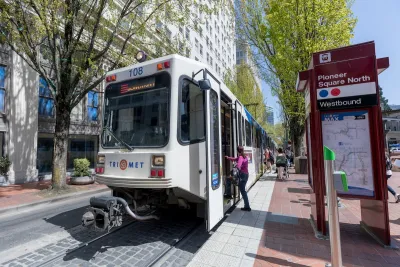
The Oregon Senate passed the state’s first major transportation bill since 2017, preventing significant cuts at the Oregon Department of Transportation (ODOT), reports Mia Maldonado in the Oregon Capitol Chronicle.
According to Maldonado, “House Bill 3991 will raise about $4.3 billion over the next 10 years to fund road maintenance and operations by raising the gas tax by six cents, nearly doubling most vehicle registration fees and doubling the payroll tax used to support public transit from 0.1% to 0.2% of a paycheck — among other fee hikes for electric vehicles.” The current bill, developed in a special legislative session, avoids cuts that would have included the layoffs of 500 ODOT workers and cuts in essential services.
While Republican lawmakers say their constituents can’t afford the tax hikes, some Democrats argue that the bill doesn’t do enough to address greenhouse gas emissions or ensure sustainable long-term funding for the Department of Transportation. “The Street Trust, an Oregon-based transportation advocacy nonprofit, said the bill creates future instability because it ends transit funding in 2028 and keeps road safety investments at 2017 levels.”
FULL STORY: Oregon Senate passes $4.3 billion transportation package

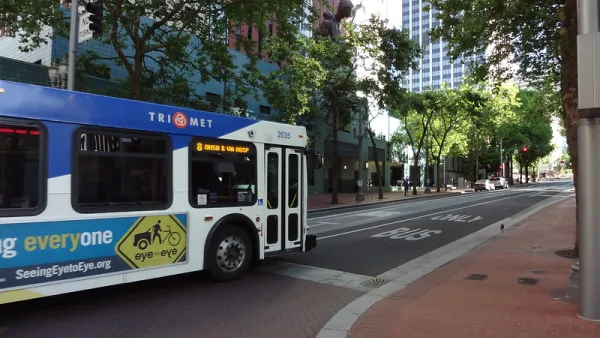
Oregon Governor Proposes Higher Gas Tax, Vehicle Fees to Fund ODOT
Gov. Kotel called a special legislative session in late August to address the budget gap at the state transportation department.

Trump Administration Proposes to Divert Billions from Mass Transit to Highways; Advocates Sound Alarm
Two proposals from the Trump DOT would eliminate a federal mass transit fund and make it harder for states to allocate funding to transit projects.
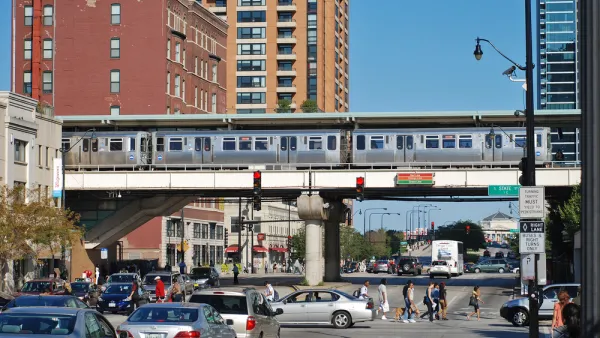
Time Running Out for Illinois Transit Bill
Chicago-area transit agencies face a daunting budget gap if lawmakers fail to agree on a funding bill by the end of the current legislative session.

The state-sanctioned urbicide of Austin
People don’t kill cities. Freeways do.

US to reduce Colorado River water deliveries to Mexico
A new Colorado Treaty amendment reduces Mexico’s Colorado River water allocation by 250,000 acre feet.

New Jersey’s second-largest city bans standalone data centers
Jersey City will continue to allow co-location facilities, such as those meant for research institutions that store their own data.

Amtrak not solely to blame for New Jersey commuter rail's unreliability, report finds
A new study from the Garden State Initiative found that NJ Transit’s budget grew 20% across a 4 year period, but reliability declined significantly over the same period.

EPA erases limits on planet-warming pollution from power plants
Under Monday’s plan, power plants would still have some limits on how much mercury, arsenic and other contaminants they can emit.

Phoenix announces new on-demand transit service, more frequent RAPID buses
Both new services will launch in October, and are part of Phoenix's Project Effective Access Solutions for Easing Congestion.

FREE Course: Walkable City 1: Why Walkability?
After describing his path towards focusing on walkability as the essence of good planning, Jeff Speck marches through his five principal reasons for making more walkable places.
Reinventing Malls: Planning Alchemy—Turning Gray Fields Into Gold
The course focuses on the opportunities and imperatives that shape reinvention of mall sites.

Eagle County Government
Harvard University Graduate School of Design
Nashville Planning Department
The Architects Foundation
University of Cincinnati Online
The Pocatello Development Authority
The Urban Renewal Agency of the City of Pocatello
Journal of the American Planning Association