A richly illustrated trip through the history of articulated buses in America.


In a photo-rich article in The Autopian, Mercedes Streeter outlines the history of the articulated bus, a now-common sight in public transit fleets that lets vehicles carry a larger number of passengers while navigating city streets.
According to Streeter, articulated buses go back as far as the 1920s. “America’s first articulated bus, the 1938 Twin Coach Super-Twin was a marvel. This bus, which, weirdly, only articulated in one direction, allowed the city of Baltimore to carry 56 people and was, allegedly, the largest passenger vehicle on the road.”
Some of the earliest incarnations used trailers that separated the vehicles in half. Later, the modern articulated bus design allowed the bus to stay in one piece. The Twin Coach was “likely the first purpose-built city bus of any kind in America,” and the Super-Twin, which ran on a combination diesel-electric engine, was touted as “the largest public transit vehicle that wasn’t a train.” Although it didn’t catch on (perhaps a victim of the times, as the first Super-Twins were built just before World War II) the Super-Twin remains a fascinating blip in transit history, and the precursor to modern articulated buses — ones that bend both ways.
Read the full story: America’s First Articulated Bus Was A Diesel-Electric Weirdo That Was The Largest Transit Vehicle On The Road

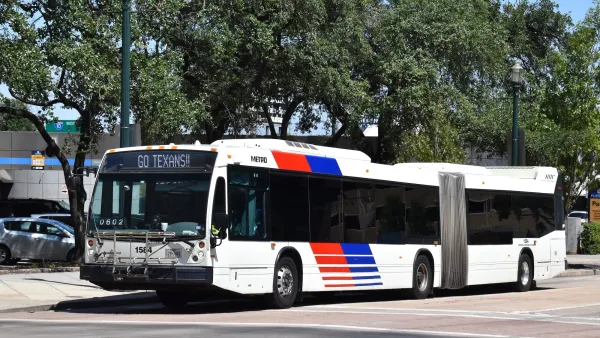
A Love Letter to the Articulated Bus
An ode to the bendy boys, by far the wackiest of the specialized vehicles you might find at a transit authority.
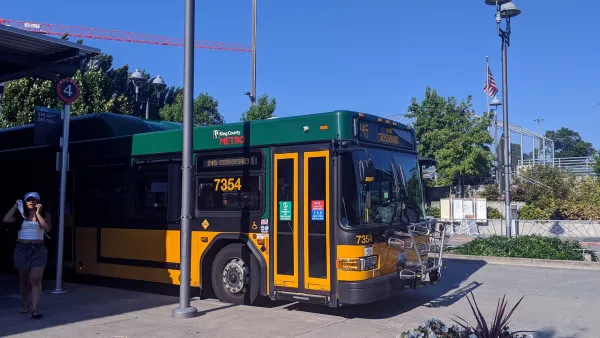
King County Metro adds 3,000 weekly bus trips, more connections to rail
King County Metro and Sound Transit are both making major adjustments to their bus networks to improve light rail connectivity across the region.
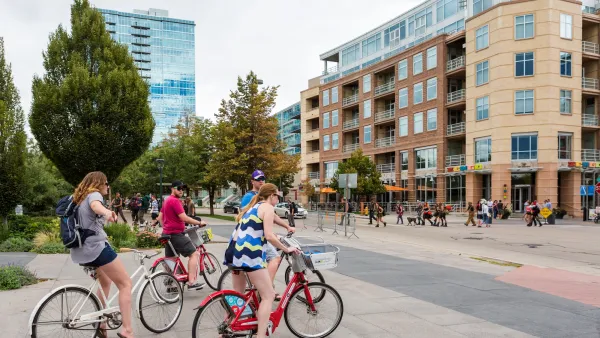
Denver mayor announces 'Mile High Line' vision for interconnected bike and transit routes
The mayor emphasized building more housing near transit lines and bike paths, but failed to address planned transit service cuts.

Planetizen Federal Action Tracker
A weekly monitor of how Trump’s orders and actions are impacting planners and planning in America.

The state-sanctioned urbicide of Austin
People don’t kill cities. Freeways do.

Colorado’s Largest Data Center Could Rise Next to Homes — Without a Public Hearing
The proposed campus would consume 11 times the power of Denver International Airport; as it has across the country, opposition mounts.

Nation's most wind-powered state turns to coal as data centers increase energy demand
For the first time in decades, Iowa has increased its generation of coal power.

NYC cools commuters with city's first rain garden above a bus stop
New York City officials say the plants in the rain garden can absorb 16 gallons of rainwater during heavy storms.

Brightline West’s future may rely on $6 billion federal loan
The company has until Nov. 2 to make a $400 million equity investment into its proposed high-speed rail line.

FREE Course: Walkable City 1: Why Walkability?
After describing his path towards focusing on walkability as the essence of good planning, Jeff Speck marches through his five principal reasons for making more walkable places.
Reinventing Malls: Planning Alchemy—Turning Gray Fields Into Gold
The course focuses on the opportunities and imperatives that shape reinvention of mall sites.

Greater Baltimore Committee
Eagle County Government
Harvard University Graduate School of Design
The Architects Foundation
University of Cincinnati Online
The Pocatello Development Authority
The Urban Renewal Agency of the City of Pocatello
Journal of the American Planning Association