The city’s post-hurricane redevelopment has failed to include its most vulnerable residents.


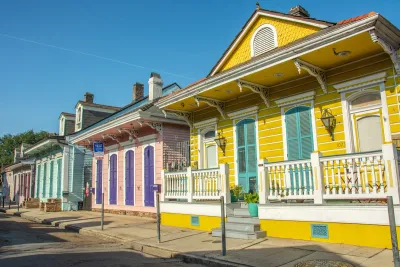
After Hurricane Katrina destroyed roughly 134,000 homes in New Orleans, officials including President George W. Bush promised to build the city back “higher and better,” writes Ryan Kushner in Smart Cities Dive. Yet housing affordability is worse than before 2005, and many displaced residents never returned.
“Today, the median sales price for all home types in New Orleans is $335,000, according to Redfin. That price is up nearly 10% compared with last year, putting New Orleans among the 10 cities with the fastest-growing home sales prices in the U.S.” Meanwhile, the percentage of rent-burdened residents grew from 24 percent before Katrina to 34 percent in 2024, and there were 10 percent fewer housing units in the city in 2020 than there were in 2000.
Despite the issues, the city is making some progress. “Last year, voters approved a Housing Trust Fund that allocates at least 2% of the city’s annual budget for affordable housing projects. The fund is expected to bring in around $17 million a year for local affordable housing.” But with federal housing assistance like housing vouchers in jeopardy, New Orleans residents could face even more challenges in finding affordable housing.
FULL STORY: Housing affordability was a problem in New Orleans before Katrina. That hasn’t changed.


High Housing Costs Driving Down Transit Ridership in LA
When neighborhoods gentrify and displace lower-income residents, transit ridership suffers, new research shows.
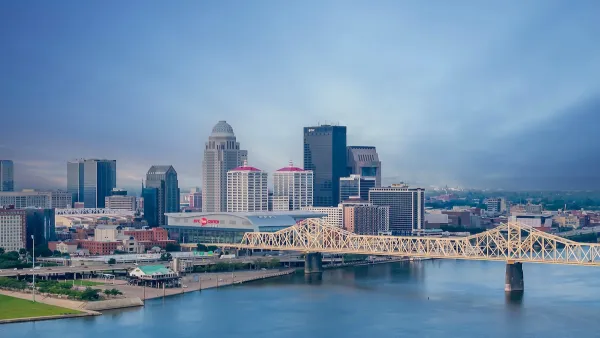
Louisville Launches ‘Anti-Displacement Tool’
After a years-long, tenant-led effort, Louisville will use a new tool to analyze whether a proposed housing development can meet a neighborhood’s housing needs and income levels. If it doesn’t, the city won’t subsidize it.
A Dirty Little Secret: Rising Property Values Are Incompatible With Affordability
Rising property values come with positive community development, but this shift can make neighborhoods inaccessible to low-income renters and fixed-income homeowners.

The state-sanctioned urbicide of Austin
People don’t kill cities. Freeways do.

US to reduce Colorado River water deliveries to Mexico
A new Colorado Treaty amendment reduces Mexico’s Colorado River water allocation by 250,000 acre feet.

New Jersey’s second-largest city bans standalone data centers
Jersey City will continue to allow co-location facilities, such as those meant for research institutions that store their own data.

Amtrak not solely to blame for New Jersey commuter rail's unreliability, report finds
A new study from the Garden State Initiative found that NJ Transit’s budget grew 20% across a 4 year period, but reliability declined significantly over the same period.

EPA erases limits on planet-warming pollution from power plants
Under Monday’s plan, power plants would still have some limits on how much mercury, arsenic and other contaminants they can emit.

Phoenix announces new on-demand transit service, more frequent RAPID buses
Both new services will launch in October, and are part of Phoenix's Project Effective Access Solutions for Easing Congestion.

FREE Course: Walkable City 1: Why Walkability?
After describing his path towards focusing on walkability as the essence of good planning, Jeff Speck marches through his five principal reasons for making more walkable places.
Reinventing Malls: Planning Alchemy—Turning Gray Fields Into Gold
The course focuses on the opportunities and imperatives that shape reinvention of mall sites.

Eagle County Government
Harvard University Graduate School of Design
Nashville Planning Department
The Architects Foundation
University of Cincinnati Online
The Pocatello Development Authority
The Urban Renewal Agency of the City of Pocatello
Journal of the American Planning Association