Boston’s transit agency is taking a firmer stance against fare evasion, cautioning riders it will begin issuing citations beginning September 8.


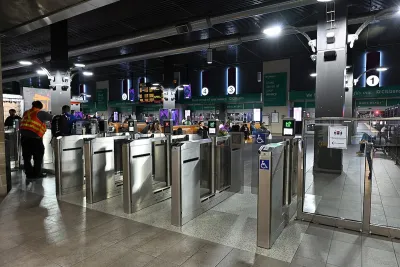
The Massachusetts Bay Transportation Authority (MBTA) announced plans to crack down on fare evasion on its transit system “with agency staff prepared to issue formal warnings and citations to riders who skip the fare gates or fareboxes.”
According to an article by Will Katcher in Mass Live, the agency has “been conducting fare education outreach” and stationed fare engagement representatives at some T stations, where fare collection jumped by 35 percent after several weeks. “The T also said it was deploying the fare staff ‘based on ridership patterns, not geography, to avoid a disproportionate presence in any one community.’”
Riders who skip fare payment will be given a warning on their first offense, $50 civil citations for three subsequent offenses, and a $100 fine on their fourth violation. The agency says the move is necessary in light of its budget problems.
FULL STORY: Free ride is over: MBTA announces plan to fine riders for fare evasion

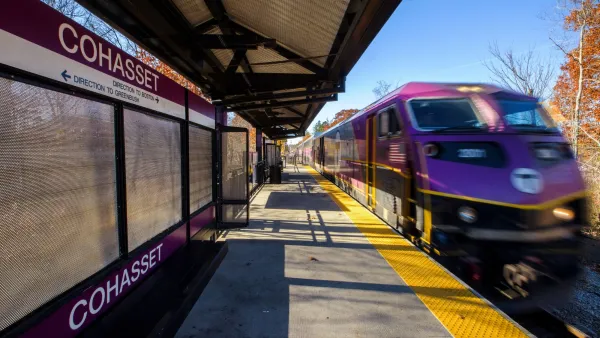
MBTA extends commuter rail discounts and lowers express bus fare to keep passengers riding into the fall
Boston-area commuters can access half-price monthly passes through November.
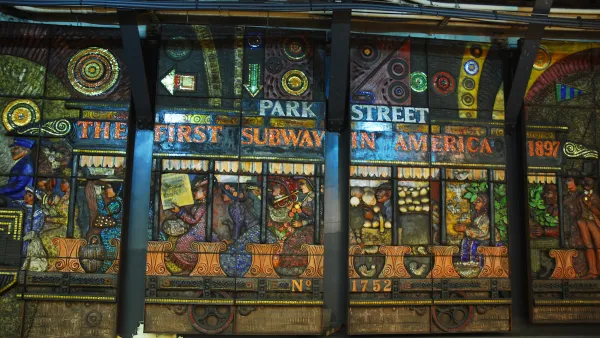
Boston Transit Board Approves Low-Income Fare, but Funding is Unclear
The board voted to include the T’s on-demand paratransit service in the discount program, prompting concerns about cost.
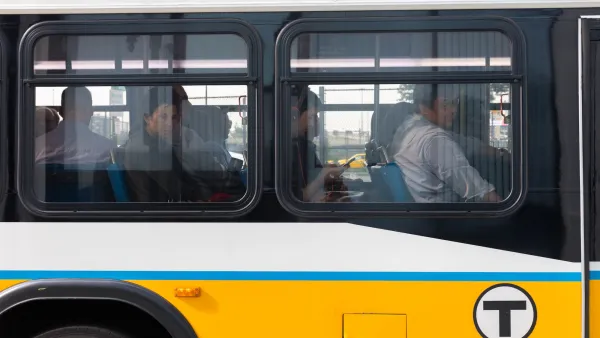
Boston extends successful fare-free bus pilot
The program began in 2021 and expanded later to include lines 28, 23 and 29.

Planetizen Federal Action Tracker
A weekly monitor of how Trump’s orders and actions are impacting planners and planning in America.

The state-sanctioned urbicide of Austin
People don’t kill cities. Freeways do.

US to reduce Colorado River water deliveries to Mexico
A new Colorado Treaty amendment reduces Mexico’s Colorado River water allocation by 250,000 acre feet.

5 New England states march closer to 800 megawatt wind energy project
Securing federal approval for the project may be complicated under the Trump administration, which has historically been hostile towards domestic wind power.

Baltimore to break ground on $50 million Transit Priority Project
The project will bring faster bus trips, safer streets and better bike connections to Baltimore.

Airbnb launches $250 million 'last-dollar financing' housing accelerator, makes first investment in Austin
The company will put $6.4 million towards affordable housing development in Texas’ capital.

FREE Course: Walkable City 1: Why Walkability?
After describing his path towards focusing on walkability as the essence of good planning, Jeff Speck marches through his five principal reasons for making more walkable places.
Reinventing Malls: Planning Alchemy—Turning Gray Fields Into Gold
The course focuses on the opportunities and imperatives that shape reinvention of mall sites.


Eagle County Government
Harvard University Graduate School of Design
Nashville Planning Department
The Architects Foundation
University of Cincinnati Online
The Pocatello Development Authority
The Urban Renewal Agency of the City of Pocatello
Journal of the American Planning Association