More cities are turning to automated enforcement to keep bus lanes clear of cars and improve service.


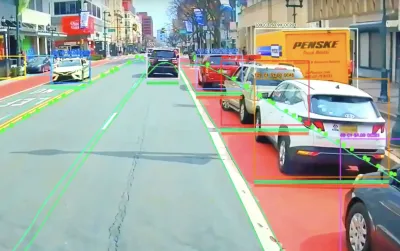
Cities are using AI-assisted, bus-mounted cameras to keep bus lanes clear. As Andy Boenau explains in Fast Company, “Recent studies show that lane obstructions increase bus delays 20% to 30% during peak hours.” The cameras identify vehicles blocking bus lanes and automate issuing citations.
Besides the obvious benefit of keeping bus lanes clear, the technology generates data to optimize bus routes, traffic signal timing, and overall network efficiency, strengthening the backbone of a multimodal transportation system that integrates buses, bikes, pedestrians, and private vehicles.
U.S. cities using the tech include Philadelphia, Los Angeles, Chicago, and New York City. In Los Angeles, the cameras boosted bus speeds by as much as 36 percent. Other cities report bus speed improvements of 10 to 30 percent. Cities are also using the data to make scheduling adjustments to improve travel times and reliability.
Boenau concludes, “Remember, a well-run bus system is an express sidewalk—a piece of infrastructure that dramatically expands the number of destinations within walking distance.”
FULL STORY: AI bus cameras will drive a transit revolution

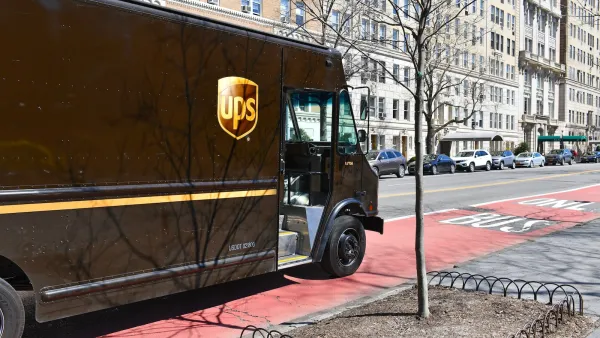
UPS trucks blocked NYC bus lanes 25,000 times last year
The city recorded 843,000 bus lane violations in 2025.
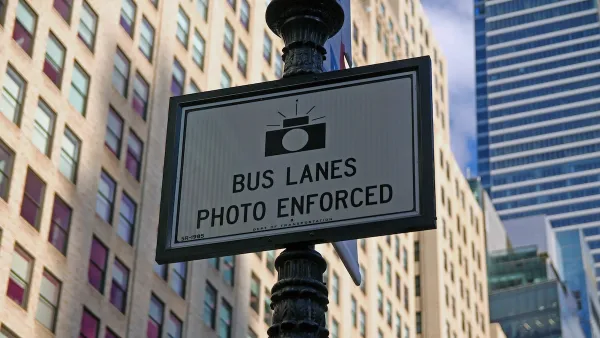
NYC Camera Program Captures 400,000 Bus Lane Violations
Bus speeds increased by as much as 25 percent on some routes after enforcement began last August.
Atlanta Transit Officials Call for Traffic Cameras to Enforce Bus-Only Lanes
MARTA says bus-mounted cameras would be a more effective way to keep bus lanes clear and make upcoming bus rapid transit lines run smoothly and reliably.

The state-sanctioned urbicide of Austin
People don’t kill cities. Freeways do.

US to reduce Colorado River water deliveries to Mexico
A new Colorado Treaty amendment reduces Mexico’s Colorado River water allocation by 250,000 acre feet.

New Jersey’s second-largest city bans standalone data centers
Jersey City will continue to allow co-location facilities, such as those meant for research institutions that store their own data.

Amtrak not solely to blame for New Jersey commuter rail's unreliability, report finds
A new study from the Garden State Initiative found that NJ Transit’s budget grew 20% across a 4 year period, but reliability declined significantly over the same period.

EPA erases limits on planet-warming pollution from power plants
Under Monday’s plan, power plants would still have some limits on how much mercury, arsenic and other contaminants they can emit.

Phoenix announces new on-demand transit service, more frequent RAPID buses
Both new services will launch in October, and are part of Phoenix's Project Effective Access Solutions for Easing Congestion.

FREE Course: Walkable City 1: Why Walkability?
After describing his path towards focusing on walkability as the essence of good planning, Jeff Speck marches through his five principal reasons for making more walkable places.
Reinventing Malls: Planning Alchemy—Turning Gray Fields Into Gold
The course focuses on the opportunities and imperatives that shape reinvention of mall sites.

Eagle County Government
Harvard University Graduate School of Design
Nashville Planning Department
The Architects Foundation
University of Cincinnati Online
The Pocatello Development Authority
The Urban Renewal Agency of the City of Pocatello
Journal of the American Planning Association