Fueled by new funding and community partnerships, these projects are replacing heat-trapping asphalt with trees and vegetation to create cooler, healthier school environments.


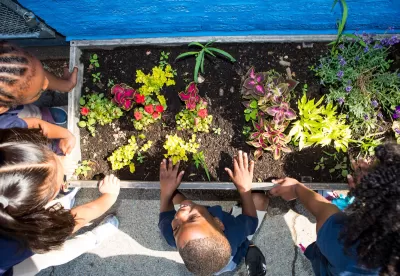
Schoolyard greening projects in Southern California have reached a major milestone, fueled by $150 million in state grants approved in 2022. About a dozen organizations are transforming asphalt-covered campuses into green spaces, providing shade, vegetation, and safer play areas for students. Advocates say the work is urgently needed as many children attend schools in areas with little tree canopy and extreme heat, with asphalt temperatures reaching 142 degrees in some San Fernando Valley campuses.
As reported by Adolfo Guzman-Lopez, groups like the Trust for Public Land, North East Trees, and TreePeople are leading the charge. North East Trees recently completed a major project at Buchanan Elementary in Highland Park, removing 400 tons of asphalt and planting 150 trees, including fruit varieties like peach and avocado. These efforts not only cool down campuses but also help absorb and collect stormwater.
Momentum for schoolyard greening is growing, with organizations tapping into philanthropic contributions and local funding sources like the Los Angeles Unified School District (LAUSD)’s Measure US and state Proposition 2 bonds. TreePeople alone has 28 active projects in Los Angeles County, building on the vision of late CEO Cindy Montañez. While thousands of schools still need greening, advocates say projects are becoming easier to fund and implement, reflecting a broader commitment to creating safe, shaded, and nature-rich environments that students both need and deserve.
Read the full story: Schoolyard greening projects hit milestone as advocates see the 'most impact ever'


Planetizen Federal Action Tracker
A weekly monitor of how Trump’s orders and actions are impacting planners and planning in America.

California plans to bury El Niño’s downpour
If the state plays its cards right, it may be able to store a billion acre-feet of El Niño’s water in aquifers.

Chicago breaks ground on $3 billion megadevelopment
The new neighborhood, titled Foundry Park, will one day host 3,700 residences.

Satanic place names
From streams and lakes to valleys and canyons, I mapped more than 1,000 places named after the Devil.

California High-Speed Rail Authority CEO resigns after $600,000 scandal
Under Ian Choudri, the authority used taxpayer dollars to fund first class flights and trips to nightclubs.

Want to study the Missouri River? Soon, you may need unanimous approval from 10 states
Legislation would require 10 governors’ permission to study or build projects moving water outside the basin.

FREE Course: Walkable City 1: Why Walkability?
After describing his path towards focusing on walkability as the essence of good planning, Jeff Speck marches through his five principal reasons for making more walkable places.
Reinventing Malls: Planning Alchemy—Turning Gray Fields Into Gold
The course focuses on the opportunities and imperatives that shape reinvention of mall sites.

City of Rosemead
Rutgers University, Edward J. Bloustein School of Planning and Public Policy
One Hundred Miles
Hunter College, City University of New York (CUNY)
The Architects Foundation
University of Cincinnati Online
City of Cambridge
Montrose County
The Pocatello Development Authority