Central Park rests on the remains of a displaced village built by free Black Americans in the 1820s.


A group of researchers has developed a visual representation of Seneca Village, a historic community established in 1825 by free Black New Yorkers on the site of what is now Central Park. The researchers, Gergely Baics, Meredith Linn, Leah Meisterlin, and Myles Zhang, outline their project in Urban Omnibus.
The community, a flourishing home to over 50 families, was forcefully displaced in 1857 through eminent domain to make way for the new park. “What is now known as Seneca Village (though we do not know if residents themselves used this name) was demolished. Buildings were razed, and the landscape was reshaped. Lives were uprooted as residents sought new footings across the city, the state, and farther afield. The village’s tangible remains were buried, and the community was largely forgotten for more than 150 years.”
Because no known images of the community survived, many modern reimaginings included misconceptions about the village. Now, Envisioning Seneca Village brings together a vast repository of knowledge about the village to create “an interactive, 3D model that layers, depicts, and narrates much of what we currently know about Seneca Village’s built and social environment.”
The model layers details from “diverse and fragmented sources, along with informed speculation” to make the model come to life with the stories of the people who once lived in Seneca Village.
FULL STORY: Seneca Village, Envisioned


Over 500 NYC ‘Blue Zones’ at Risk of More Destructive Floods
High-risk flood zones cover roughly 20% of the city’s land.
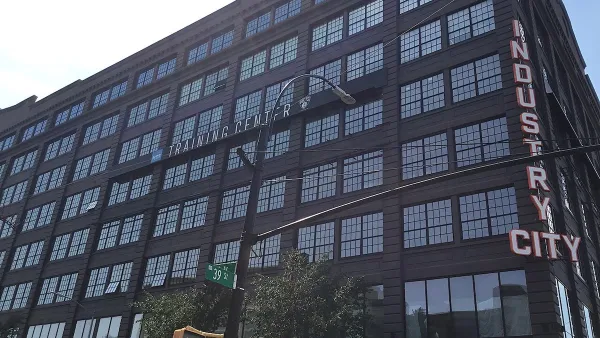
‘Emergent City’ Documentary Highlights Rare Anti-Gentrification Victory
The film charts the saga of a Brooklyn site called Industry City.
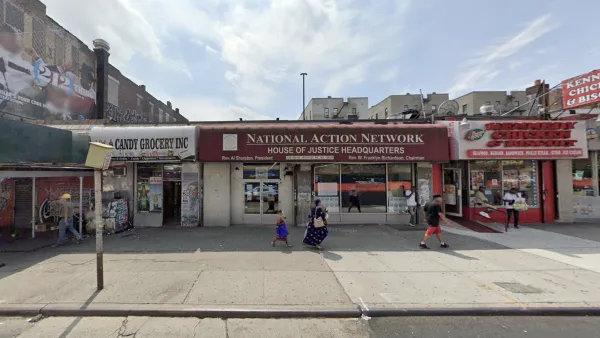
Market Rate Condos Could Replace Harlem Towers Proposal
After facing community opposition and a call for more deeply affordable housing units, developers withdrew their proposal for Harlem’s One45, prompting questions about the future of the site.

Planetizen Federal Action Tracker
A weekly monitor of how Trump’s orders and actions are impacting planners and planning in America.

The state-sanctioned urbicide of Austin
People don’t kill cities. Freeways do.

US to reduce Colorado River water deliveries to Mexico
A new Colorado Treaty amendment reduces Mexico’s Colorado River water allocation by 250,000 acre feet.

5 New England states march closer to 800 megawatt wind energy project
Securing federal approval for the project may be complicated under the Trump administration, which has historically been hostile towards domestic wind power.

Baltimore to break ground on $50 million Transit Priority Project
The project will bring faster bus trips, safer streets and better bike connections to Baltimore.

Airbnb launches $250 million 'last-dollar financing' housing accelerator, makes first investment in Austin
The company will put $6.4 million towards affordable housing development in Texas’ capital.

FREE Course: Walkable City 1: Why Walkability?
After describing his path towards focusing on walkability as the essence of good planning, Jeff Speck marches through his five principal reasons for making more walkable places.
Reinventing Malls: Planning Alchemy—Turning Gray Fields Into Gold
The course focuses on the opportunities and imperatives that shape reinvention of mall sites.

Eagle County Government
Harvard University Graduate School of Design
Nashville Planning Department
The Architects Foundation
University of Cincinnati Online
The Pocatello Development Authority
The Urban Renewal Agency of the City of Pocatello
Journal of the American Planning Association