The Danish capital is implementing a massive, multi-pronged strategy to build resilience against flooding and shore up water supplies during drought periods.


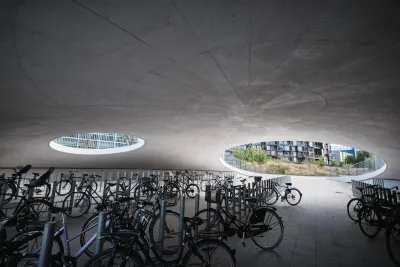
Over the last decade and a half, Copenhagen has adapted its infrastructure to a wetter future, overhauling critical components of its urban design and infrastructure to transform itself into a “sponge city,” writes Paul Hockenos in a piece in Yale Environment 360.
The city’s plan, known as the Cloudburst project, is partly a response to severe flooding in 2011 that caused $1.8 billion in damages. “This state-of-the-art defense system — which combines nature-based surface features, like wetlands and parks, with large underground structures, like storage pipes and retention basins — is expected to fortify the city against cloudbursts and sea level rise for 100 years.”
As Hockenos explains, “Although the Cloudburst project, which was originally slated to be completed in 2032, is less than halfway to its goal, experts say that Copenhagen is already in significantly better shape to withstand torrential rains.” The city has reduced its flood risk by 30 to 50 percent in the highest-risk areas.
The city’s strategy combines green infrastructure that filters and absorbs stormwater with gray infrastructure such as underground tunnels, basins, and pumping stations to manage excess stormwater. “Although Copenhagen’s architects say that urban flooding is the city’s foremost concern, the sponge city model offers advantages in times of aridity, too. The city’s green spaces, which detain water, help to replenish the city’s aquifers, and its tunnels, which hold rainwater from moderate-size storms, function as reservoirs that can be tapped during dry spells.”
FULL STORY: ‘Sponge City’: How Copenhagen Is Adapting to a Wetter Future

Grassroots Dutch Movement Replaces Pavement With Green Space
Neighbors engage in a practice known as “tegelwippen,” picking up paving stones and replacing them with permeable surfaces, often with the support of local governments.
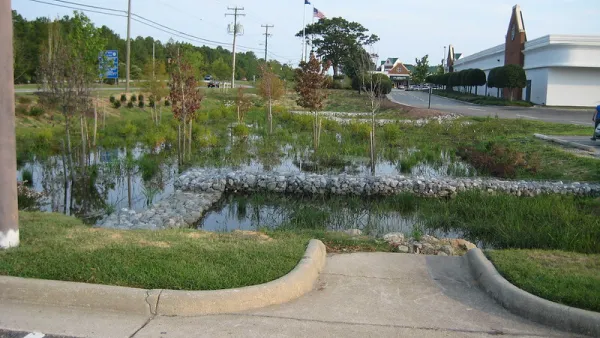
Opinion: Cities Need Green Infrastructure to Weather Future Storms
How ‘sponge cities’ can protect residents and conserve water.
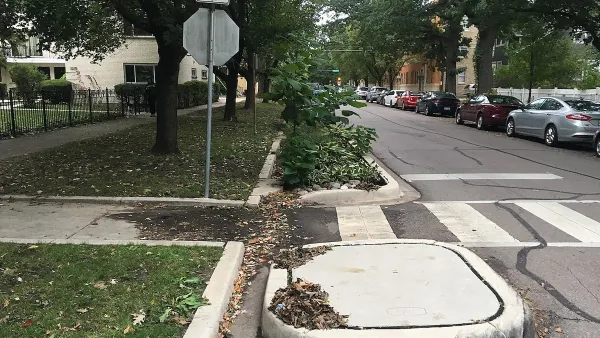
How Capturing Rainwater Can Make Cities Safer, More Resilient
Green infrastructure can help prevent flooding and replenish groundwater supplies, preventing subsidence that makes land sink.

Planetizen Federal Action Tracker
A weekly monitor of how Trump’s orders and actions are impacting planners and planning in America.

The state-sanctioned urbicide of Austin
People don’t kill cities. Freeways do.

US to reduce Colorado River water deliveries to Mexico
A new Colorado Treaty amendment reduces Mexico’s Colorado River water allocation by 250,000 acre feet.

Mamdani overhauls NYC's Vision Zero plan with 100 new policy goals
The overhaul aims to reduce traffic deaths and make streets safer for pedestrians, cyclists and drivers through lower speed limits, new safety infrastructure and more.

Amtrak not solely to blame for New Jersey commuter rail's unreliability, report finds
A new study from the Garden State Initiative found that NJ Transit’s budget grew 20% across a 4 year period, but reliability declined significantly over the same period.

EPA erases limits on planet-warming pollution from power plants
Under Monday’s plan, power plants would still have some limits on how much mercury, arsenic and other contaminants they can emit.

FREE Course: Walkable City 1: Why Walkability?
After describing his path towards focusing on walkability as the essence of good planning, Jeff Speck marches through his five principal reasons for making more walkable places.
Reinventing Malls: Planning Alchemy—Turning Gray Fields Into Gold
The course focuses on the opportunities and imperatives that shape reinvention of mall sites.

Eagle County Government
Harvard University Graduate School of Design
Nashville Planning Department
The Architects Foundation
University of Cincinnati Online
The Pocatello Development Authority
The Urban Renewal Agency of the City of Pocatello
Journal of the American Planning Association