Developers can apply for a land use variance for housing projects within half a mile to one mile of rail stations, but the complex process means few are likely to take advantage of the program.


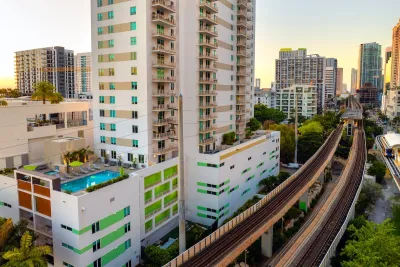
Miami just approved a new zoning program that encourages transit-oriented development.
According to an article by Andres Viglucci, Tess Riski and Carl David Goette-Luciap in the Miami Herald, the Transit Station Neighborhood Development program allows for denser development within a mile radius of Metrorail and other train stations within the city. “Within those zones, developers can apply to build high-rise residential and commercial projects with considerably more units and height than the old local rules allowed, a strategy intended to sharply increase housing supply and affordability while boosting transit use.”
According to the article, the change may not yield very quick results and could be limited to developers with more resources. “The approval process sets out a complicated procedure that first requires a land-use change under the city’s comprehensive plan, which guides where, how much and what kind of development is allowed.” A developer must then submit a general or enhanced Transit Station Neighborhood Development plan that specifies what type of projects can be built. “The extensive requirements mean that only a relatively short list of ambitious and well-financed developers with the capacity to plan and build an entire urban neighborhood are likely to apply for the most intensive ‘enhanced’ category.”
FULL STORY: Miami adds incentives for high-rises up to 1 mile from rail stations. What to know

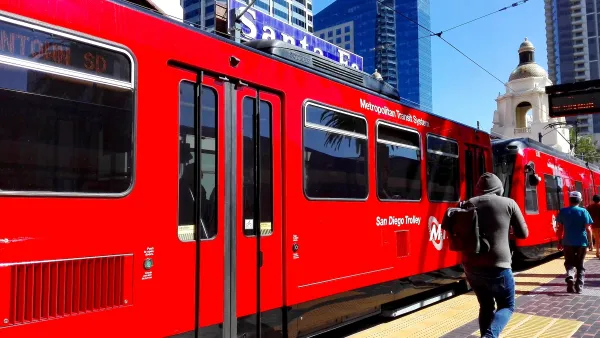
San Diego wants to limit upzoning law to just 16% of transit-adjacent parcels
The city's planning director says some areas are unfit for immediate upzoning due to a lack of resources or hazards such as wildfire risk.
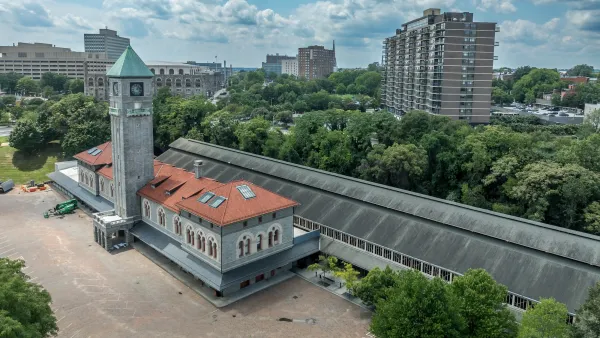
Maryland unveils plan for 5,000 homes near transit
Gov. Moore announced a plan to activate housing construction on 134 acres of state-owned land near transit stations.
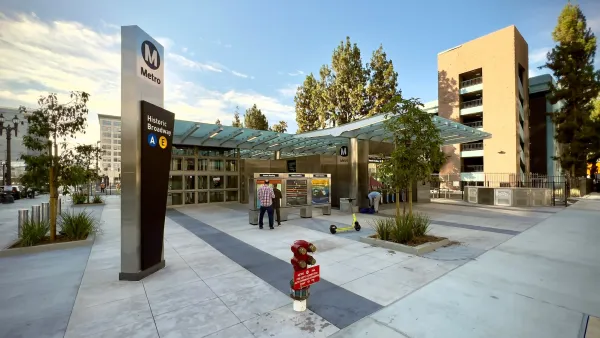
LA Delays State TOD Law to 2030 With its Own, Lower-density Plan
SB 79 allows cities to delay its implementation if they come up with alternate plans to boost density while retaining local control near transit.

Planetizen Federal Action Tracker
A weekly monitor of how Trump’s orders and actions are impacting planners and planning in America.

The state-sanctioned urbicide of Austin
People don’t kill cities. Freeways do.

US to reduce Colorado River water deliveries to Mexico
A new Colorado Treaty amendment reduces Mexico’s Colorado River water allocation by 250,000 acre feet.

5 New England states march closer to 800 megawatt wind energy project
Securing federal approval for the project may be complicated under the Trump administration, which has historically been hostile towards domestic wind power.

Baltimore to break ground on $50 million Transit Priority Project
The project will bring faster bus trips, safer streets and better bike connections to Baltimore.

Airbnb launches $250 million 'last-dollar financing' housing accelerator, makes first investment in Austin
The company will put $6.4 million towards affordable housing development in Texas’ capital.

FREE Course: Walkable City 1: Why Walkability?
After describing his path towards focusing on walkability as the essence of good planning, Jeff Speck marches through his five principal reasons for making more walkable places.
Reinventing Malls: Planning Alchemy—Turning Gray Fields Into Gold
The course focuses on the opportunities and imperatives that shape reinvention of mall sites.

Eagle County Government
Harvard University Graduate School of Design
Nashville Planning Department
The Architects Foundation
University of Cincinnati Online
The Pocatello Development Authority
The Urban Renewal Agency of the City of Pocatello
Journal of the American Planning Association