Just 9 bus routes untouched as agency proposes to slash trips but CEO remains mum on potential layoffs.


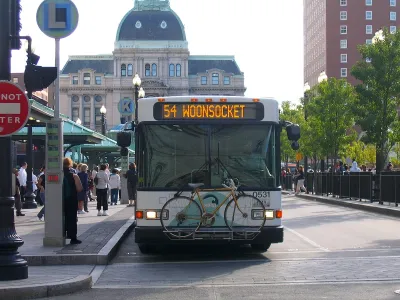
This article by Christopher Shea was originally published in Rhode Island Current. It has been shortened.
To cover a $10 million deficit, the Rhode Island Public Transit Authority (RIPTA) on Thursday laid out a wide-ranging plan for service cuts.
And just how deep are they? Well, it might be easier to say what’s not on the chopping block.
That’s because the agency is proposing to cut or reduce 58 of its 67 routes — around 86% — ranging from connections to the Block Island Ferry, weekend service to Roger Williams Park Zoo, and the trolleys connecting Newport’s North End to the city’s beaches.
Eleven routes would be totally eliminated. Thirty routes would see reductions in trip frequency or number of trips. A half dozen routes serving park and rides would be eliminated or have round trips reduced.
But just how many jobs are on the line remains unclear. [RIPTA CEO Christopher Durand] had previously told reporters that between 90 to 100 employees could be let go, but walked back his projections Thursday.
Proposed service changes arrive four days before a series of public hearings are scheduled to begin across the state. The first will be held Monday, July 28 at the Community College of Rhode Island’s Knight Campus in Warwick from noon to 1:30 p.m.
After those hearings, Durand said the board will consider approving the final plan when it holds a special meeting Aug. 7.
Should the panel move forward with the recommendations, the cuts would take effect Sept.13.
But Durand told the board a fare increase will remain off the table — at least for now.
“That is something we’re going to take a little more time to understand to make sure whatever we do is thoughtful and effective,” Durand said.
The agency plans to conduct a study to analyze impacts of a potential fare increase on “ridership, revenue, and equity,” according to its announcement of the proposed service cuts.
FULL STORY: Cash-strapped RIPTA unveils massive cuts to bus service across the state to board

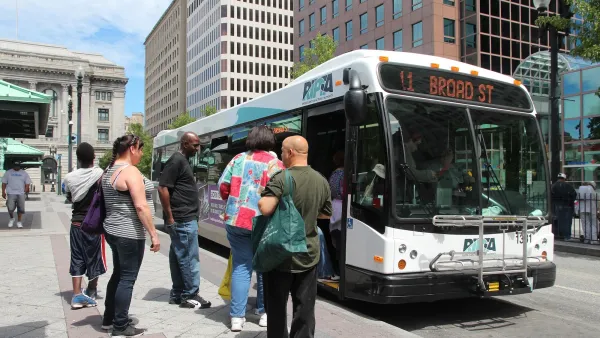
RIPTA Ridership Dropped 12% After Cuts Forced Riders to Quit Jobs, Lengthen Commutes
Rhode Island transit riders are being forced into hours-long commutes after RIPTA drastically reduced service last fall.
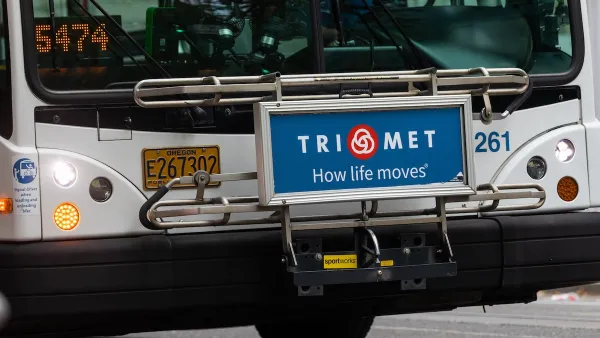
Portland Transit Agency Announces Planned Service Cuts
TriMet says the state legislature’s failure to pass a bill that would have funded transit means it will have to make significant service cuts over the next several years.

Milwaukee transit agency plans 25% service cuts
The MCTS system will have to make a difficult choice between service frequency and coverage.

Planetizen Federal Action Tracker
A weekly monitor of how Trump’s orders and actions are impacting planners and planning in America.

The state-sanctioned urbicide of Austin
People don’t kill cities. Freeways do.

US to reduce Colorado River water deliveries to Mexico
A new Colorado Treaty amendment reduces Mexico’s Colorado River water allocation by 250,000 acre feet.

Colorado’s Largest Data Center Could Rise Next to Homes — Without a Public Hearing
The proposed campus would consume 11 times the power of Denver International Airport; as it has across the country, opposition mounts.

5 New England states march closer to 800 megawatt wind energy project
Securing federal approval for the project may be complicated under the Trump administration, which has historically been hostile towards domestic wind power.

Baltimore to break ground on $50 million Transit Priority Project
The project will bring faster bus trips, safer streets and better bike connections to Baltimore.

FREE Course: Walkable City 1: Why Walkability?
After describing his path towards focusing on walkability as the essence of good planning, Jeff Speck marches through his five principal reasons for making more walkable places.
Reinventing Malls: Planning Alchemy—Turning Gray Fields Into Gold
The course focuses on the opportunities and imperatives that shape reinvention of mall sites.


Eagle County Government
Harvard University Graduate School of Design
Nashville Planning Department
The Architects Foundation
University of Cincinnati Online
The Pocatello Development Authority
The Urban Renewal Agency of the City of Pocatello
Journal of the American Planning Association