The agency plans to cut 10 percent of its workforce and has confirmed it will not fund new high-speed rail projects.


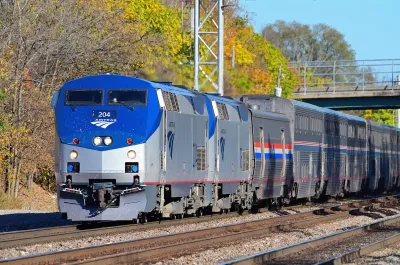
Amtrak has started to cut costs in response to pressure from the Trump administration to align with its priorities.
According to an article by Dan Zukowski in Smart Cities Dive, the agency carried 15 percent more customers last year than in 2023, and its new St. Paul-to-Chicago line exceeded ridership projections. Now, Amtrak is reorganizing its priorities; its CEO resigned in March, and Amtrak announced it will cut roughly 10 percent of jobs.
In April, USDOT rescinded federal support for the Texas Central high-speed rail project, and “An Amtrak spokesperson confirmed to Smart Cities Dive that the railroad is no longer pursuing new high-speed rail projects.”
Sean Jeans-Gail, vice president of policy and government affairs for Rail Passengers Association, said the flat funding, which is now directed to the national network rather than focused on the Northeast Corridor, is a pleasant surprise in light of feared deeper cuts. “Jeans-Gail said there is a consensus forming around some new policy ideas, such as a national equipment pool that would purchase and lease rail cars, train sets and locomotives to Amtrak, states and other passenger railroads, a practice that is commonplace in commercial aviation.”
FULL STORY: How will Amtrak change under the second Trump administration?

Trump budget slashes passenger rail funding by 82%
The White House's proposed FY2027 budget makes drastic cuts to public transit and eliminates high-speed rail funding altogether.
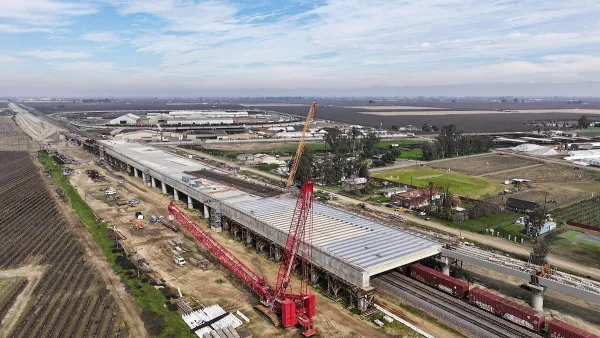
DOT Officially Cancels California High-Speed Rail Funding
The Trump administration has repeatedly taken aim at the LA-to-Bay Area rail project, blaming Democratic leaders for cost overruns and delays.
Proposed NYC-to-Boston HSR Would Cut Trip to Under Two Hours
The proposed project would use a mix of new and old rail lines and bypass some cities to speed up the trip.

The state-sanctioned urbicide of Austin
People don’t kill cities. Freeways do.

US to reduce Colorado River water deliveries to Mexico
A new Colorado Treaty amendment reduces Mexico’s Colorado River water allocation by 250,000 acre feet.

New Jersey’s second-largest city bans standalone data centers
Jersey City will continue to allow co-location facilities, such as those meant for research institutions that store their own data.

Amtrak not solely to blame for New Jersey commuter rail's unreliability, report finds
A new study from the Garden State Initiative found that NJ Transit’s budget grew 20% across a 4 year period, but reliability declined significantly over the same period.

EPA erases limits on planet-warming pollution from power plants
Under Monday’s plan, power plants would still have some limits on how much mercury, arsenic and other contaminants they can emit.

Phoenix announces new on-demand transit service, more frequent RAPID buses
Both new services will launch in October, and are part of Phoenix's Project Effective Access Solutions for Easing Congestion.

FREE Course: Walkable City 1: Why Walkability?
After describing his path towards focusing on walkability as the essence of good planning, Jeff Speck marches through his five principal reasons for making more walkable places.
Reinventing Malls: Planning Alchemy—Turning Gray Fields Into Gold
The course focuses on the opportunities and imperatives that shape reinvention of mall sites.

Eagle County Government
Harvard University Graduate School of Design
Nashville Planning Department
The Architects Foundation
University of Cincinnati Online
The Pocatello Development Authority
The Urban Renewal Agency of the City of Pocatello
Journal of the American Planning Association