Over 56% of inspected trucks had other violations.


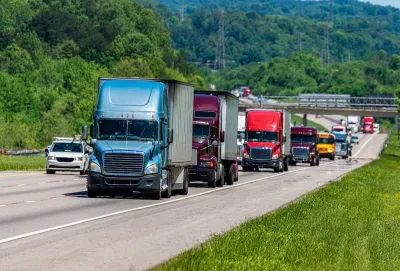
A new study from researcher Adam Wingfield sheds light on a concerning statistic in the U.S. trucking industry: roughly 4 percent of truckers operating on American highways don’t have a valid commercial driver’s license.
That number is based on random Federal Motor Carrier Safety Administration inspection data, which collects information from 4 out of every 100 trucks traveling on a highway at any given time. According to an article in Freight Waves, “This issue transcends regulatory oversight, posing a serious threat to all who share the road with these massive vehicles.” The article adds, “Given the weight and risk of these vehicles, ensuring operators are fully trained and licensed is critical for regulators and the industry.”
Other data analyzed by Wingfield shows that more than 56 percent of inspected trucks had some kind of safety violation. “In the first quarter of 2025, trucking recorded 645 fatal crashes.”
FULL STORY: An alarming reality: 4% of truckers on US highways lack valid license

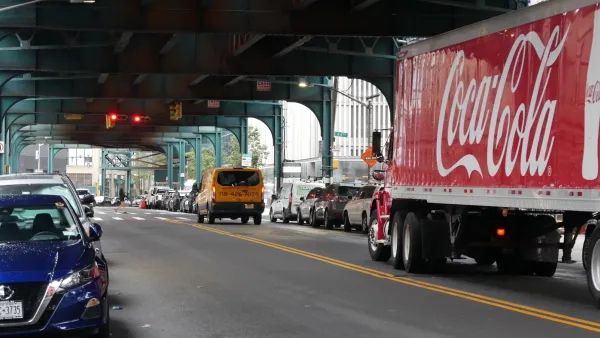
NYC plans to route trucks through more neighborhoods as safety efforts stall
90% of freight enters New York City by big rig.

Study: Large SUVs Double Risk of Death for Children Under 10
New research from the United Kingdom reveals the higher risk of larger vehicles for pedestrians and cyclists.
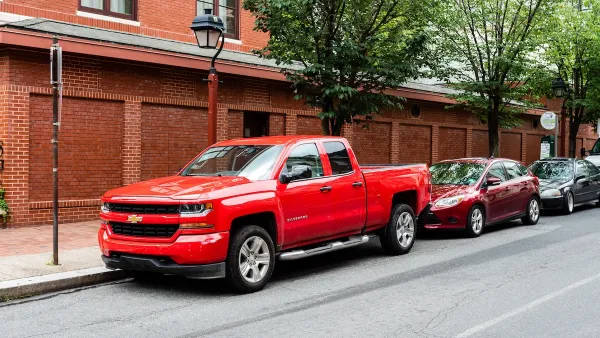
Heavier Vehicles Don’t Keep Passengers Safer
A new study shows that modern safety features are more important than size and weight once vehicles weigh over 4,000 pounds.

Planetizen Federal Action Tracker
A weekly monitor of how Trump’s orders and actions are impacting planners and planning in America.

The state-sanctioned urbicide of Austin
People don’t kill cities. Freeways do.

US to reduce Colorado River water deliveries to Mexico
A new Colorado Treaty amendment reduces Mexico’s Colorado River water allocation by 250,000 acre feet.

5 New England states march closer to 800 megawatt wind energy project
Securing federal approval for the project may be complicated under the Trump administration, which has historically been hostile towards domestic wind power.

Baltimore to break ground on $50 million Transit Priority Project
The project will bring faster bus trips, safer streets and better bike connections to Baltimore.

Airbnb launches $250 million 'last-dollar financing' housing accelerator, makes first investment in Austin
The company will put $6.4 million towards affordable housing development in Texas’ capital.

FREE Course: Walkable City 1: Why Walkability?
After describing his path towards focusing on walkability as the essence of good planning, Jeff Speck marches through his five principal reasons for making more walkable places.
Reinventing Malls: Planning Alchemy—Turning Gray Fields Into Gold
The course focuses on the opportunities and imperatives that shape reinvention of mall sites.

Eagle County Government
Harvard University Graduate School of Design
Nashville Planning Department
The Architects Foundation
University of Cincinnati Online
The Pocatello Development Authority
The Urban Renewal Agency of the City of Pocatello
Journal of the American Planning Association