The sweeping city council decision removes set parking requirements from developments downtown, near transit, small businesses and more.


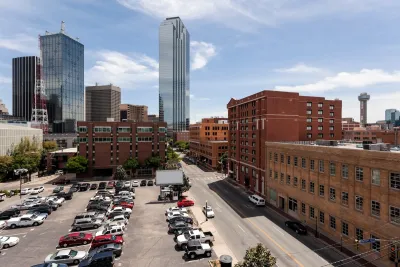
The Dallas City Council voted to reduce minimum parking requirements in many parts of the city, including areas near transit. Writing in the Strong Towns blog, Asia Mieleszko explains how the new rules could help ease the city’s housing crisis and support small businesses.
The new rules completely eliminate parking minimums for residential developments with less than 200 units and bars and restaurants under 2,500 square feet, as well as many other office and retail spaces. “If a structure is officially designated as historic, parking mandates are gone—removing one of the biggest obstacles to restoring or reusing older buildings.”
Dallas follows other cities and states in reforming parking requirements, which impose arbitrary mandates that often drive up the cost of housing or make starting a business impossible. “By removing these outdated mandates, Dallas is giving builders more flexibility to use land and resources for actual homes instead of storage space for cars. This could lower barriers to entry for small developers and help diversify the city’s housing stock—especially in areas where parking requirements previously made infill development infeasible.”
Read the full story: Dallas Just Ditched Its Outdated Parking Rules—Here’s What That Means

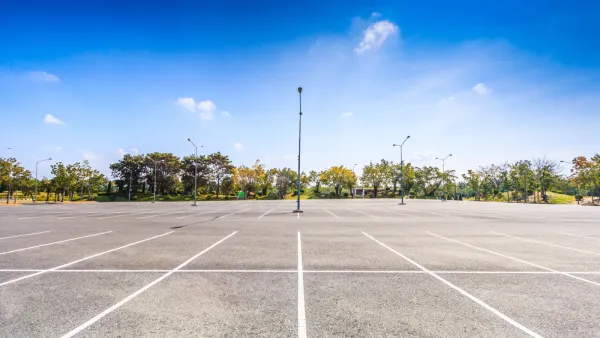
Dallas Considers Nixing Parking Requirements
According to one local official, Dallas projects routinely build 20 to 30 percent more parking than they need, driving up the cost of housing and leading to unsustainable land use patterns.
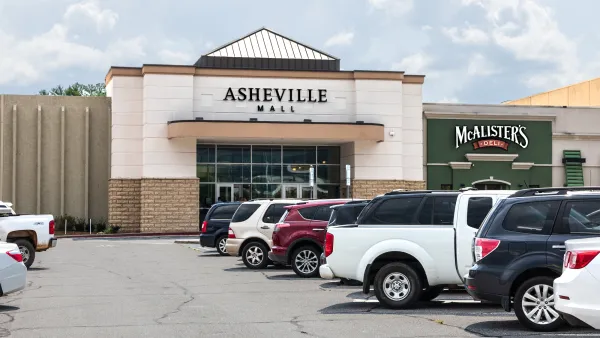
Asheville reconsiders parking minimums as surface parking eats up over a third of downtown real estate
Housing advocates say parking requirements are unnecessary and induce sprawl.

New Hampshire House Passes Parking Reform Bill
The revised bill, which caps parking requirements at one spot per residential unit and eliminates exemptions, will go back to the Senate for a new vote.

Planetizen Federal Action Tracker
A weekly monitor of how Trump’s orders and actions are impacting planners and planning in America.

California plans to bury El Niño’s downpour
If the state plays its cards right, it may be able to store a billion acre-feet of El Niño’s water in aquifers.

Chicago breaks ground on $3 billion megadevelopment
The new neighborhood, titled Foundry Park, will one day host 3,700 residences.

Satanic Place Names
From streams and lakes to valleys and canyons, I mapped more than 1,000 places named after the Devil.

California High-Speed Rail Authority CEO resigns after $600,000 scandal
Under Ian Choudri, the authority used taxpayer dollars to fund first class flights and trips to nightclubs.

Want to study the Missouri River? Soon, you may need unanimous approval from 10 states
Legislation would require 10 governors’ permission to study or build projects moving water outside the basin.

FREE Course: Walkable City 1: Why Walkability?
After describing his path towards focusing on walkability as the essence of good planning, Jeff Speck marches through his five principal reasons for making more walkable places.
Reinventing Malls: Planning Alchemy—Turning Gray Fields Into Gold
The course focuses on the opportunities and imperatives that shape reinvention of mall sites.

City of Rosemead
Rutgers University, Edward J. Bloustein School of Planning and Public Policy
One Hundred Miles
Hunter College, City University of New York (CUNY)
The Architects Foundation
University of Cincinnati Online
City of Cambridge
Montrose County
The Pocatello Development Authority