A Google-backed proposal to turn an underused section of Toronto waterfront into a tech hub holds relevant lessons about privacy and data.



Five years after the failure of Google-affiliated Sidewalk Labs’ proposal to build a hyperconnected, tech-forward planned community in Toronto, Stephen Goldsmith reflects on the lessons that planners learned — and forgot — from the experiment.
For Goldsmith, the project created questions about privacy, digitally connected cities, and data handling. “If anything, the landscape has only gotten more complex, dispersed and high-stakes.”
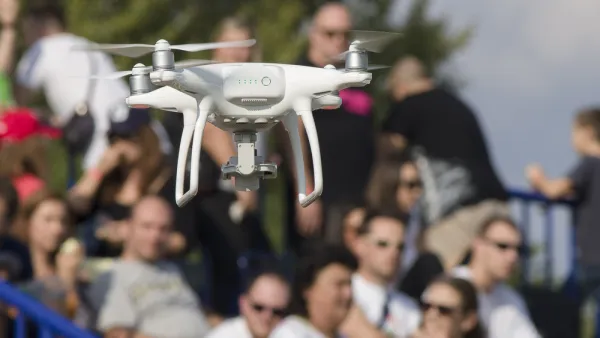
New mobility services, connected vehicles and on-demand deliveries track the movements of people and goods across cities. An explosion of video cameras, license plate readers, drones and biometric tools monitor public spaces and promise better safety and enforcement. Sensor networks optimize services by capturing endless data streams on peoples’ health, energy use, parking and more.
Goldsmith argues that, while there is a net benefit to the growth of this technology, civic leaders must take proactive steps to protect citizens’ privacy and understand how data is being captured, monitored, and used. Cities must also “set clear policies for external partners” and offer complete transparency around data collection.
For Goldsmith, “When it comes to balancing technology’s benefits and risks in urban environments, the story is just getting started, and local leaders need to keep up with it.”
Read the full story: Lessons From a Failed Tech Urbanist Dream


Study: It's Not Hard to Connect Anonymous Data to Specific Individuals
People have had to take it on faith that data anoymization was adequate to the task of protecting privacy of individuals. Recent research suggests such faith was misplaced.
Internet of Things Brings More Surveillance and Vulnerabilities to Cities
Too often, smart city technology is described as an innocuous tool, but Adam Greenfield argues the technology acquiring this data will be used to distribute city resources, an inherently political act.
Sidewalk Labs Launches Urban Technology Blog
Alphabet's Sidewalk Labs announced the launch of Sidewalk Talk — a blog and forum for urbanists and technologists to converse and collaborate.

Planetizen Federal Action Tracker
A weekly monitor of how Trump’s orders and actions are impacting planners and planning in America.

California plans to bury El Niño’s downpour
If the state plays its cards right, it may be able to store a billion acre-feet of El Niño’s water in aquifers.

Desperate measures: Advocates weigh draining Lake Powell to fill Colorado River
Draining the reservoir could reduce evaporation losses by a couple hundred thousand acre-feet.

Chicago Avenue bridge construction delays enrages city leaders
The bridge has been closed since 2025. The city originally aimed to re-open it in December, and now expects to finish construction in 2027.

NYC bus network redesign speeds up Queens buses
Rush routes have seen a 4.6% speed increase after the redesign.

California High-Speed Rail Authority picks trainset manufacturer
The California High-Speed Rail Authority aims to start servicing passengers by 2033.

FREE Course: Walkable City 1: Why Walkability?
After describing his path towards focusing on walkability as the essence of good planning, Jeff Speck marches through his five principal reasons for making more walkable places.
Reinventing Malls: Planning Alchemy—Turning Gray Fields Into Gold
The course focuses on the opportunities and imperatives that shape reinvention of mall sites.

City of Rosemead
Rutgers University, Edward J. Bloustein School of Planning and Public Policy
One Hundred Miles
Hunter College, City University of New York (CUNY)
The Architects Foundation
University of Cincinnati Online
City of Cambridge
Montrose County
The Pocatello Development Authority