The outrage over the chain’s decision to limit the use of its bathrooms should prompt more questions about why the U.S. lacks public restrooms.


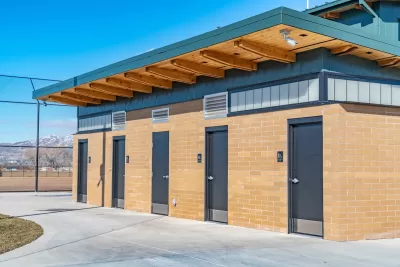
As Starbucks shifts its policy to limit people from using its restrooms and facilities, Lloyd Alter argues that “what is truly outrageous is that citizens are forced to use private washrooms because there are almost no public ones in North America.”
In many countries, the Starbucks problem wouldn’t exist — because there are ample public restrooms available for use. “According to the Public Toilet Index, New York City has four toilets per 100,000 people; in Iceland, there are 56.”
Authorities say providing public washrooms can't be done because it would cost “hundreds of millions” but never have a problem spending billions on the building of highways for the convenience of drivers who can drive from home to the mall where there are lots of washrooms.
Alter concludes that public restrooms should be a common good provided by the government, “This is why we pay taxes — for public services that meet human needs.” As Harvey Molotch wrote, “That there is so often no way to satisfy a necessary bodily function is symptom of the larger callousness — of ignoring basic human needs. The trouble is a dearth of civic responsibility.”
FULL STORY: Starbucks is No Longer ‘America’s Bathroom.’ It Never Should Have Been.

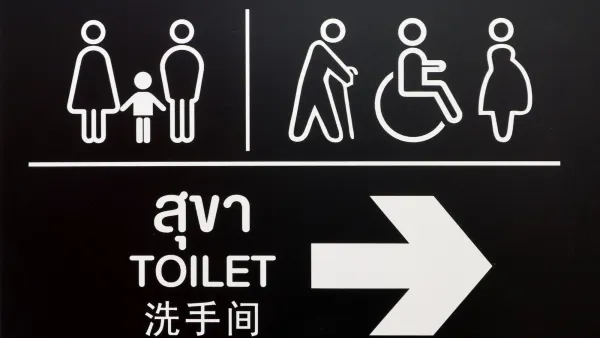
This Thai city is the 'global capital of toilet access'
The Global Public Toilet Index ranks cities by per capita public restrooms.
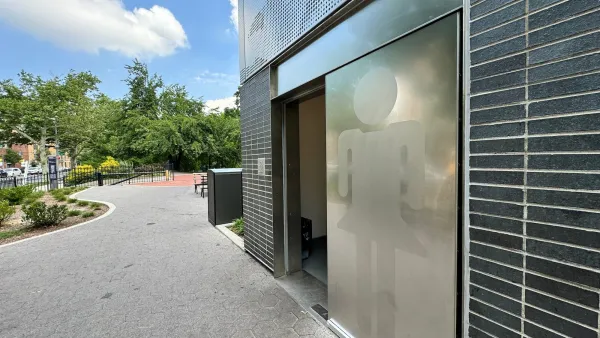
Mamdani Administration Promises 20-30 New Public Bathrooms by End of Summer
Of the city’s 1,000 public restrooms, just 30 percent are located outside of parks.
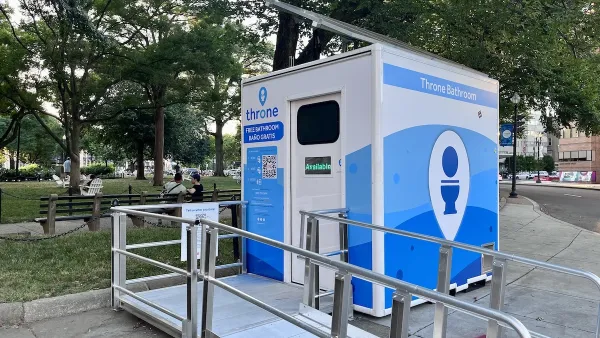
DC to Invest $1 Million in Public Restrooms in 2026
After residents protested the closing of six Throne restrooms, the District is creating a position to manage public bathrooms and plans to fund 10 bathrooms in the next year.

Planetizen Federal Action Tracker
A weekly monitor of how Trump’s orders and actions are impacting planners and planning in America.

The state-sanctioned urbicide of Austin
People don’t kill cities. Freeways do.

US to reduce Colorado River water deliveries to Mexico
A new Colorado Treaty amendment reduces Mexico’s Colorado River water allocation by 250,000 acre feet.

5 New England states march closer to 800 megawatt wind energy project
Securing federal approval for the project may be complicated under the Trump administration, which has historically been hostile towards domestic wind power.

Baltimore to break ground on $50 million Transit Priority Project
The project will bring faster bus trips, safer streets and better bike connections to Baltimore.

Airbnb launches $250 million 'last-dollar financing' housing accelerator, makes first investment in Austin
The company will put $6.4 million towards affordable housing development in Texas’ capital.

FREE Course: Walkable City 1: Why Walkability?
After describing his path towards focusing on walkability as the essence of good planning, Jeff Speck marches through his five principal reasons for making more walkable places.
Reinventing Malls: Planning Alchemy—Turning Gray Fields Into Gold
The course focuses on the opportunities and imperatives that shape reinvention of mall sites.

Eagle County Government
Harvard University Graduate School of Design
Nashville Planning Department
The Architects Foundation
University of Cincinnati Online
The Pocatello Development Authority
The Urban Renewal Agency of the City of Pocatello
Journal of the American Planning Association