Voters approved a bond measure that includes up to $10 million for creating a public housing entity.


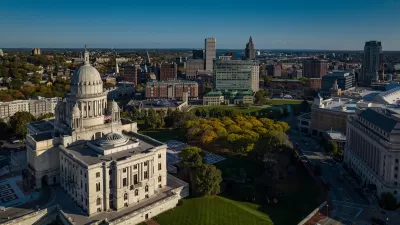
Rhode Island state leaders are considering using public funds for affordable housing development after voters approved a $120 million housing bond that includes $10 million for public housing development.
As Jared Brey explains in Governing, “While it’s not clear exactly how the program will work, or even whether it will happen, advocates have been pushing for the state to create a public development entity similar to one used in Montgomery County, Maryland. There, the county invests directly in mixed-income housing projects, and instead of profiting off the market-rate units, it uses the income to subsidize reduced rents for lower-income people and reinvests its equity in other projects.”
More cities and states are experimenting with funding models that can support affordable housing even in the absence of federal assistance (President-elect Trump has proposed further cuts to housing vouchers and other federal assistance programs).
As the pandemic exacerbated the housing crisis, Rhode Island put more funding into affordable housing, investing $330 million in American Rescue Act dollars in housing programs. However, this only produced roughly 1,500 new housing units, signaling the inefficiency of the existing development system. Proponents of a state development entity suggest it could help direct state funds more effectively to mixed-income developments.
FULL STORY: Rhode Island Could Create a 'Public Developer' to Address Housing Crisis

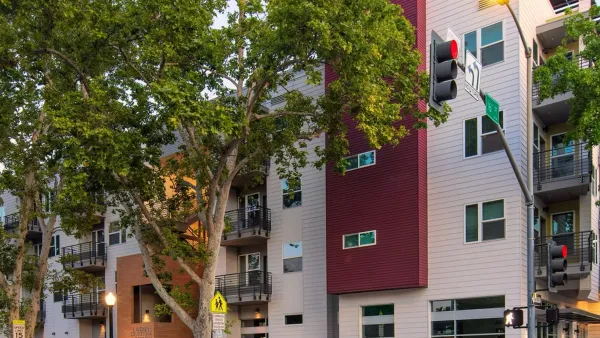
New Washington State Law Lets Cities Give Social Housing Developers City-owned Land
In its current form, HB 1687, which authorizes local governments to assist social housing agencies with land or other resources, only applies to Seattle.

How Atlanta Built 7,000 Housing Units in 3 Years
The city’s comprehensive, neighborhood-focused housing strategy focuses on identifying properties and land that can be repurposed for housing and encouraging development in underserved neighborhoods.
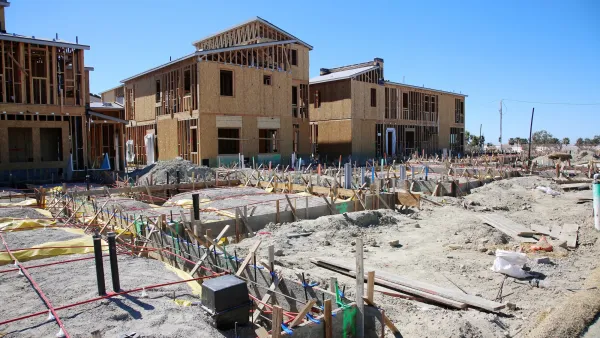
Less than 6% of California cities are building enough housing for very low-income households
Only five jurisdictions are on track to meet their housing goals for all income brackets.

Planetizen Federal Action Tracker
A weekly monitor of how Trump’s orders and actions are impacting planners and planning in America.

The state-sanctioned urbicide of Austin
People don’t kill cities. Freeways do.

US to reduce Colorado River water deliveries to Mexico
A new Colorado Treaty amendment reduces Mexico’s Colorado River water allocation by 250,000 acre feet.

5 New England states march closer to 800 megawatt wind energy project
Securing federal approval for the project may be complicated under the Trump administration, which has historically been hostile towards domestic wind power.

Baltimore to break ground on $50 million Transit Priority Project
The project will bring faster bus trips, safer streets and better bike connections to Baltimore.

Airbnb launches $250 million 'last-dollar financing' housing accelerator, makes first investment in Austin
The company will put $6.4 million towards affordable housing development in Texas’ capital.

FREE Course: Walkable City 1: Why Walkability?
After describing his path towards focusing on walkability as the essence of good planning, Jeff Speck marches through his five principal reasons for making more walkable places.
Reinventing Malls: Planning Alchemy—Turning Gray Fields Into Gold
The course focuses on the opportunities and imperatives that shape reinvention of mall sites.

Eagle County Government
Harvard University Graduate School of Design
Nashville Planning Department
The Architects Foundation
University of Cincinnati Online
The Pocatello Development Authority
The Urban Renewal Agency of the City of Pocatello
Journal of the American Planning Association