The model comes with high costs that make it unsustainable without subsidies.


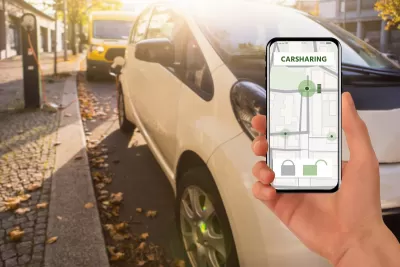
Writing in Next City, Nithin Coca attempts to suss out why car-sharing companies keep going out of business: largely, their for-profit model, which doesn’t lend itself to the type of service coverage they would need to provide.
According to Coca, “For-profit car-sharing models have a fundamental challenge: They need to set prices high enough to at least break even. Often, that means prices are too high for those in low-income communities, who tend to have less access to cars and public transportation in general.” For this reason, companies have stuck largely to more well-off neighborhoods where residents are already more likely to own cars.
One new California car-sharing service, Míocar, operates in low-income areas supported by a grant from the California Air Resources Board. “It’s also seeing high utilization rates, with cars sometimes booked months in advance.” However, Caroline Jane Rodier, Associate Director of the Urban Land Use and Transportation Center at the University of California, Davis, warns that “Without subsidies, it’s not going to work.”
If successful, Míocar “could point towards a new non-profit model for car-sharing, where the focus is on equity, access and climate benefits from reduced emissions and fossil fuel consumption.”
Coca points out that ‘free-flowing’ car-sharing systems are thriving in other countries, perhaps signaling a stronger demand in places where car ownership is itself more expensive.
FULL STORY: Another Car-Sharing Startup Is Dead. Why Is Car Sharing So Difficult?


Electric Car Share Comes to Detroit’s Eastside
The program is operated by the Eastside Community Network and funded through the U.S. Department of Energy.

Study: Equity in Car Share Programs Requires Low Cost, Broad Coverage
Data from a Los Angeles car share program showed its impact on underserved communities was ‘limited by its small footprint.’

‘Week Without Driving’ Highlights Needs of Non-Drivers
The event encourages public officials to use their local public transit and engage with the people who rely on it every day.

Planetizen Federal Action Tracker
A weekly monitor of how Trump’s orders and actions are impacting planners and planning in America.

The state-sanctioned urbicide of Austin
People don’t kill cities. Freeways do.

US to reduce Colorado River water deliveries to Mexico
A new Colorado Treaty amendment reduces Mexico’s Colorado River water allocation by 250,000 acre feet.

5 New England states march closer to 800 megawatt wind energy project
Securing federal approval for the project may be complicated under the Trump administration, which has historically been hostile towards domestic wind power.

Baltimore to break ground on $50 million Transit Priority Project
The project will bring faster bus trips, safer streets and better bike connections to Baltimore.

Airbnb launches $250 million 'last-dollar financing' housing accelerator, makes first investment in Austin
The company will put $6.4 million towards affordable housing development in Texas’ capital.

FREE Course: Walkable City 1: Why Walkability?
After describing his path towards focusing on walkability as the essence of good planning, Jeff Speck marches through his five principal reasons for making more walkable places.
Reinventing Malls: Planning Alchemy—Turning Gray Fields Into Gold
The course focuses on the opportunities and imperatives that shape reinvention of mall sites.

Eagle County Government
Harvard University Graduate School of Design
Nashville Planning Department
The Architects Foundation
University of Cincinnati Online
The Pocatello Development Authority
The Urban Renewal Agency of the City of Pocatello
Journal of the American Planning Association