Twelve states and industry groups are supporting Utah’s lawsuit against the Bureau of Land Management, arguing the agency can’t bar extractive uses on ‘unappropriated’ public lands.


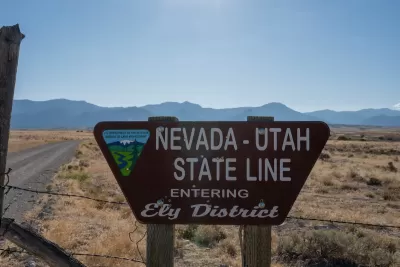
More Western states are signing on to support Utah’s effort to fight the Bureau of Land Management’s new public lands rule, which allows the agency to control uses on 18.5 million acres of “unappropriated” public lands, reports Kyle Dunphey in the Utah News Dispatch.
The rule elevates conservation — or non-use — to the same importance level as logging, ranching, or other extractive uses.
States and organizations have filed an amicus brief arguing that the public lands rule “curtails state sovereignty” and that the BLM can’t hold land without designating it for specific uses. “In the filing, attorneys argue that the state’s inability to control that land causes a host of problems. There’s a different criminal code; the land cannot be taxed by the state and results in tax hikes; the state cannot exercise eminent domain; and the state can’t generate revenue from grazing fees, mineral leases or timber sales, the brief claims.”
Read the full story: 12 states get behind Utah’s lawsuit to take over millions of acres of federally-controlled land

BLM To Rescind Public Lands Rule
The change will downgrade conservation, once again putting federal land at risk for mining and other extractive uses.

Industry Groups Sue BLM Over Public Lands Rule
Farmers, ranchers, and others are challenging a policy change that puts conservation on the same footing as other land uses.
Nevada and Utah Groups Oppose Public Land Sell-Off Plan
A set of last-minute amendments to the budget reconciliation bill open up over half a million acres of federally managed land to sales.

Planetizen Federal Action Tracker
A weekly monitor of how Trump’s orders and actions are impacting planners and planning in America.

California plans to bury El Niño’s downpour
If the state plays its cards right, it may be able to store a billion acre-feet of El Niño’s water in aquifers.

Chicago breaks ground on $3 billion megadevelopment
The new neighborhood, titled Foundry Park, will one day host 3,700 residences.

Satanic place names
From streams and lakes to valleys and canyons, I mapped more than 1,000 places named after the Devil.

California High-Speed Rail Authority CEO resigns after $600,000 scandal
Under Ian Choudri, the authority used taxpayer dollars to fund first class flights and trips to nightclubs.

Want to study the Missouri River? Soon, you may need unanimous approval from 10 states
Legislation would require 10 governors’ permission to study or build projects moving water outside the basin.

FREE Course: Walkable City 1: Why Walkability?
After describing his path towards focusing on walkability as the essence of good planning, Jeff Speck marches through his five principal reasons for making more walkable places.
Reinventing Malls: Planning Alchemy—Turning Gray Fields Into Gold
The course focuses on the opportunities and imperatives that shape reinvention of mall sites.

City of Rosemead
Rutgers University, Edward J. Bloustein School of Planning and Public Policy
One Hundred Miles
Hunter College, City University of New York (CUNY)
The Architects Foundation
University of Cincinnati Online
City of Cambridge
Montrose County
The Pocatello Development Authority