The state wants more local control of public lands not designated as national parks or monuments.



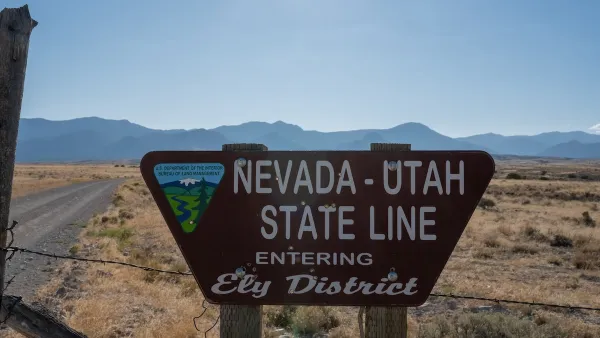
The Supreme Court struck down an effort by Utah to assert state control over federal public lands. According to an article by Anastasia Hufham in the Salt Lake Tribune, the Court declined to hear Utah’s challenge to the federal government’s jurisdiction over 18.5 million acres of “unappropriated” public lands. The state charged that the Bureau of Land Management’s control over these lands is unconstitutional.
State leaders expressed disappointment at the Court’s decision, saying BLM policies harm Utah residents “by restricting access to public lands, hindering active management, and reducing economic and recreation opportunities.”
The status of public land management is under question as the incoming Trump administration has signaled a desire to reopen public lands to extractive uses — or what Utah state leaders call ‘multiple use’ — and shift more decisionmaking power to states. Other states have challenged the BLM’s Public Lands Rule, which recently strengthened conservation measures.
FULL STORY: U.S. Supreme Court refuses to hear Utah’s public lands challenge


Nevada and Utah Groups Oppose Public Land Sell-Off Plan
A set of last-minute amendments to the budget reconciliation bill open up over half a million acres of federally managed land to sales.

BLM To Rescind Public Lands Rule
The change will downgrade conservation, once again putting federal land at risk for mining and other extractive uses.
More States Push Back on BLM’s Conservation Rule
Twelve states and industry groups are supporting Utah’s lawsuit against the Bureau of Land Management, arguing the agency can’t bar extractive uses on ‘unappropriated’ public lands.

The state-sanctioned urbicide of Austin
People don’t kill cities. Freeways do.

US to reduce Colorado River water deliveries to Mexico
A new Colorado Treaty amendment reduces Mexico’s Colorado River water allocation by 250,000 acre feet.

New Jersey’s second-largest city bans standalone data centers
Jersey City will continue to allow co-location facilities, such as those meant for research institutions that store their own data.

Amtrak not solely to blame for New Jersey commuter rail's unreliability, report finds
A new study from the Garden State Initiative found that NJ Transit’s budget grew 20% across a 4 year period, but reliability declined significantly over the same period.

EPA erases limits on planet-warming pollution from power plants
Under Monday’s plan, power plants would still have some limits on how much mercury, arsenic and other contaminants they can emit.

Phoenix announces new on-demand transit service, more frequent RAPID buses
Both new services will launch in October, and are part of Phoenix's Project Effective Access Solutions for Easing Congestion.

FREE Course: Walkable City 1: Why Walkability?
After describing his path towards focusing on walkability as the essence of good planning, Jeff Speck marches through his five principal reasons for making more walkable places.
Reinventing Malls: Planning Alchemy—Turning Gray Fields Into Gold
The course focuses on the opportunities and imperatives that shape reinvention of mall sites.

Eagle County Government
Harvard University Graduate School of Design
Nashville Planning Department
The Architects Foundation
University of Cincinnati Online
The Pocatello Development Authority
The Urban Renewal Agency of the City of Pocatello
Journal of the American Planning Association