Low-income renters face an increased risk of eviction after a natural disaster. Most cities and states don’t offer any protection.


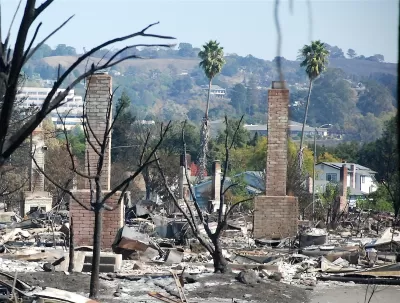
A Sonoma County, California ordinance passed last month bars landlords from evicting tenants during weather disasters and other declared emergencies. The first-in-the-nation “disaster-triggered” moratorium aims to prevent waves of evictions similar to those that impacted residents in Florida during the 2021 hurricane season. The Sonoma ordinance is the result of activism from the region’s large agricultural worker community, who suffered after 2017’s Tubbs Fire.
In a Bloomberg CityLab article, Patrick Sisson explains how natural disasters lead to evictions. “Lack of internet access can cut off the ability to pay rent online, and those who evacuated can’t just drop off rent checks. Jobs are upended and schools close, putting childcare strains on working parents. And damage to homes and workplaces continue to exact a lingering economic toll on the afflicted area long after emergency response is completed.” Compounding the problem, a study found that rents go up by 4 percent to 6 percent in impacted areas, and evictions rise sharply.
Supporters of the Sonoma law hope it can be a model for other communities, particularly in vulnerable areas like south Texas and Florida.
FULL STORY: Should Evictions Be Banned After Hurricanes and Climate Disasters?

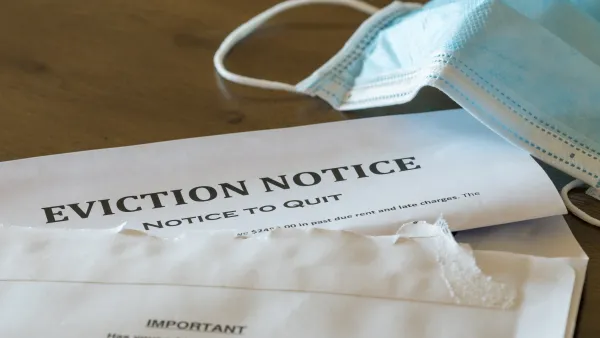
Evictions Surge as Protections End
With pandemic assistance funding running out, many U.S. renters face the threat of eviction, with families with children at a disproportionately high risk for losing their housing.

Sacramento Households Hit Hard by Evictions
With pandemic-era renter protections ending and rents rising by close to 20 percent, renters in Sacramento are finding it harder to afford housing in the region.

L.A. Tenants Hit With Sudden Rent Hikes Under 'Discounted Rent' Loophole
A legal loophole has allowed some Los Angeles landlords to sharply raise rents on apartments that would otherwise fall under the city's rent stabilization ordinance and pandemic-related rent freeze.

Planetizen Federal Action Tracker
A weekly monitor of how Trump’s orders and actions are impacting planners and planning in America.

The state-sanctioned urbicide of Austin
People don’t kill cities. Freeways do.

US to reduce Colorado River water deliveries to Mexico
A new Colorado Treaty amendment reduces Mexico’s Colorado River water allocation by 250,000 acre feet.

5 New England states march closer to 800 megawatt wind energy project
Securing federal approval for the project may be complicated under the Trump administration, which has historically been hostile towards domestic wind power.

Baltimore to break ground on $50 million Transit Priority Project
The project will bring faster bus trips, safer streets and better bike connections to Baltimore.

Airbnb launches $250 million 'last-dollar financing' housing accelerator, makes first investment in Austin
The company will put $6.4 million towards affordable housing development in Texas’ capital.

FREE Course: Walkable City 1: Why Walkability?
After describing his path towards focusing on walkability as the essence of good planning, Jeff Speck marches through his five principal reasons for making more walkable places.
Reinventing Malls: Planning Alchemy—Turning Gray Fields Into Gold
The course focuses on the opportunities and imperatives that shape reinvention of mall sites.

.jpg)
Eagle County Government
Harvard University Graduate School of Design
Nashville Planning Department
The Architects Foundation
University of Cincinnati Online
The Pocatello Development Authority
The Urban Renewal Agency of the City of Pocatello
Journal of the American Planning Association