A solar project atop a massive food market will provide electricity to Mexico City's public transit buses.



Thousands of solar panels on the roofs of Mexico City’s iconic Central de Abasto food market, one of the largest in the world, will be used to power the city’s transit buses, reports Valentine Hilaire in Bloomberg CityLab.
The project was announced in 2022 by then-mayor Claudia Sheinbaum, who was just inaugurated as Mexico’s first woman president. “During her presidential campaign, Sheinbaum pledged to strengthen state oil and electricity companies while also investing $13.6 billion in new power generation projects, including solar plants.”
According to Hilaire, “The first stage is complete and the rooftop panels are already powering selected parts of market, cutting its electricity bills. In the second phase, which is set [to] begin in January after additional work and testing, energy will be channeled toward the city’s transit system.”
The installation is expected to produce 26.5 gigawatt hours of electricity per year, which will eventually power 300 electric buses. Because a new entity was created to allow the market to trade energy with the transportation unit, the project offers a model for scaling the concept and letting more government buildings set up similar projects.
FULL STORY: Roofs of Mexico City’s Massive Food Market Will Power Public Buses

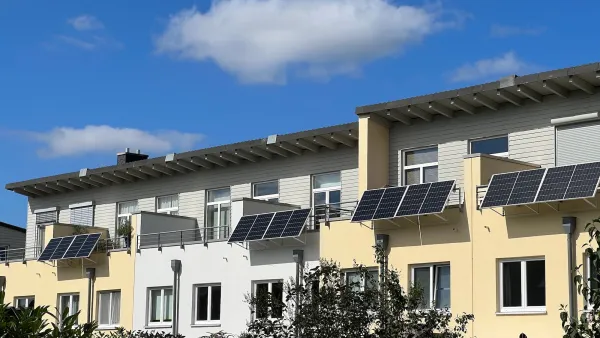
28 States and DC Could Legalize ‘Balcony Solar’
Plug-in solar panels, which are becoming popular across Europe, live in a regulatory gray area in the United States.
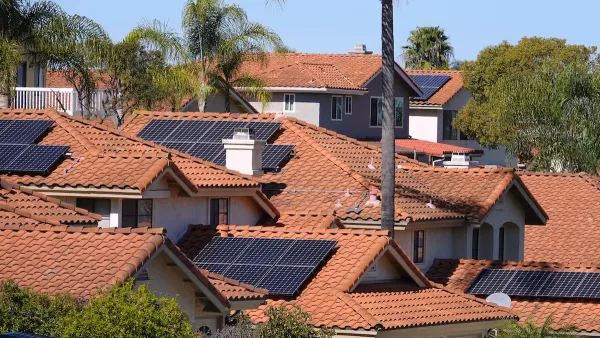
California Leads in Solar Rooftops
A combination of state and local incentives and building code mandates has helped California far outpace other states in residential rooftop solar permits.
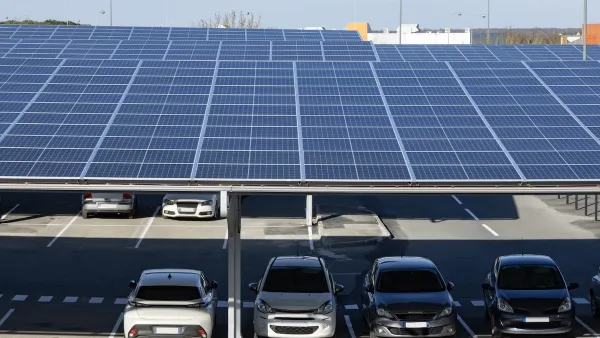
Commercial Buildings, Parking Lots Offer Significant Potential for Solar Energy
Massive swaths of flat rooftops, garages, and surface parking lots go underutilized. They could be producing renewable energy.

Planetizen Federal Action Tracker
A weekly monitor of how Trump’s orders and actions are impacting planners and planning in America.

The state-sanctioned urbicide of Austin
People don’t kill cities. Freeways do.

US to reduce Colorado River water deliveries to Mexico
A new Colorado Treaty amendment reduces Mexico’s Colorado River water allocation by 250,000 acre feet.

5 New England states march closer to 800 megawatt wind energy project
Securing federal approval for the project may be complicated under the Trump administration, which has historically been hostile towards domestic wind power.

Baltimore to break ground on $50 million Transit Priority Project
The project will bring faster bus trips, safer streets and better bike connections to Baltimore.

Airbnb launches $250 million 'last-dollar financing' housing accelerator, makes first investment in Austin
The company will put $6.4 million towards affordable housing development in Texas’ capital.

FREE Course: Walkable City 1: Why Walkability?
After describing his path towards focusing on walkability as the essence of good planning, Jeff Speck marches through his five principal reasons for making more walkable places.
Reinventing Malls: Planning Alchemy—Turning Gray Fields Into Gold
The course focuses on the opportunities and imperatives that shape reinvention of mall sites.

.jpg)
Eagle County Government
Harvard University Graduate School of Design
Nashville Planning Department
The Architects Foundation
University of Cincinnati Online
The Pocatello Development Authority
The Urban Renewal Agency of the City of Pocatello
Journal of the American Planning Association