More children are using active transportation modes to get to school in the wake of a policy that charges drivers to enter a low-emissions zone in central London.


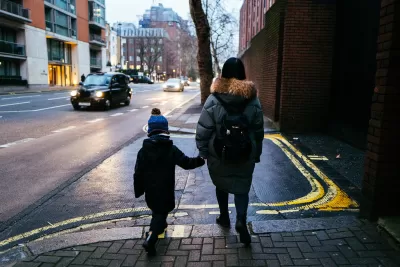
Kids in London are walking and biking to school more after the city implemented the world’s largest ‘ultra-low emissions zone’ in the city center.
As Syris Valentine explains in Grist, the data comes from a study conducted by University of Cambridge and Queen Mary University researchers that sought to understand how changes in air quality would impact youth health.
In the first of many papers expected from the study, the researchers found that, a year after the ultra-low emissions zone took effect, 2 out of every 5 London students in the study had switched from ‘passive’ to ‘active’ ways of getting to school. So instead of being chauffeured to school by their parents, the students started walking, biking, scootering, or taking public transit.
According to epidemiologist Alison Macpherson, walking or biking to school “can be calming and conducive to concentration” in addition to providing an opportunity for exercise. Future studies will look to understand the reasons why parents make the switch. “While developing pedestrian-friendly infrastructure and building out protected bike lanes can encourage a shift in how people travel, Xiao found as she assembled a review of research investigating how to promote shifts to healthier transit, people preferred the stick to the carrot. In other words, discouraging car travel was often more effective than just building infrastructure conducive to active travel.”
FULL STORY: London Saw a Surprising Benefit to Fining High-Polluting Cars: More Active Kids

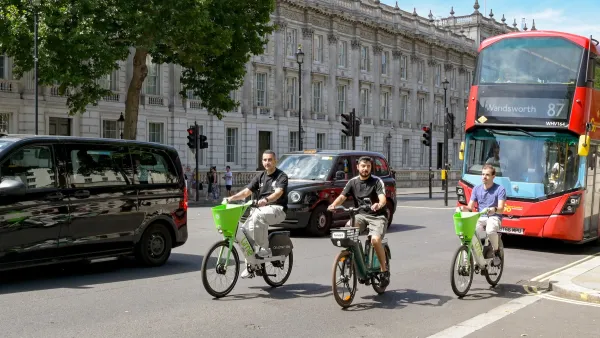
Bike use in London grew by 43% since 2019, but car use remains roughly the same
The city's efforts to reduce car use have stalled despite ambitious programs like congestion pricing and low-traffic neighborhoods.
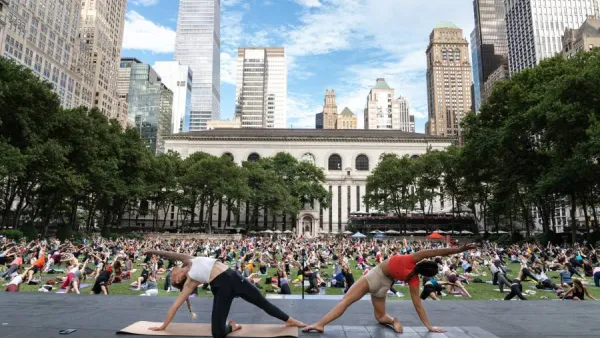
The Panacea of Outdoor Human Movement
Humans relish in over-complicating things, but the sweetest and healthiest things in life are the simplest.
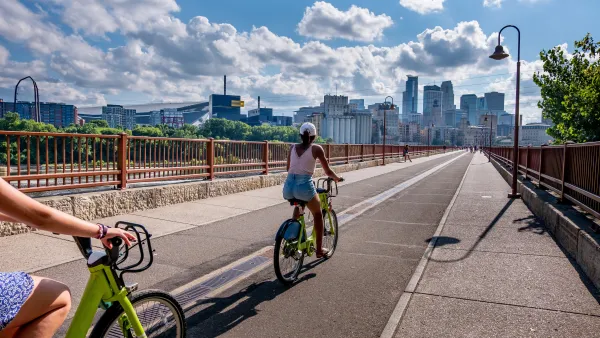
Minnesota Awards Active Transportation Grants
The grants are aimed at helping cities create action plans for improving their bike and pedestrian networks.

The state-sanctioned urbicide of Austin
People don’t kill cities. Freeways do.

US to reduce Colorado River water deliveries to Mexico
A new Colorado Treaty amendment reduces Mexico’s Colorado River water allocation by 250,000 acre feet.

New Jersey’s second-largest city bans standalone data centers
Jersey City will continue to allow co-location facilities, such as those meant for research institutions that store their own data.

Amtrak not solely to blame for New Jersey commuter rail's unreliability, report finds
A new study from the Garden State Initiative found that NJ Transit’s budget grew 20% across a 4 year period, but reliability declined significantly over the same period.

EPA erases limits on planet-warming pollution from power plants
Under Monday’s plan, power plants would still have some limits on how much mercury, arsenic and other contaminants they can emit.

Phoenix announces new on-demand transit service, more frequent RAPID buses
Both new services will launch in October, and are part of Phoenix's Project Effective Access Solutions for Easing Congestion.

FREE Course: Walkable City 1: Why Walkability?
After describing his path towards focusing on walkability as the essence of good planning, Jeff Speck marches through his five principal reasons for making more walkable places.
Reinventing Malls: Planning Alchemy—Turning Gray Fields Into Gold
The course focuses on the opportunities and imperatives that shape reinvention of mall sites.

Eagle County Government
Harvard University Graduate School of Design
Nashville Planning Department
The Architects Foundation
University of Cincinnati Online
The Pocatello Development Authority
The Urban Renewal Agency of the City of Pocatello
Journal of the American Planning Association