While some rail stations get the starchitect treatment, most bus stops fail to offer aesthetic value. One study suggests this is a mistake.


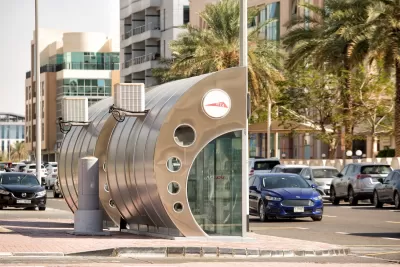
An Italian study published in Transportation Research Interdisciplinary Perspectives shows that the aesthetics of bus stops can affect how likely riders are to use them. As Sonja Wind notes in Bloomberg CityLab, the researchers used virtual reality helmets to offer bus riders two different experiences.
According to lead author Armando Cartenì, “It means that there are other attributes, in addition to the traditional ones of waiting time, travel time and ticket cost, to attract users to bus transport.” The study found that respondents were willing to pay an extra 25 to 40 percent for fares to use more attractive facilities.
“Apart from increasing passenger satisfaction and ticket revenue, building more attractive bus facilities would draw more riders to public transportation, reducing emissions and congestion associated with private car use.” Yet, especially in the United States, most bus stops have minimal facilities like shade and seating, let alone aesthetic elements.
FULL STORY: What a Beautiful Bus Stop Can Do

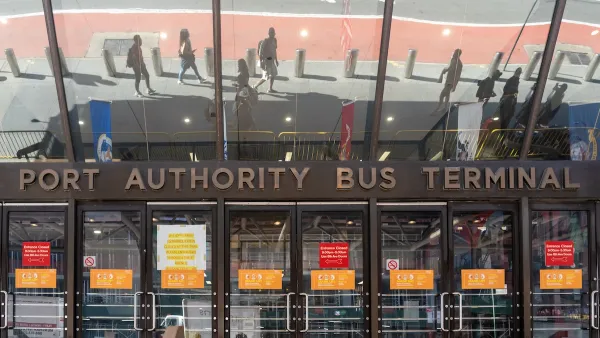
NYC Secures Funding for Midtown Bus Terminal Replacement
The aging Manhattan transit terminal, the world’s busiest, will receive a $10 billion revamp and expansion.
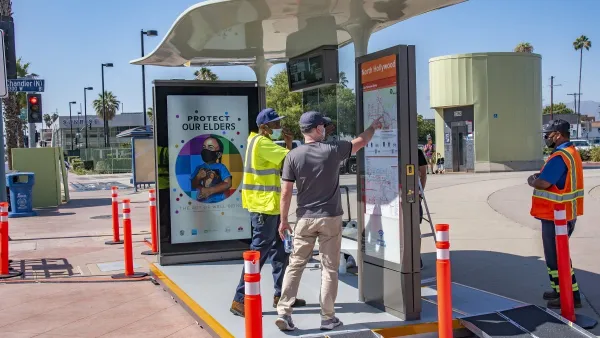
LA Begins Adding New Bus Shelters
The program, years in the works, pledges to add 3,000 new bus shelters and 450 shade structures to protect riders from extreme heat and weather.
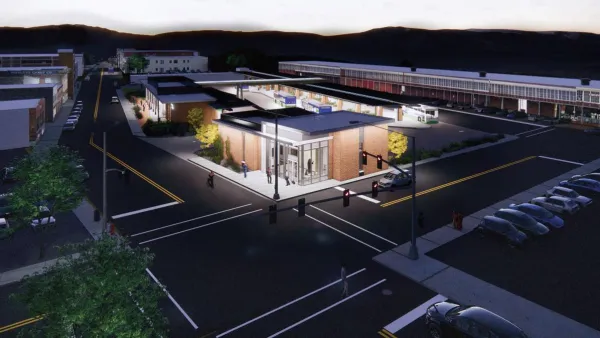
Roanoke Finds a Planning Work Around to Approve New Transit Station
With Planning Commission approval in hand, the Roanoke City Council will soon consider a controversial proposal for a new transit station in the city's downtown.

The state-sanctioned urbicide of Austin
People don’t kill cities. Freeways do.

US to reduce Colorado River water deliveries to Mexico
A new Colorado Treaty amendment reduces Mexico’s Colorado River water allocation by 250,000 acre feet.

New Jersey’s second-largest city bans standalone data centers
Jersey City will continue to allow co-location facilities, such as those meant for research institutions that store their own data.

Amtrak not solely to blame for New Jersey commuter rail's unreliability, report finds
A new study from the Garden State Initiative found that NJ Transit’s budget grew 20% across a 4 year period, but reliability declined significantly over the same period.

EPA erases limits on planet-warming pollution from power plants
Under Monday’s plan, power plants would still have some limits on how much mercury, arsenic and other contaminants they can emit.

Phoenix announces new on-demand transit service, more frequent RAPID buses
Both new services will launch in October, and are part of Phoenix's Project Effective Access Solutions for Easing Congestion.

FREE Course: Walkable City 1: Why Walkability?
After describing his path towards focusing on walkability as the essence of good planning, Jeff Speck marches through his five principal reasons for making more walkable places.
Reinventing Malls: Planning Alchemy—Turning Gray Fields Into Gold
The course focuses on the opportunities and imperatives that shape reinvention of mall sites.

Eagle County Government
Harvard University Graduate School of Design
Nashville Planning Department
The Architects Foundation
University of Cincinnati Online
The Pocatello Development Authority
The Urban Renewal Agency of the City of Pocatello
Journal of the American Planning Association