Many rural households could benefit from the cost savings of electric cars for everyday trips.


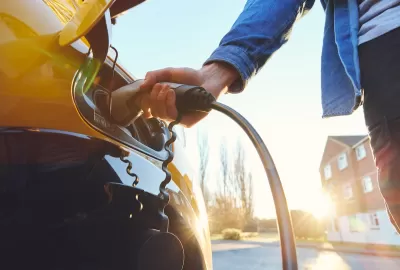
In an article for CleanTechnica, Steve Hanley makes the argument that electric vehicles are, in fact, a logical option for rural drivers.
According to a recent report from advocacy group Coltura, “Nearly 70% of US road miles are in rural areas, and without much public transit, it makes sense that more rural households have cars than urban ones.” Rural drivers, who make up 18.8 percent of drivers, use over a quarter of the nation’s gasoline. “Then there are the rural “superusers” who make up just 3.6% of the U.S. population but consume about 1,950 gallons of gas annually, or nearly 13% of the nation’s total gasoline consumption.”
All this adds up to high costs for drivers. Adopting electric vehicles could help rural residents save money and reduce greenhouse gas emissions. And while some trips may not be possible with electric vehicles, many rural trips are relatively short and close to home.
The report concludes, “Focusing efforts on the transition of rural gasoline superusers to EVs can unlock significant economic benefits for rural households burdened by disproportionate fuel expenses and achieve a substantial reduction in national gasoline use. Further, increasing EV adoption by superusers in rural areas can catalyze expanded charging networks to enhance accessibility and convenience for all electric car drivers.”
Read the full story: Let’s Put An End To The Myth That Electric Cars Are Not Suitable For Rural Drivers

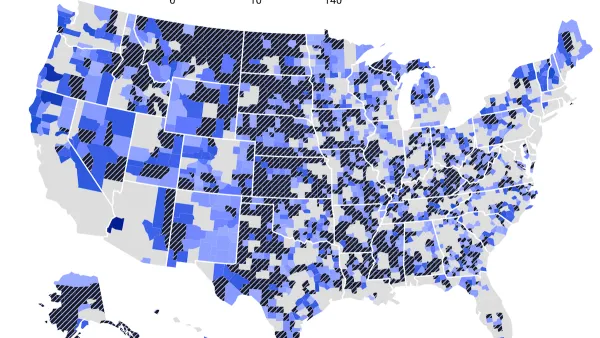
The EV “Charging Divide” Plaguing Rural America
With “the deck stacked” against rural areas, will the great electric American road trip ever be a reality?
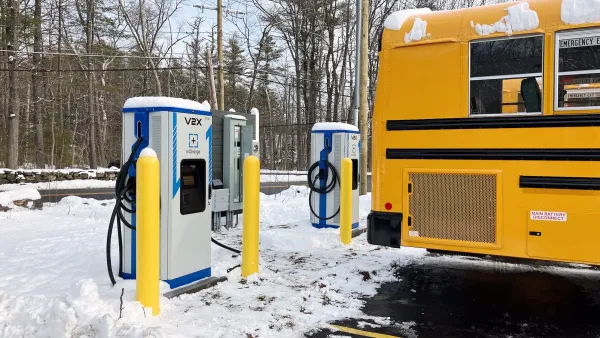
Massachusetts program pays EV owners to put power back into the grid
A pilot program could pave the way for more vehicle-to-grid installations in the United States.
California launches $3,500 EV rebate
A new rebate program aims to maintain momentum for EV adoption as the federal government eliminates other incentives.

Planetizen Federal Action Tracker
A weekly monitor of how Trump’s orders and actions are impacting planners and planning in America.

Amtrak, CN end decades-long dispute with eight-year agreement
The new operating agreement establishes an updated framework for the companies to work together, including processes to resolve disputes.

Judges permit Denver to divert 77,000 acre feet from the Colorado River for reservoir expansion
Overuse and climate change have caused the Colorado River’s water levels to plummet.

'Something we’ve never seen before:' rising utility rates could strain city finances nationwide
Data centers, climate change and other factors have caused utility rates in the United States to increase by 38% since 2020.

Trump to overrule local leaders, lease millions of acres of America’s Pacific Island territories’ seafloors to mining companies
International law says that the Indigenous people of America’s territories have a right to prior and informed consent regarding projects that impact their countries.

A ‘shady’ deal: Chicagoans rally against planned Amtrak maintenance facility
The $900 million facility would allow Amtrak to maintain entire trains in one building, which the company says will reduce delays.

FREE Course: Walkable City 1: Why Walkability?
After describing his path towards focusing on walkability as the essence of good planning, Jeff Speck marches through his five principal reasons for making more walkable places.
Reinventing Malls: Planning Alchemy—Turning Gray Fields Into Gold
The course focuses on the opportunities and imperatives that shape reinvention of mall sites.

KFH Group Inc.
Greater Baltimore Committee
Eagle County Government
The Architects Foundation
University of Cincinnati Online
The Pocatello Development Authority
The Urban Renewal Agency of the City of Pocatello