Do big projects really bring jobs to the neighborhoods they claim to help?


Rather than focus on manufacturing or new industries such as biotechnology, the city has zeroed in on big events, such as the forthcoming Republican convention, and big projects. But do such projects really create jobs? If so, are local residents the ones who get them? And just how good are the jobs?...
Corporations get huge tax breaks, but do not always create all the jobs they claim they will. And while a new project might generate revenues, the money goes straight to the city, not necessarily to the neighborhood most affected. Many new big box stores and malls are occupied by out-of-town business that may offer the best jobs to suburbanites and give the poverty-wage work to city dwellers. All this can leave some residents feeling trampled."
Thanks to Richard Layman
Read the full story: In Big Projects Where Do the Jobs Go?


Planetizen Federal Action Tracker
A weekly monitor of how Trump’s orders and actions are impacting planners and planning in America.

‘Going backwards:’ Baltimore mayor, students rally against state's transit funding plan
Maryland's proposed six-year plan provides no funding for Baltimore’s BMORE bus program and reduces its road maintenance funding.
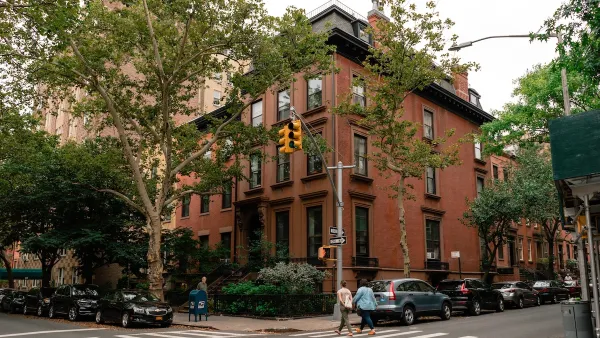
Mamdani sent nearly 6,000 pied-à-terre tax warnings to homes that didn’t qualify
A judge has ordered the administration to cancel thousands of pied-à-terre tax notices after it sent 35% of them erroneously.

Mamdani sent nearly 6,000 pied-à-terre tax warnings to homes that didn’t qualify
A judge has ordered the administration to cancel thousands of pied-à-terre tax notices after it sent 35% of them erroneously.

Detroit to transform waterfront with $2.2 billion investment
Developers will convert about 18 acres of unused parking lot space into civic spaces.

‘Going backwards:’ Baltimore mayor, students rally against state's transit funding plan
Maryland's proposed six-year plan provides no funding for Baltimore’s BMORE bus program and reduces its road maintenance funding.

FREE Course: Walkable City 1: Why Walkability?
After describing his path towards focusing on walkability as the essence of good planning, Jeff Speck marches through his five principal reasons for making more walkable places.
Reinventing Malls: Planning Alchemy—Turning Gray Fields Into Gold
The course focuses on the opportunities and imperatives that shape reinvention of mall sites.

City of Thousand Oaks
City of Wisconsin Rapids
Harvard University Graduate School of Design
The Architects Foundation
University of Cincinnati Online
Northern Illinois Transit Authority (NITA)
The Pocatello Development Authority
The Urban Renewal Agency of the City of Pocatello