A wave of new legislation targets people who reside illegally in properties they don’t own.


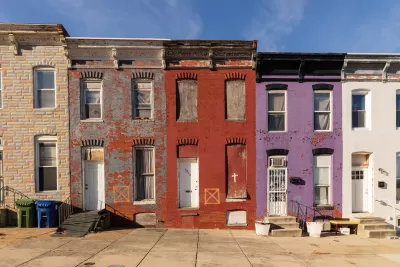
States including New York and Georgia are cracking down on squatters, reports Mary Salmonsen in Smart Cities Dive.
Until recently, people living in a unit illegally for over 30 days in New York State were considered tenants, forcing the owner into a judicial eviction process. “On April 22, New York Gov. Kathy Hochul signed the 2025 state budget, which changed the state’s property law to say that squatters are not considered tenants on any timeframe, effective immediately.”
Other states with new anti-squatting legislation include Florida, where a new bill criminalizes squatting, and Alabama, where new legislation creates a process for removal. “United States Rep. Dan Meuser, R-Pa., also introduced a bill in the U.S. House on April 10 that, if passed, would define trespassing or squatting as grounds for deportation for any non-U.S. citizen.”
As Salmonsen explains, “The laws colloquially referred to as ‘squatters’ rights’ can also encompass adverse possession, in which a person who does not own a property may acquire title to it under certain circumstances.” According to M. Denzell Moton, attorney and owner of Moton Legal Group in Atlanta, the new laws are not expected to impact adverse possession clauses — which often deal with years or decades of residency — but will have a major impact on short-term squatters.
FULL STORY: States see wave of squatting-related legislation

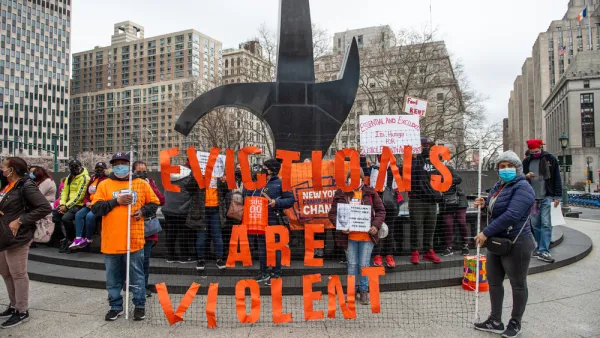
L.A. Ends COVID Eviction Protections
Some of the nation’s longest-lasting eviction protections are set to expire in February, while the future of other renter assistance programs remains uncertain.
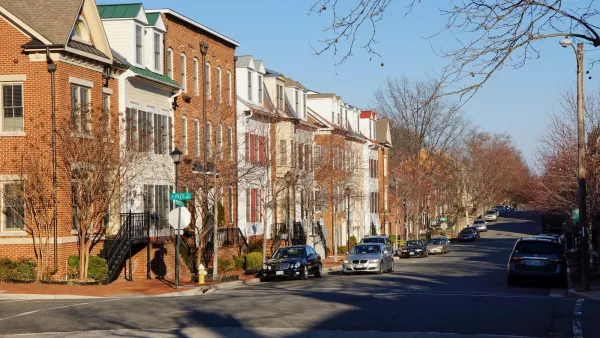
Alexandria eviction diversion program will let tenants pay back rent in installments
Eligible tenants will be allowed to make a 10% down payment on the back rent they owe and pay off the rest in installments while remaining in their home.

Austin rents are down — yet evictions spiked by 30%
Austin landlords filed a record number of evictions last year.

Planetizen Federal Action Tracker
A weekly monitor of how Trump’s orders and actions are impacting planners and planning in America.

The state-sanctioned urbicide of Austin
People don’t kill cities. Freeways do.

US to reduce Colorado River water deliveries to Mexico
A new Colorado Treaty amendment reduces Mexico’s Colorado River water allocation by 250,000 acre feet.

5 New England states march closer to 800 megawatt wind energy project
Securing federal approval for the project may be complicated under the Trump administration, which has historically been hostile towards domestic wind power.

Baltimore to break ground on $50 million Transit Priority Project
The project will bring faster bus trips, safer streets and better bike connections to Baltimore.

Airbnb launches $250 million 'last-dollar financing' housing accelerator, makes first investment in Austin
The company will put $6.4 million towards affordable housing development in Texas’ capital.

FREE Course: Walkable City 1: Why Walkability?
After describing his path towards focusing on walkability as the essence of good planning, Jeff Speck marches through his five principal reasons for making more walkable places.
Reinventing Malls: Planning Alchemy—Turning Gray Fields Into Gold
The course focuses on the opportunities and imperatives that shape reinvention of mall sites.

Eagle County Government
Harvard University Graduate School of Design
Nashville Planning Department
The Architects Foundation
University of Cincinnati Online
The Pocatello Development Authority
The Urban Renewal Agency of the City of Pocatello
Journal of the American Planning Association