The law allows local jurisdictions to set tax rates for vacant lots and properties to discourage speculation and stimulate development.


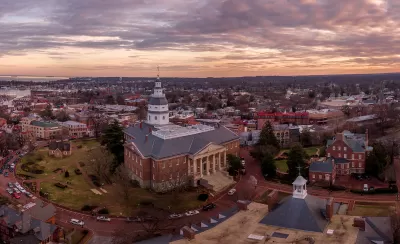
A new Maryland state law signed by Governor Wes Moore, House Bill 2, allows local governments to impose higher taxes on the owners of vacant properties, reports Danielle J. Brown for Maryland Matters.
The bill is part of an effort to reduce the number of underused and vacant lots and encourage development and housing construction. “Baltimore City Councilmember Odette Ramos explained that raising the taxes on vacant property could help reduce the number of abandoned houses and lots in two ways: to incentivize property owners to revitalize the lot for habitation and to make it easier for local jurisdictions to acquire the abandoned property.”
A legislative analysis reveals that there are 242,361 vacant properties across Maryland. Brown notes that “The law does not establish a required tax rate on vacant properties, but it provides the authority for local jurisdictions to do so at their own volition.” Higher taxes can speed up the process of “judicial in rem foreclosure,” letting the city acquire properties for redevelopment more quickly.
Read the full story: New Maryland law enables local jurisdictions to impose higher taxes on vacant properties


Baltimore Pushes ‘Whole Block’ Redevelopment Plan for Vacant Properties
The city will incentivize developers to take on projects that will renovate or redevelop unused city-owned properties.

How Effective are Philadelphia’s Keystone Opportunity Zones?
The impacts of a tax break designed to create jobs, stimulate development, and reduce blight are proving hard to track.

Detroit Mayor Proposes Vacant Lot Tax
A new tax plan would reform the city’s famously low vacancy tax rates in an effort to stimulate more housing development and limit speculation.

Planetizen Federal Action Tracker
A weekly monitor of how Trump’s orders and actions are impacting planners and planning in America.

California plans to bury El Niño’s downpour
If the state plays its cards right, it may be able to store a billion acre-feet of El Niño’s water in aquifers.

Chicago breaks ground on $3 billion megadevelopment
The new neighborhood, titled Foundry Park, will one day host 3,700 residences.

California High-Speed Rail Authority CEO resigns after $600,000 scandal
Under Ian Choudri, the authority used taxpayer dollars to fund first class flights and trips to nightclubs.

Want to study the Missouri River? Soon, you may need unanimous approval from 10 states
Legislation would require 10 governors’ permission to study or build projects moving water outside the basin.

Desperate measures: Advocates weigh draining Lake Powell to fill Colorado River
Draining the reservoir could reduce evaporation losses by a couple hundred thousand acre-feet.

FREE Course: Walkable City 1: Why Walkability?
After describing his path towards focusing on walkability as the essence of good planning, Jeff Speck marches through his five principal reasons for making more walkable places.
Reinventing Malls: Planning Alchemy—Turning Gray Fields Into Gold
The course focuses on the opportunities and imperatives that shape reinvention of mall sites.

City of Rosemead
Rutgers University, Edward J. Bloustein School of Planning and Public Policy
One Hundred Miles
Hunter College, City University of New York (CUNY)
The Architects Foundation
University of Cincinnati Online
City of Cambridge
Montrose County
The Pocatello Development Authority