A civil engineer outlines the federal regulations and mechanisms aimed at preventing the damage and loss of life seen in the Francis Scott Key Bridge collapse.


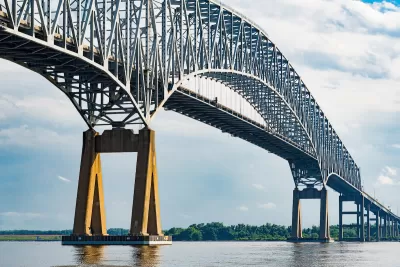
In an interview with Governing, civil engineer Sherif El-Tawil explains how bridges can be built to better withstand ship collisions like the one that damaged the Francis Scott Key Bridge in Baltimore on March 26.
El-Tawil explains that a similar collision in 1980 prompted new federal regulations that took effect in the early 1990s — three years after the Baltimore bridge was built. “What those specifications say is that you either design the bridge for the impact force that a ship can deliver or you must protect the bridge against that impact force. So you must have a protective system.”
El-Tawil notes that such ship collisions are extremely rare, which could explain the lack of expensive protective mechanisms on the Key Bridge. Still, the loss of the bridge will have a major impact on shipping and the national supply chain. “The loss of this bridge, beyond the tragic loss of life, is going to be felt for many months if not years. It’s not a straightforward process to replace a bridge of this magnitude, of this span distance. It’s something that will require a lot of planning and a lot of resources to come back again to where we were before.”
FULL STORY: How Bridges Can Be Protected From Ship Collisions

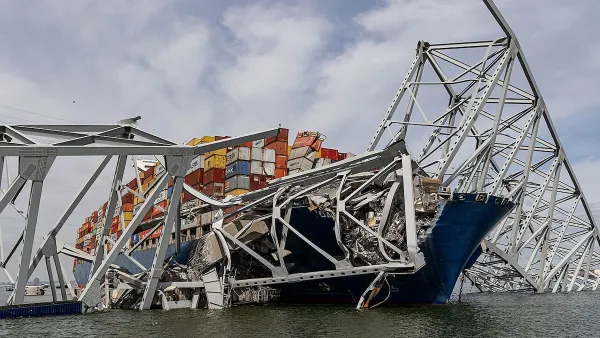
Baltimore Traffic Suffering From Absence of Key Bridge
The loss of a key route to the Port of Baltimore is causing major delays and long detours on alternate routes.
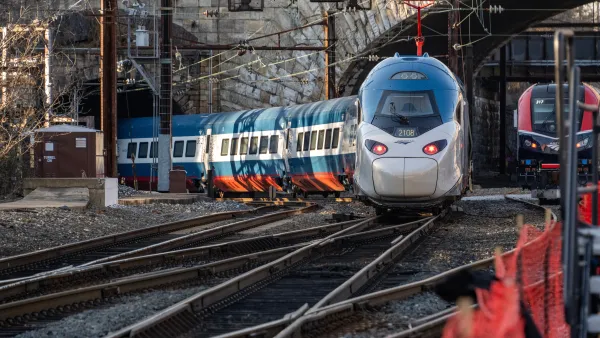
Amtrak’s $6 billion tunnel project moves closer to a faster Northeast Corridor
The Baltimore & Potomac Tunnel Replacement Program is Amtrak's largest-ever single infrastructure investment, and will pave the way for more reliable passenger rail service between Baltimore, Washington and Virginia.

Baltimore’s historically-Black communities receive upgraded pools after decades of neglect
Four pools have already been renovated, with a fifth set to open in 2028.

The state-sanctioned urbicide of Austin
People don’t kill cities. Freeways do.

US to reduce Colorado River water deliveries to Mexico
A new Colorado Treaty amendment reduces Mexico’s Colorado River water allocation by 250,000 acre feet.

New Jersey’s second-largest city bans standalone data centers
Jersey City will continue to allow co-location facilities, such as those meant for research institutions that store their own data.

Amtrak not solely to blame for New Jersey commuter rail's unreliability, report finds
A new study from the Garden State Initiative found that NJ Transit’s budget grew 20% across a 4 year period, but reliability declined significantly over the same period.

EPA erases limits on planet-warming pollution from power plants
Under Monday’s plan, power plants would still have some limits on how much mercury, arsenic and other contaminants they can emit.

Phoenix announces new on-demand transit service, more frequent RAPID buses
Both new services will launch in October, and are part of Phoenix's Project Effective Access Solutions for Easing Congestion.

FREE Course: Walkable City 1: Why Walkability?
After describing his path towards focusing on walkability as the essence of good planning, Jeff Speck marches through his five principal reasons for making more walkable places.
Reinventing Malls: Planning Alchemy—Turning Gray Fields Into Gold
The course focuses on the opportunities and imperatives that shape reinvention of mall sites.

Eagle County Government
Harvard University Graduate School of Design
Nashville Planning Department
The Architects Foundation
University of Cincinnati Online
The Pocatello Development Authority
The Urban Renewal Agency of the City of Pocatello
Journal of the American Planning Association