More Americans than ever agree climate change is happening—but fewer agree on what to do about it.


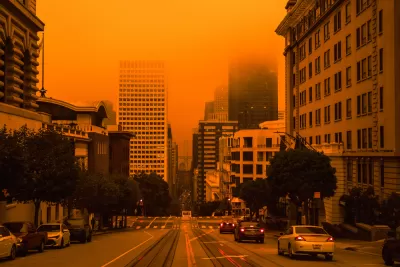
New survey data from Yale University shows that the majority of Americans—72 percent—now believe that climate change is real. But people of different political stripes agree on little beyond that, report Denise Chow and Chase Cain for NBC News.
According to the survey, the perception of risk is rising steadily, even in the most conservative-leaning states. However, “While there is scientific consensus that human activities, such as burning fossil fuels, are the main driver of climate change, only 58% percent of Americans across the country echoed that conclusion.”
Although opinion remains divided on how to respond, support for climate-friendly policies also grew overall, even in typically hands-off states like Idaho. “Though there can be deep divisions between Democrats and Republicans on climate change, research suggests that global warming is on people’s minds regardless of their party affiliation.”
FULL STORY: Americans are warming to climate change — but they can't agree after that

New Jersey Has a Plan to Shift to Clean Energy, but Questions Remain
The state’s energy plan focuses on the move to renewable energy, but specifics about how that will happen and what the costs will be need to be pinned down.
Court unfreezes $20B in federal climate grants
A U.S. Court of Appeals ruled that the Trump administration potentially violated the Inflation Reduction Act by attempting to claw back grants awarded under the Greenhouse Gas Reduction Fund program.
Portland's clean energy fund has generated $1 billion for climate action
Since 2019, the city has levied a 1% sales tax on large corporations to support climate resilience and clean energy projects.

Planetizen Federal Action Tracker
A weekly monitor of how Trump’s orders and actions are impacting planners and planning in America.

The state-sanctioned urbicide of Austin
People don’t kill cities. Freeways do.

US to reduce Colorado River water deliveries to Mexico
A new Colorado Treaty amendment reduces Mexico’s Colorado River water allocation by 250,000 acre feet.

Mamdani overhauls NYC's Vision Zero plan with 100 new policy goals
The overhaul aims to reduce traffic deaths and make streets safer for pedestrians, cyclists and drivers through lower speed limits, new safety infrastructure and more.

Amtrak not solely to blame for New Jersey commuter rail's unreliability, report finds
A new study from the Garden State Initiative found that NJ Transit’s budget grew 20% across a 4 year period, but reliability declined significantly over the same period.

EPA erases limits on planet-warming pollution from power plants
Under Monday’s plan, power plants would still have some limits on how much mercury, arsenic and other contaminants they can emit.

FREE Course: Walkable City 1: Why Walkability?
After describing his path towards focusing on walkability as the essence of good planning, Jeff Speck marches through his five principal reasons for making more walkable places.
Reinventing Malls: Planning Alchemy—Turning Gray Fields Into Gold
The course focuses on the opportunities and imperatives that shape reinvention of mall sites.

Eagle County Government
Harvard University Graduate School of Design
Nashville Planning Department
The Architects Foundation
University of Cincinnati Online
The Pocatello Development Authority
The Urban Renewal Agency of the City of Pocatello
Journal of the American Planning Association