The state developed a framework for planning to phase out natural gas, denying industry calls to allow hydrogen and renewable natural gas.



The Massachusetts Department of Public Utilities released a “framework for reducing the use of gas for heating as part of a larger strategy to address climate change.” According to an article by Dan Gearino in Inside Climate News, “Massachusetts is the first state to take such a clear step to phase out natural gas, but it likely won’t be the last.” Natural gas powers 51 percent of Massachusetts households, giving the change the potential to make a significant impact.
The ruling acknowledges the disproportionate impact that the cost of shifting away from natural gas will have on lower-income consumers and homeowners, but said only that the department will “monitor and reduce the energy cost burden.” Jenifer Bosco of the National Consumer Law Center told Inside Climate News, “Without a focus on affordability, low-income consumers could be left stranded on an increasingly unaffordable gas system, bearing more than their share of the cost to keep the system operating.”
Energy companies have been lobbying to allow the use of other alternative fuels such as hydrogen and renewable natural gas. “The department rejected most of the utilities’ suggestions, with some of the only agreement coming on the idea that the companies should explore greater use of geothermal energy.”
FULL STORY: Massachusetts Just Took a Big Step Away from Natural Gas. Which States Might Follow?


Improving Indoor Air Quality, One Block at a Time
A movement to switch to electric appliances at the neighborhood scale is taking off in California.

Geothermal Pilot Program Breaks Ground in Massachusetts
A first-of-its-kind’ program will connect roughly 40 residential and commercial buildings to an underground geothermal network that will replace fossil fuel-powered furnaces.
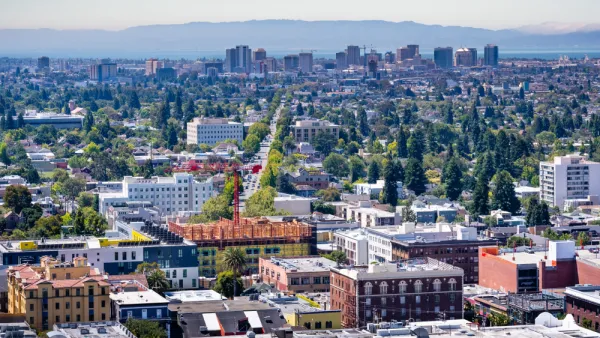
Another Berkeley 'First': Banning Natural Gas Lines in New Buildings
On Tuesday night, the City Council of Berkeley, Calif., unanimously voted to ban natural gas infrastructure from new buildings starting next year, the first city in the U.S. to pass such an ordinance. Fifty cities in the state could be next.

Planetizen Federal Action Tracker
A weekly monitor of how Trump’s orders and actions are impacting planners and planning in America.

The state-sanctioned urbicide of Austin
People don’t kill cities. Freeways do.

US to reduce Colorado River water deliveries to Mexico
A new Colorado Treaty amendment reduces Mexico’s Colorado River water allocation by 250,000 acre feet.

Baltimore to break ground on $50 million Transit Priority Project
The project will bring faster bus trips, safer streets and better bike connections to Baltimore.

Airbnb launches $250 million 'last-dollar financing' housing accelerator, makes first investment in Austin
The company will put $6.4 million towards affordable housing development in Texas’ capital.

Guerilla urbanists are building DIY bus stop benches in Chicago
A before-and-after of one of the bus stops with a new bench. The new benches are not officially sanctioned or permitted, but the residents who placed them hope they will be the start of a network of DIY benches across the city.

FREE Course: Walkable City 1: Why Walkability?
After describing his path towards focusing on walkability as the essence of good planning, Jeff Speck marches through his five principal reasons for making more walkable places.
Reinventing Malls: Planning Alchemy—Turning Gray Fields Into Gold
The course focuses on the opportunities and imperatives that shape reinvention of mall sites.

Eagle County Government
Harvard University Graduate School of Design
Nashville Planning Department
The Architects Foundation
University of Cincinnati Online
The Pocatello Development Authority
The Urban Renewal Agency of the City of Pocatello
Journal of the American Planning Association