The proposed rule would apply to residents of multifamily housing supported by federal rental assistance.



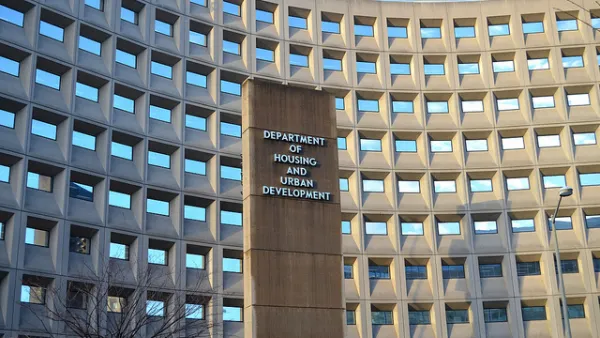
A proposed rule from the U.S. Department of Housing and Urban Development (HUD) would make permanent a pandemic-era regulation governing affordable housing residents at risk of eviction, reports Kimberly Bonvissuto in McKnight Senior Living.
The rule would mandate a 30-day notification period for evictions for rent nonpayment. “The proposed rule also would require the notice to include instructions on how residents can resolve lease violations, and information on how to recertify their income and request a minimum rent hardship exemption, if applicable, to avoid eviction.”
The rule could impact as many as 3.9 million people. “HUD estimated that 70% of HUD-assisted households for PBRAs and public housing live in states that require housing provides to provide tenants with an eviction notice seven days or less before eviction, 26% of these households live in states that require eight to 14 days notice, and 3% live in states that require 15 to 30 days notice.”
Read the full story: Proposed HUD rule formalizes pandemic-era protections for affordable housing residents


Boulder's Eviction Prevention Program, One Year Later
A program created last year to assist tenants and prevent evictions has helped close to 400 households in its first year.
HUD Secretary: Administration Must Restore Depleted Staff
To take on President Biden's ambitious housing goals, the agency needs to restore the staff lost during the Trump era.

Analysis: ROAD to Housing Act could take years to implement
HUD is tasked with implementing nine new rules as part of the ROAD to Housing Act — while operating with a significantly reduced staff.

Planetizen Federal Action Tracker
A weekly monitor of how Trump’s orders and actions are impacting planners and planning in America.

California plans to bury El Niño’s downpour
If the state plays its cards right, it may be able to store a billion acre-feet of El Niño’s water in aquifers.

Desperate measures: Advocates weigh draining Lake Powell to fill Colorado River
Draining the reservoir could reduce evaporation losses by a couple hundred thousand acre-feet.

MTA gives itself 30 days to transform pit into basketball court
The site has been under construction since 2022; the city originally estimated it would finish the court in 2024.

Non-stop party: Chicago voters weigh permanent festival grounds
A stable place for bleachers, stages and drainage may streamline the setup and teardown of large events.

Metra may invest $9.1 billion in regional rail
The agency released a draft of a study examining potential ways to offer more frequent train service.

FREE Course: Walkable City 1: Why Walkability?
After describing his path towards focusing on walkability as the essence of good planning, Jeff Speck marches through his five principal reasons for making more walkable places.
Reinventing Malls: Planning Alchemy—Turning Gray Fields Into Gold
The course focuses on the opportunities and imperatives that shape reinvention of mall sites.


City of Rosemead
Rutgers University, Edward J. Bloustein School of Planning and Public Policy
One Hundred Miles
Hunter College, City University of New York (CUNY)
The Architects Foundation
University of Cincinnati Online
City of Cambridge
Montrose County
The Pocatello Development Authority