Learn more about ways to improve park equity with Norma García-González, the director of the Los Angeles County Department of Parks and Recreation, and Catherine Nagel, the executive director of the City Parks Alliance.


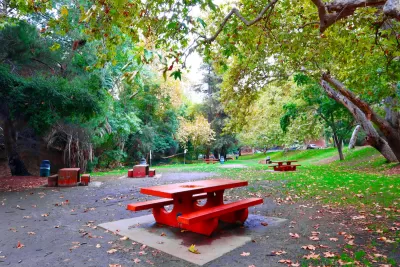
How is park equity being advanced in Los Angeles County and in other cities across the country? This episode of Resources Radio, a weekly podcast from Resources for the Future, addresses this and other related questions. Specifically, host Margaret Walls interviews Norma García-González, the director of L.A. County's Department of Parks and Recreation (DPR), and Catherine Nagel, the executive director of the City Parks Alliance.
Some of the notable quotes include:
- Urban park systems are booming: “The fact is that in the last half-century, we’ve seen a growth in the urban population. So, the need for, and the number of, urban parks has grown, and there’s been a true renaissance of park-making that is doing so many things for cities beyond just providing the traditional recreation benefits.” —Nagel
- Community engagement can foster support for public parks: “We resoundingly heard how critical parks are and the need to create more parks, especially in communities of color and urban areas, as well as the critical importance of taking care of park infrastructure … There was a lot of critical data, but what really happened is we created this movement that was centered in community, and that really set the stage in our Park Needs Assessment to provide data that informed [a ballot initiative to fund public parks], which was resoundingly approved by the voters in Los Angeles County, receiving almost 75 percent of voter approval.” —García-González
- Some urban park systems are using data to inform more equitable decision-making: “[Some cities] were not just addressing [inequities], but they were using data to make the decisions about how they were going to use public budgets to address the needs of the communities that had really not been paid attention to for many years. We saw cities using data sets to look at, for example, air quality and what part of the city had high levels of pollution and asthma rates … That’s a very new approach to how a community can make a decision about its use and appropriation of public funds.” —Nagel
- There is a significant need to restore and heal degraded lands: “We have created a road map in Los Angeles County that not only looks at areas where we need to conserve park lands, public lands, but in areas where we need to restore and heal lands to support and to address deep environmental burdens that have come with toxicities and degraded lands. So, we have now gone beyond just building parks in high-need communities to thinking about using this data to heal land and to restore degraded lands as an environmental-restoration initiative for Los Angeles County.” —García-González
To listen and learn more, please go to the source link.
FULL STORY: Creating an Equitable Urban Park System, with Norma Garcia-Gonzalez and Catherine Nagel

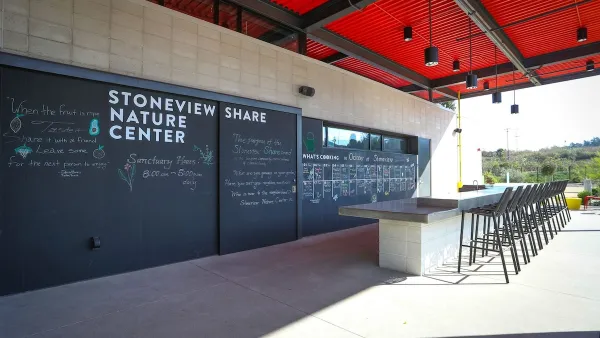
How LA County Parks are Fostering Equity
Los Angeles County's Department of Parks and Recreation actively engages the public through diverse methods to ensure parks and recreation programming align with community needs and priorities.
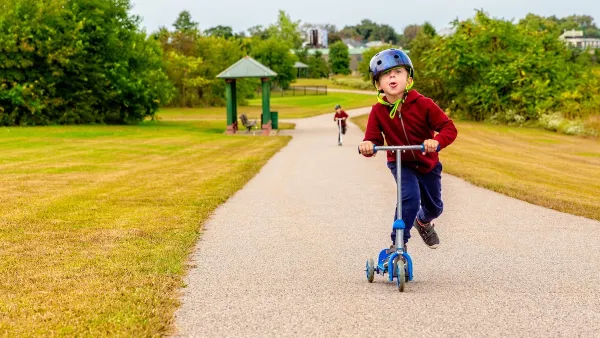
How Local Parks Promote Equitable Outdoor Access
Targeted investments in local parks, improved infrastructure, and enhanced transit connectivity are essential strategies to close the nature gap and ensure equitable outdoor access for underserved communities.
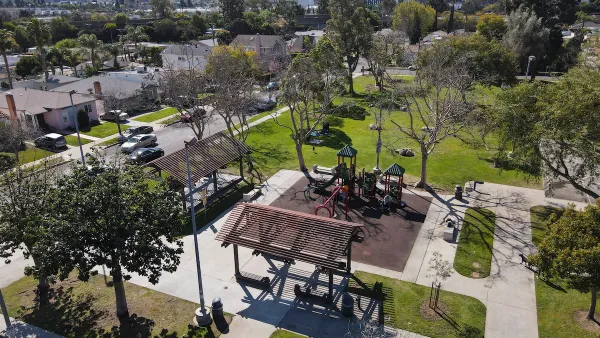
LA County Releases Funding for Parkland Acquisition in Underserved Communities
Los Angeles County has released $14.5 million in Measure A grant funds to support parkland acquisition in high-need areas, aiming to create additional green spaces and advance environmental justice and equity.

Planetizen Federal Action Tracker
A weekly monitor of how Trump’s orders and actions are impacting planners and planning in America.

The state-sanctioned urbicide of Austin
People don’t kill cities. Freeways do.

US to reduce Colorado River water deliveries to Mexico
A new Colorado Treaty amendment reduces Mexico’s Colorado River water allocation by 250,000 acre feet.

5 New England states march closer to 800 megawatt wind energy project
Securing federal approval for the project may be complicated under the Trump administration, which has historically been hostile towards domestic wind power.

Baltimore to break ground on $50 million Transit Priority Project
The project will bring faster bus trips, safer streets and better bike connections to Baltimore.

Airbnb launches $250 million 'last-dollar financing' housing accelerator, makes first investment in Austin
The company will put $6.4 million towards affordable housing development in Texas’ capital.

FREE Course: Walkable City 1: Why Walkability?
After describing his path towards focusing on walkability as the essence of good planning, Jeff Speck marches through his five principal reasons for making more walkable places.
Reinventing Malls: Planning Alchemy—Turning Gray Fields Into Gold
The course focuses on the opportunities and imperatives that shape reinvention of mall sites.

Eagle County Government
Harvard University Graduate School of Design
Nashville Planning Department
The Architects Foundation
University of Cincinnati Online
The Pocatello Development Authority
The Urban Renewal Agency of the City of Pocatello
Journal of the American Planning Association