The mandate doesn’t include additional funding, prompting backlash from utility companies.


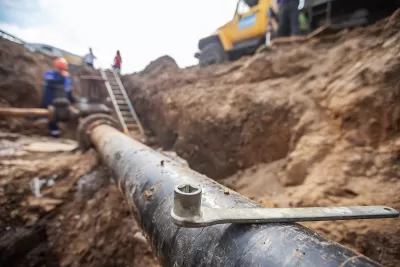
A proposed rule from the Environmental Protection Agency (EPA) would require water utilities to identify and remove pipes with any level of lead over ten years, reports Kery Murakami for Route Fifty.
While the rule would not add new funding, “The 2021 Infrastructure Investment and Jobs Act did include $15 billion to remove lead pipes, as well as $11.7 billion in Drinking Water State Revolving Funds that can also be used for that purpose.” The industry estimates removing all lead pipes around the country could cost as much as $47 billion, saying they may be forced to raise rates for customers.
“But getting less notice is that agencies with the most lead pipes will get a little more time to meet the requirement,” Murakami adds. “Specifically, the agency said it would give utilities that have to replace more than 10,000 service lines a year ‘as many years as necessary’ to replace all the lead pipes “as quickly as feasible.’” The use of lead pipes for drinking water has been outlawed since 1986.
The proposal would also require cities to pass laws requiring private property owners to replace their own lead pipes or give the local utility access to do so. “The EPA argued that the cost of removing virtually all of the nation’s lead pipes is worth the price because of the harm they are causing to not only children but adults, too.”
Read the full story: EPA proposes all lead pipes be replaced within 10 years

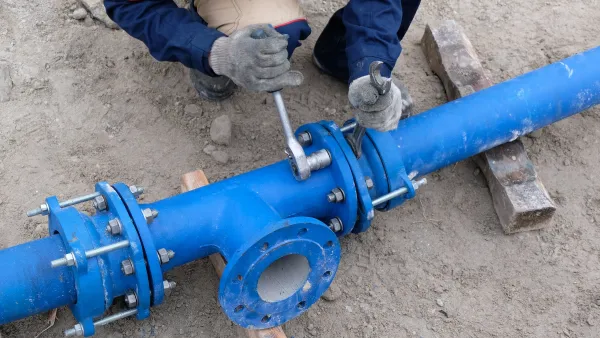
Replacing lead pipes in Chicago costs more than 6 times the national average — and authorities can't explain why
Replacing one lead pipe in Chicago costs around $31,000, while the national average cost sits at around $4,700 per line.
How the U.S. Environmental Protection Agency Failed the People of Flint
While blame squarely lays with Michigan state officials, agencies, and possibly Gov. Rick Snyder himself, the EPA also played a role by both detecting the cause of the problem but not acting on the reports of improper treatment of river water.
First Step to Restoring Drinking Water for Flint—Coat the Existing Pipes
Gov. Rick Snyder (R-Mich.) announced on Wednesday that the state is working to ensuring safe tap water for Flint residents. While there is no schedule to replace the corroded lead pipes, they are being treated to prevent further lead leaching.

Planetizen Federal Action Tracker
A weekly monitor of how Trump’s orders and actions are impacting planners and planning in America.

The state-sanctioned urbicide of Austin
People don’t kill cities. Freeways do.

US to reduce Colorado River water deliveries to Mexico
A new Colorado Treaty amendment reduces Mexico’s Colorado River water allocation by 250,000 acre feet.

Brightline West’s future may rely on $6 billion federal loan
The company has until Nov. 2 to make a $400 million equity investment into its proposed high-speed rail line.

LA Metro’s ultimatum: no extra buses for LA28 if federal funding isn’t imminently secured
If Metro does not provide additional buses, LA28 organizers will have to find a new way to manage Olympic traffic. LA28’s budget does not include a line item for transit.

Colorado’s Largest Data Center Could Rise Next to Homes — Without a Public Hearing
The proposed campus would consume 11 times the power of Denver International Airport; as it has across the country, opposition mounts.

FREE Course: Walkable City 1: Why Walkability?
After describing his path towards focusing on walkability as the essence of good planning, Jeff Speck marches through his five principal reasons for making more walkable places.
Reinventing Malls: Planning Alchemy—Turning Gray Fields Into Gold
The course focuses on the opportunities and imperatives that shape reinvention of mall sites.

Eagle County Government
Harvard University Graduate School of Design
Nashville Planning Department
The Architects Foundation
University of Cincinnati Online
The Pocatello Development Authority
The Urban Renewal Agency of the City of Pocatello
Journal of the American Planning Association