Texans will decide on November 7 whether to subsidize electricity generation to strengthen the power grid to prevent blackouts, but only with the construction of new natural gas power plants.


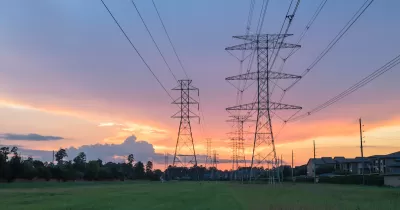
Update November 8: Proposition 7 passed with nearly 65 percent of the vote, according to Ballotpedia.
“TXOGA is pleased to see infrastructure propositions to expand water, electricity and broadband pass with overwhelming support from voters,” said Todd Staples, President of the Texas Oil & Gas Association, referring to Proposition 6 and Proposition 8, as well as Prop. 7, in a statement on November 7. “With an estimated 1,000 people a day moving to the Lone Star State, growing infrastructure is essential to the success of every Texan.”
“Today, voters in Texas will decide whether to provide billions of taxpayer dollars for the construction of natural-gas-fired power plants,” reports Maxine Joselow, chief writer for The Washington Post's Climate 202 newsletter on Nov. 7, Election Day.
The [legislatively referred] constitutional amendment, which is almost certain to pass, seeks to solve the crisis facing the electric grid in Texas, where a 2021 winter freeze killed 246 people and caused millions to lose power. But not everyone agrees it’s the right solution.
[Planetizen coverage of Winter Storm 2021 began on Feb. 18, 2021].
The topic is certainly now a new one—but focusing almost solely on natural gas power is a controversial approach to electricity reliability.
[See: Energy Reliability Vs. the Environment, August 22, 2023]
“Modernization of electric generation facilities”
Voters will not see “natural gas power plants” on their ballots. Voters will be asked in Proposition 7 whether they wish to support the creation of the “Texas Energy Fund and authorize funding to modernize electric generation facilities.”
The proposition carries a $10 billion price tag. Unlike many California ballot measures, which are often funded by taxpayer-supported general obligation bonds, or funding from ratepayers, “[m]oney in the fund would consist of money appropriated by the state legislature; investment returns from the fund; and gifts, grants, and donations contributed to the fund,” according to Ballotpedia.
“While the proposal doesn’t explicitly mention natural gas plants, it would primarily benefit them,” adds Joselow of The Washington Post.
That’s because the loans and grants would be reserved for projects that are “dispatchable,” meaning they can quickly adjust the amount of power they feed the grid.
Gas plants are dispatchable, while weather-dependent wind and solar farms are not. The measure also specifies that giant batteries are not eligible for the loans and grants, even though they are dispatchable — and they played a crucial role in preventing power outages when a punishing heat dome settled over the state this summer.
Funding will be allocated for three purposes:
- Most of that money — about $7.2 billion — would go toward low-interest loans and grants for power projects in the region served by the Electric Reliability Council of Texas, the state’s main grid operator.
- Another $1 billion worth of loans and grants would go to power projects outside ERCOT.
- The remaining $1.8 billion would help pay for microgrids, or small-scale power systems that can operate independently of the grid, at critical facilities such as hospitals.
Ballotpedia excerpted statements from editorials from six major Texas daily newspapers – three in support and three opposed. A sample:
- Houston Chronicle Editorial Board: “Proposition 7 is hardly perfect, but as a sum of its parts it could be an effective bridge solution for keeping our lights on and ACs running. We urge a 'for' vote on Proposition 7.”
- Austin American-Statesman Editorial Board: “With this amendment, the state shows its hand that it is wiling to help one player only — natural gas-powered electric plants, which can harm the environment and be more expensive to operate than cleaner solutions. If natural gas-powered plants are needed, they should be able to get their own financing to build. Vote ‘No.‘”
FULL STORY: Texans to vote on providing billions in taxpayer money for gas plants

Disaster Averted!
The California power grid withstood its biggest test ever on Tuesday and passed—barely. The only rolling blackouts that occurred during the Stage Three Energy Emergency alert were results of miscommunication.
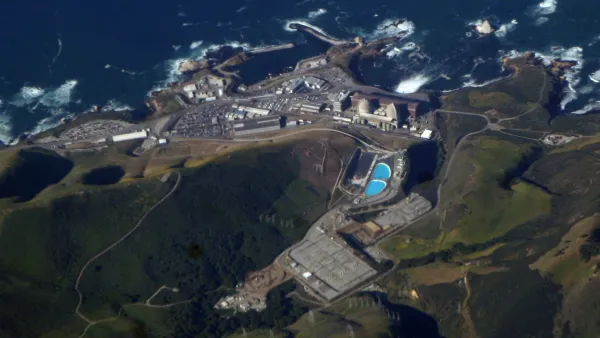
Funding Allocated to Extend Life of Diablo Canyon Nuclear Power Plant
In order to to ensure that the lights stay on, the California legislature approved allocating up to $75 million to extend the life of the state's sole remaining nuclear plant and four natural gas powered plants, to the chagrin of environmentalists.
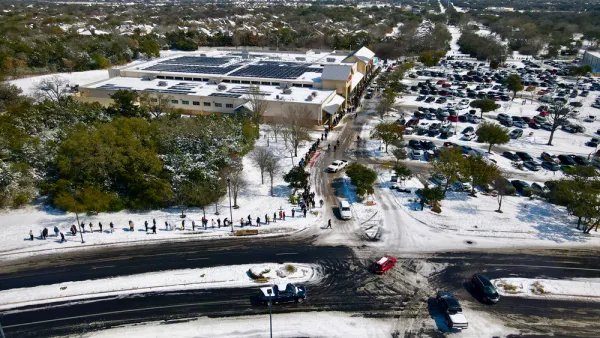
Blaming ERCOT
The Electric Reliability Council of Texas (ERCOT), the nonprofit, independent power grid operator for 90 percent of the nation's second-largest state, has become the convenient fall guy for the epic power failure caused by an extreme weather event.

The state-sanctioned urbicide of Austin
People don’t kill cities. Freeways do.

US to reduce Colorado River water deliveries to Mexico
A new Colorado Treaty amendment reduces Mexico’s Colorado River water allocation by 250,000 acre feet.

New Jersey’s second-largest city bans standalone data centers
Jersey City will continue to allow co-location facilities, such as those meant for research institutions that store their own data.

Amtrak not solely to blame for New Jersey commuter rail's unreliability, report finds
A new study from the Garden State Initiative found that NJ Transit’s budget grew 20% across a 4 year period, but reliability declined significantly over the same period.

EPA erases limits on planet-warming pollution from power plants
Under Monday’s plan, power plants would still have some limits on how much mercury, arsenic and other contaminants they can emit.

Phoenix announces new on-demand transit service, more frequent RAPID buses
Both new services will launch in October, and are part of Phoenix's Project Effective Access Solutions for Easing Congestion.

FREE Course: Walkable City 1: Why Walkability?
After describing his path towards focusing on walkability as the essence of good planning, Jeff Speck marches through his five principal reasons for making more walkable places.
Reinventing Malls: Planning Alchemy—Turning Gray Fields Into Gold
The course focuses on the opportunities and imperatives that shape reinvention of mall sites.

Eagle County Government
Harvard University Graduate School of Design
Nashville Planning Department
The Architects Foundation
University of Cincinnati Online
The Pocatello Development Authority
The Urban Renewal Agency of the City of Pocatello
Journal of the American Planning Association