The summer issue of Metropolis Magazine calls on designers to embrace the beauty in circularity.


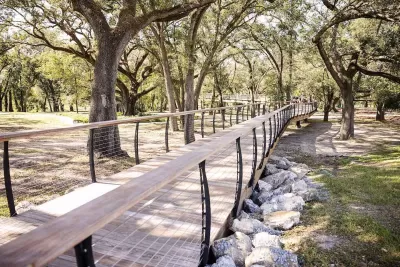
The July/August 2023 issue of Metropolis focuses on regenerative design, asking whether designers can embrace circularity as a new form of beauty in architecture and urban design.
Using examples such as Bonnet Springs Park in Lakeland, Florida, a former industrial site that is now a lush park welcoming a million visitors in just its first seven months, Avinash Rajagopal writes in the introduction to the issue that there is “another kind of beauty in the best adaptive reuse projects—the hidden joys of flexible design details, dormant until the next architect or designer tasked with preparing the building for a new use discovers them.”
Adaptive reuse and circularity, Rajagopal writes, reveal “the beauty of entrepreneurship, the ability to see value where others cannot and to turn that into economic and social opportunity.”
For Rajagopal, “There are many practical reasons for pursuing circularity in the built environment. But what excites me the most is that in our effort to save ourselves and other life on the planet, we have embarked on a quest for new forms of beauty.”
FULL STORY: Can Designers Find New Beauty in Circularity?

Portland Learning from Los Angeles
An interdisciplinary team of urban designers, architects, and analysts have proposed a neo-retro-futurist scenario for making downtown Portland nearly car-free by 2050.
How to get away from 'single-use buildings'
The construction industry creates 40% of global carbon emissions. Can it do better?
From SoHo to SoDoSoPa
How zoning made great neighborhoods illegal to build, and preordained gentrification.

Planetizen Federal Action Tracker
A weekly monitor of how Trump’s orders and actions are impacting planners and planning in America.

The state-sanctioned urbicide of Austin
People don’t kill cities. Freeways do.

US to reduce Colorado River water deliveries to Mexico
A new Colorado Treaty amendment reduces Mexico’s Colorado River water allocation by 250,000 acre feet.

Colorado’s Largest Data Center Could Rise Next to Homes — Without a Public Hearing
The proposed campus would consume 11 times the power of Denver International Airport; as it has across the country, opposition mounts.

5 New England states march closer to 800 megawatt wind energy project
Securing federal approval for the project may be complicated under the Trump administration, which has historically been hostile towards domestic wind power.

Baltimore to break ground on $50 million Transit Priority Project
The project will bring faster bus trips, safer streets and better bike connections to Baltimore.

FREE Course: Walkable City 1: Why Walkability?
After describing his path towards focusing on walkability as the essence of good planning, Jeff Speck marches through his five principal reasons for making more walkable places.
Reinventing Malls: Planning Alchemy—Turning Gray Fields Into Gold
The course focuses on the opportunities and imperatives that shape reinvention of mall sites.

Eagle County Government
Harvard University Graduate School of Design
Nashville Planning Department
The Architects Foundation
University of Cincinnati Online
The Pocatello Development Authority
The Urban Renewal Agency of the City of Pocatello
Journal of the American Planning Association