How zoning made great neighborhoods illegal to build, and preordained gentrification.


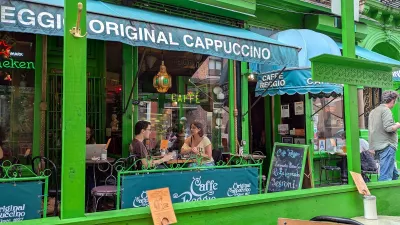
In the 1970s, influential social theorists like Daniel Bell began to speak of a “post-industrial society” in which automation would make menial labor a thing of the past. In the 2000s, urban theorist Richard Florida described how the “rise of the creative class,” rather than blue collar manufacturing work, was the key to urban economic growth. Industry was an anachronism.
Urban planners did not just respond to these theories, they precipitated them. In its 1961 rezoning, New York City banned new industrial leases in large parts of Manhattan, all but ensuring a post-industrial future for the island. Subsequent rezonings during the Bloomberg administration would continue this trend in the outer boroughs, directing new housing construction to industrial areas.
As San Francisco belatedly began to reckon with its self-created housing shortage in the 2000s, it, too, planned for new development in its industrial neighborhoods. Other big cities pursued similar policies. Between 2000 and 2010, Atlanta, Boston, Baltimore, Minneapolis and San Jose all rezoned between 12 and 20 percent of their industrial land for residential or other uses. Cities went from separating homes and industry, to specifically directing new housing to industrial areas.
Getting the public, especially its most affluent members, comfortable with living in an industrial neighborhood required a massive cultural shift. Artists were at the vanguard of this revolution of consciousness. Starting as early as the 1950s, artists began moving into industrial lofts south of Houston Street and north of Canal, in the middle of Lower Manhattan.
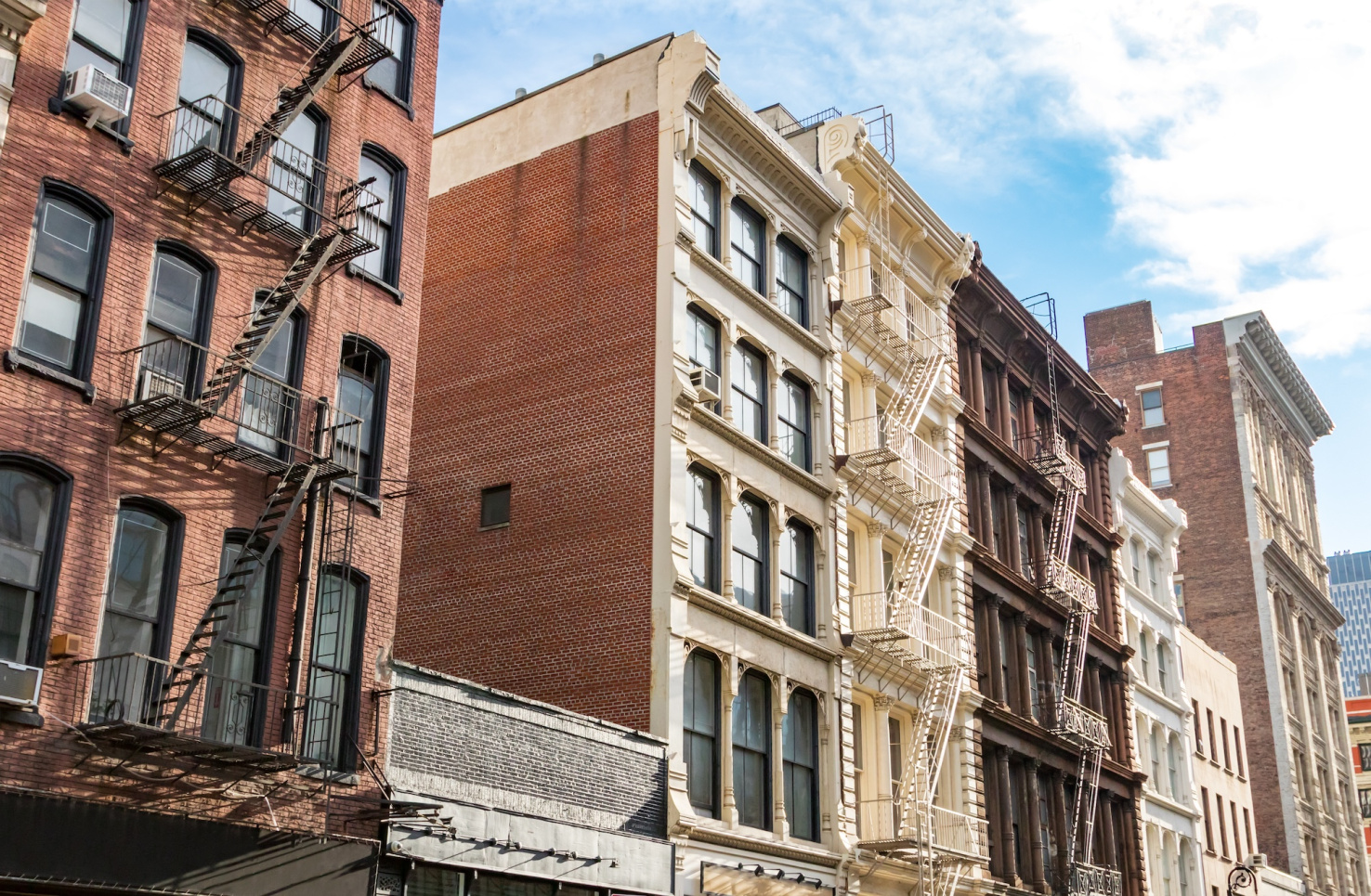
Lofts’ large floor plates, big windows, high ceilings, and cargo elevators were put to use by a rising generation of abstract expressionists like Robert Rauschenberg, minimalists like Donald Judd, and conceptual artists like Nam June Paik, who were making bigger, weirder works than the world had ever seen.
Up until the late 1960s, this area was not called SoHo. It was just another Lower Manhattan industrial backwater, a district that didn’t need a proper name because the businesses operating there had no use for one. But as more residents began to follow artists into the neighborhood, real estate interests saw it in a new light. This post-industrial place needed a post-industrial identity, and so the real estate press christened it SoHo, for South of Houston Street.
This new brand effectively wiped away old associations people had with the neighborhood and its industrial architecture. No longer ugly and foreboding, evoking child labor and billowing smoke, its loft buildings came to be seen as edgy and charming. Creative class knowledge workers, in “industries,” as they were now called, like media, design, and advertising, were attracted to the authenticity of these old spaces where their grandparents may have toiled.
“Only people who do not know the steam and sweat of a real factory can find industrial space romantic or interesting,” sociologist Sharon Zukin writes of the initial gentrification of SoHo in the 1970s. Like the European modern architects who celebrated America’s industrial architecture, members of the post-industrial society were able to view industrial buildings as art objects plucked from their unsavory context.
In the ensuing decades, other urban industrial districts embarked on similar transformations. In Los Angeles’ Arts District and Miami’s Wynwood, artists in search of spacious, affordable workspaces paved the way for radical neighborhood transformations. These mural-covered quarters are now among their cities’ most significant tourist attractions and business hubs.
Other post-industrial neighborhoods resemble SoHo more in their nomenclature: See Brooklyn’s DUMBO, Denver’s RiNo, or Washington’s NoMa. In San Francisco, erstwhile canneries and coffee roasters in SoMa transformed into “multimedia gulch” in the 1990s, incubating the companies of the Web 1.0 era. No longer can you buy wholesale meat at Chicago’s Fulton Market, but you do have your choice of places to tuck into an Eggs Benedict.
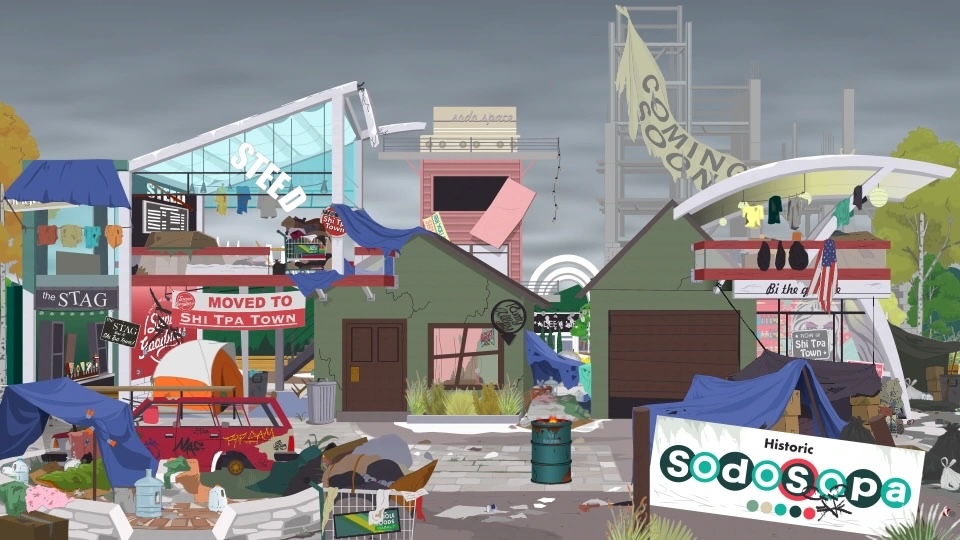
Post-industrial neighborhoods are low-hanging fruit for critics of gentrification. South Park skewered the naming conventions and cultural tropes of these places with its 2015 “SoDoSoPa” episode, in which a Whole Foods is constructed next to a crumbling shanty town in order to capitalize on the district’s “rustic charm.”
In a similar vein, scholars like Zukin frame post-industrial neighborhood transition as part of a conspiracy between developers and city planners to remove working class people, and their jobs, from centrally located neighborhoods. While there’s some truth to this perspective, it neglects the demand side of the equation. Many people gravitated to post-industrial neighborhoods not because of some kind of South Parkian poverty fetish, but because they were conveniently located and relatively affordable.
In a sense, the rebirth of historic industrial urban neighborhoods was preordained. These pre-zoning neighborhoods are typically walkable and mixed-use. In cities with a scarcity of such spaces, and an unwillingness to create more of them, people seeking an urban way of life naturally found their way there. Cities created the conditions for this transition not only by allowing housing in post-industrial areas, but by banning it virtually everywhere else.
The results aren’t always South Park-worthy. Some of these neighborhoods, like LA’s Arts District and Brooklyn’s Williamsburg, are architecturally invigorating collections of contemporary apartment buildings and historic warehouses. Sometimes, the former literally sprouts from the preserved facade of the latter, offering an on-the-nose metaphor for the neighborhood’s shifting identity.
What post-industrial neighborhoods lack in subtlety they make up for in their symbolism. Here, the currents of economic and cultural change are plain to see in the cityscape. Their evolution reveals a great deal about what city dwellers want from their neighborhoods.
This piece is an excerpt from The Unfinished Metropolis, Ben Schneider’s new book exploring how America’s favorite things to build — freeways, single-family homes, malls, and downtown office towers — are keeping us stuck in the past. In The Unfinished Metropolis, Schneider argues for the reclamation of the lost art of city-building in the modern day. Read more excerpts, and more of Ben’s work here.
From The Unfinished Metropolis: Igniting the City-Building Revolution Copyright © 2025 by Benjamin Schneider by permission of Island Press, Washington, D.C.

Where Urban Design Is Headed in 2024
A forecast of likely trends in urban design and architecture.
The Case for a Walkable Honolulu
Why supporting mixed use development and ground-level retail can solve the city’s housing and walkability crises at the same time.
The Simple Legislative Tool Transforming Vacant Downtowns
In California, Michigan and Georgia, an easy win is bringing dollars — and delight — back to city centers.

Planetizen Federal Action Tracker
A weekly monitor of how Trump’s orders and actions are impacting planners and planning in America.

California plans to bury El Niño’s downpour
If the state plays its cards right, it may be able to store a billion acre-feet of El Niño’s water in aquifers.

Chicago breaks ground on $3 billion megadevelopment
The new neighborhood, titled Foundry Park, will one day host 3,700 residences.

One of Denver’s busiest corridors to gain BRT
The project will span 18 miles and contain 74 bus rapid transit stations.

275,000 bus trips are at stake on Seattle's ballot
If passed, the Seattle Transit Measure would trigger a 0.3% sales tax and raise an average of $138 million per year to maintain and expand Seattle’s bus services.

Texas may pay Israeli company billions to ease water woes
Texas awarded IDE Technologies the contract for its Harbor Island project, which is slated to become the Western Hemisphere's largest desalination plant.

FREE Course: Walkable City 1: Why Walkability?
After describing his path towards focusing on walkability as the essence of good planning, Jeff Speck marches through his five principal reasons for making more walkable places.
Reinventing Malls: Planning Alchemy—Turning Gray Fields Into Gold
The course focuses on the opportunities and imperatives that shape reinvention of mall sites.

City of Rosemead
Rutgers University, Edward J. Bloustein School of Planning and Public Policy
One Hundred Miles
Hunter College, City University of New York (CUNY)
The Architects Foundation
University of Cincinnati Online
City of Cambridge
Montrose County
The Pocatello Development Authority


