The construction industry creates 40% of global carbon emissions. Can it do better?


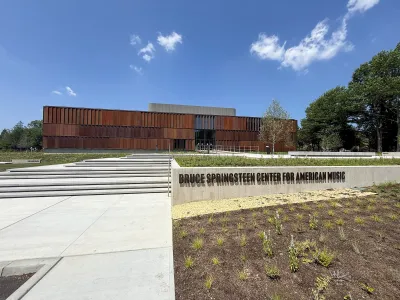
In a piece in Common Edge, Rick Cook describes how the construction industry could shift away from "single-use" homes made of inexpensive, convenient and disposable materials that end up in landfills after demolition.
Cook asks, "How might sustainable buildings become as common as the Trader Joe’s tote, the reusable alternative to the plastic bag?"
Cook's answer is the concept of circularity, which "invites us to consider a building’s life cycle not as a linear timeline from construction to demolition, but as a closed loop in which a building’s material and cultural investment is renewed through each generation." This framework encourages the adaptive reuse of buildings and materials as well as "design for disassembly."
Also known as "reversible architecture," designing for disassembly involves using fasteners instead of adhesives, for example, to make it easier to take apart parts of a building when it reaches the end of its useful life. Cook also recommends proactively working to replace unsustainable materials. "The most adaptable building is only as sustainable as its parts. When done strategically, material specification can help propel the goals of the circular economy."
Read the full story: Can Circularity Break the Cycle of Architectural Waste?

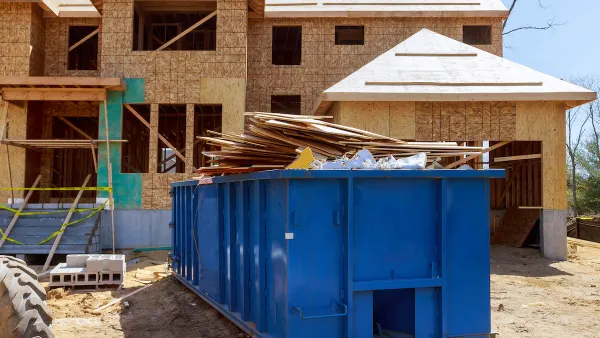
Bringing Circularity to the Construction Industry
Using more recycled materials could dramatically reduce carbon emissions and waste from construction projects.
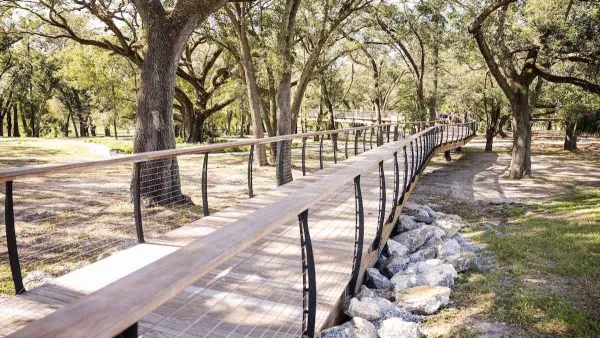
Finding Beauty in Adaptive Reuse
The summer issue of Metropolis Magazine calls on designers to embrace the beauty in circularity.
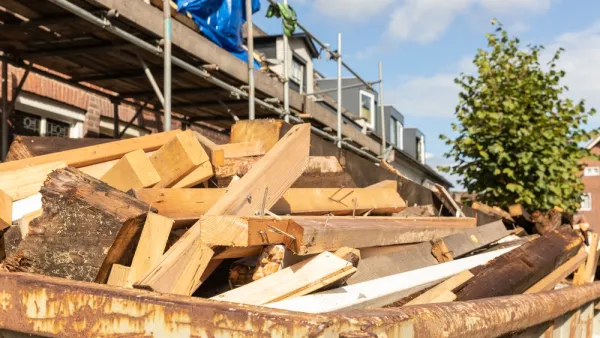
The Link Between Circular Building, Affordability, and Sustainability
A growing movement seeks to reduce waste in the construction industry and focus on the long-term impact of building materials.

Planetizen Federal Action Tracker
A weekly monitor of how Trump’s orders and actions are impacting planners and planning in America.

California plans to bury El Niño’s downpour
If the state plays its cards right, it may be able to store a billion acre-feet of El Niño’s water in aquifers.

Chicago breaks ground on $3 billion megadevelopment
The new neighborhood, titled Foundry Park, will one day host 3,700 residences.

Want to study the Missouri River? Soon, you may need unanimous approval from 10 states
Legislation would require 10 governors’ permission to study or build projects moving water outside the basin.

Desperate measures: Advocates weigh draining Lake Powell to fill Colorado River
Draining the reservoir could reduce evaporation losses by a couple hundred thousand acre-feet.

This road in NYC is infamously dangerous — and Mamdani can't fix it
New York City's Ocean Parkway is known for reckless driving, but the power to implement safety measures lies with the state rather than the city.

FREE Course: Walkable City 1: Why Walkability?
After describing his path towards focusing on walkability as the essence of good planning, Jeff Speck marches through his five principal reasons for making more walkable places.
Reinventing Malls: Planning Alchemy—Turning Gray Fields Into Gold
The course focuses on the opportunities and imperatives that shape reinvention of mall sites.

City of Rosemead
Rutgers University, Edward J. Bloustein School of Planning and Public Policy
One Hundred Miles
Hunter College, City University of New York (CUNY)
The Architects Foundation
University of Cincinnati Online
City of Cambridge
Montrose County
The Pocatello Development Authority