One Denver neighborhood’s massive redevelopment project includes a branding element. Is it necessary?


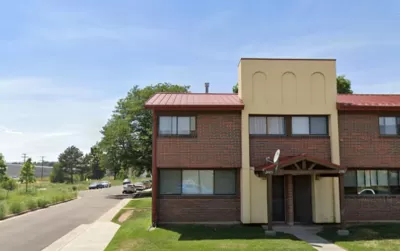
Place branding, while controversial, is nothing new. Cities and neighborhoods frequently employ branding and marketing strategies to stimulate their economy, attract visitors and businesses, and generally boost their profile. Writing in Fast Company, Elissaveta M. Brandon describes the rebranding process occurring in one Denver neighborhood, questioning the utility of the project.
Denver’s Sun Valley, a formerly industrial zone, declined as the are was increasingly cut off from the rest of the city by railroads and freeways. “In 2010, about 27 homes remained, and five of them were vacant. Nearly 80% of Sun Valley residents lived below the poverty line.” Then, the Denver Housing Authority (DHA) “set out to redevelop the neighborhood by demolishing the almost hundred-year-old housing projects, building new subsidized and free-market housing units, and investing in a public park, a community garden, a community-operated supermarket, a job training center—and a visual identity for the renewed neighborhood.”
But the project came at a cost, which included displacing the 1,000 residents who lived in the apartments slated for demolition. As of May of this year, only 20 percent of former residents have returned to the neighborhood. “The residents have gained better housing and better public amenities, but according to Collective Colorado, they have lost the tight-knit community they had built.”
As for the branding aspect, the vision created by design firm Wunder Werkz, inspired by the cultural diversity of the neighborhood, is still a work in progress. “Wunder Werkz has essentially created an easy-to-use, flexible kit of parts with a clear hierarchy and set of rules that the community can reference and use when construction is complete, or whenever they need it.”
FULL STORY: One of Denver’s poorest neighborhood got a rebrand. Did it need it?

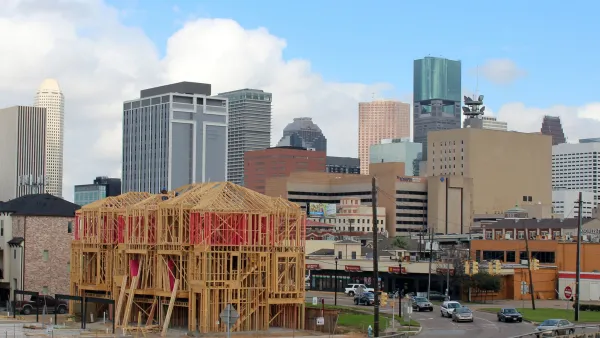
Houston's East River Redevelopment Threatens Historic Black Neighborhoods
Longtime residents are being left behind by new development that has raised housing costs and property taxes for some of Houston's most vulnerable communities, according to an article in the Houston Chronicle.
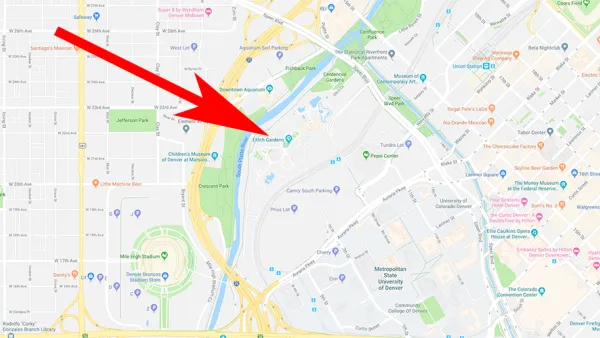
Skyline Redefining Redevelopment Moving Forward in Denver
The Denver City Council approved a development agreement and rezoning for a 58-acre parcel along the South Platte River that is currently home to the Elitch Gardens Theme and Water Park.
The Risks and Conflicts of Interest in San Diego's Proposed Redevelopment Scheme
Before San Diego adopts a proposal to continue redevelopment using profit-based concepts, it should pause to consider the perils, argues Murtaza H. Baxamusa, an affordable housing developer and planning professor.

Planetizen Federal Action Tracker
A weekly monitor of how Trump’s orders and actions are impacting planners and planning in America.

The state-sanctioned urbicide of Austin
People don’t kill cities. Freeways do.

US to reduce Colorado River water deliveries to Mexico
A new Colorado Treaty amendment reduces Mexico’s Colorado River water allocation by 250,000 acre feet.

5 New England states march closer to 800 megawatt wind energy project
Securing federal approval for the project may be complicated under the Trump administration, which has historically been hostile towards domestic wind power.

Baltimore to break ground on $50 million Transit Priority Project
The project will bring faster bus trips, safer streets and better bike connections to Baltimore.

Airbnb launches $250 million 'last-dollar financing' housing accelerator, makes first investment in Austin
The company will put $6.4 million towards affordable housing development in Texas’ capital.

FREE Course: Walkable City 1: Why Walkability?
After describing his path towards focusing on walkability as the essence of good planning, Jeff Speck marches through his five principal reasons for making more walkable places.
Reinventing Malls: Planning Alchemy—Turning Gray Fields Into Gold
The course focuses on the opportunities and imperatives that shape reinvention of mall sites.

Eagle County Government
Harvard University Graduate School of Design
Nashville Planning Department
The Architects Foundation
University of Cincinnati Online
The Pocatello Development Authority
The Urban Renewal Agency of the City of Pocatello
Journal of the American Planning Association