Overly loud noise isn’t just a public health risk for humans.


A new study being conducted in the Bridger-Teton National Forest in Wyoming is finding that “the mere presence of human sound, no matter how loud or quiet, fast or slow, changes how animals behave.” Christine Peterson describes the new research in High Country News.
“For some species, hikers and bikers may be little more than a sideshow in a forest full of natural disturbances. For others, recreationists could have an impact similar to that of terrifying predators, invading habitat where food can be found, resulting in lower birthrates and even increasing deaths.”
While “non-consumptive recreation” such as hiking may seem harmless, “recent studies show otherwise. There’s one out of Vail, Colorado, showing that increased trail use by hikers and mountain bikers disturbed elk so much the cows birthed fewer calves. Another out of Grand Teton National Park showed that backcountry skiers scared bighorn sheep during winter when food was scarce, with potentially lethal consequences.”
The study is designed to assess what types of noises cause the biggest reactions in animals. “Judging by an initial analysis of last summer’s data, large groups of mountain bikers were the most likely to cause animals like mule deer and elk to flee.”
FULL STORY: When the Woods Get Noisy, the Animals Get Nervous

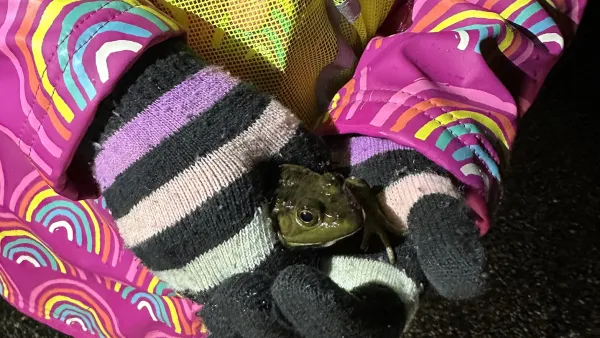
Once a year, Maine roads become highways for amphibians
The 'Big Night' brings out volunteers to help frogs, salamanders, and other migrating amphibians cross roads to reach their breeding grounds.

‘Quiet Parks’ Highlight Importance of Silence for Public Health
The initiative recognizes parks and other areas that preserve natural quiet in a world full of noise pollution.
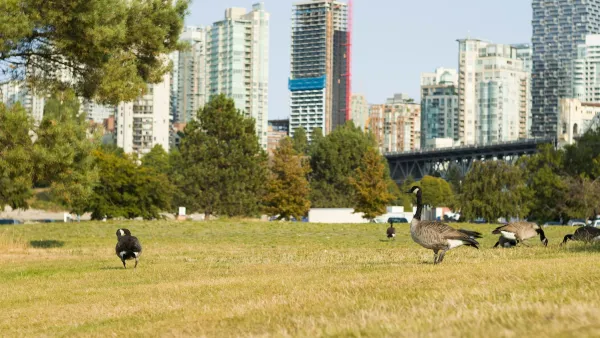
Study: How Urban Parks Can Support Biodiversity
Conservation and recreation can go hand in hand in urban green spaces designed to serve both humans and local wildlife.

The state-sanctioned urbicide of Austin
People don’t kill cities. Freeways do.

US to reduce Colorado River water deliveries to Mexico
A new Colorado Treaty amendment reduces Mexico’s Colorado River water allocation by 250,000 acre feet.

New Jersey’s second-largest city bans standalone data centers
Jersey City will continue to allow co-location facilities, such as those meant for research institutions that store their own data.

Amtrak not solely to blame for New Jersey commuter rail's unreliability, report finds
A new study from the Garden State Initiative found that NJ Transit’s budget grew 20% across a 4 year period, but reliability declined significantly over the same period.

EPA erases limits on planet-warming pollution from power plants
Under Monday’s plan, power plants would still have some limits on how much mercury, arsenic and other contaminants they can emit.

Phoenix announces new on-demand transit service, more frequent RAPID buses
Both new services will launch in October, and are part of Phoenix's Project Effective Access Solutions for Easing Congestion.

FREE Course: Walkable City 1: Why Walkability?
After describing his path towards focusing on walkability as the essence of good planning, Jeff Speck marches through his five principal reasons for making more walkable places.
Reinventing Malls: Planning Alchemy—Turning Gray Fields Into Gold
The course focuses on the opportunities and imperatives that shape reinvention of mall sites.

Eagle County Government
Harvard University Graduate School of Design
Nashville Planning Department
The Architects Foundation
University of Cincinnati Online
The Pocatello Development Authority
The Urban Renewal Agency of the City of Pocatello
Journal of the American Planning Association