Los Angeles County is conducting a community needs assessment and planning effort to re-envision and remove barriers to accessing Marina del Rey as a vibrant waterfront destination for all.


Located in Los Angeles County, Marina del Rey is the second largest built harbor in the world, consisting of 401 acres of land and 403 acres of water. Construction of Marina del Rey was completed in the early 1960s, and it has since grown into a thriving waterside community consisting of recreational boating facilities and services, apartments, hotels, restaurants, and civic amenities. Marina del Rey is owned by L.A. County and is managed by the Department of Beaches and Harbors (DBH).
Marina del Rey for All (MdR for All) is a recently launched community-based effort, led by L.A. County Second District Supervisor Holly J. Mitchell and DBH, along with other County partners, to reimagine Marina del Rey to make it more inclusive, equitable and accessible. The goal is to develop a plan that will ensure future development in the Marina welcomes all county residents and visitors, with an increased focus on community-serving amenities and youth-serving programming, as well as sustainable and equitable development and business practices.
The first step of the MdR for All initiative is to gather feedback from community members and other stakeholders. This will help L.A. County to develop and present development scenarios and options that are reflective of public input. Anyone interested in this process to reimagine Marina del Rey is encouraged to complete the survey at this link.
(For those who have not visited Marina del Rey before, the summer is a good time to do so, especially when the convenient and affordable WaterBus is in service. The WaterBus operates from eight stops in the Marina and tickets are only $1.00 one-way per destination.)
FULL STORY: Marina del Rey For All

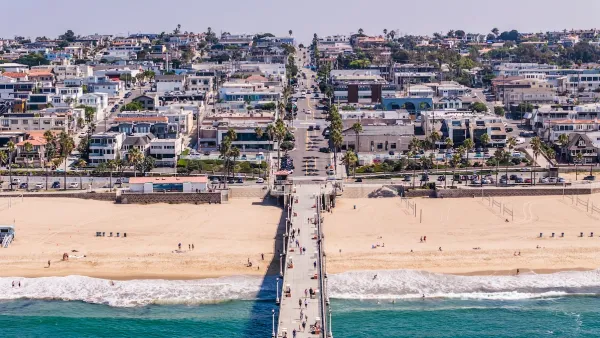
Los Angeles County Secures Funding for Beach Protection
L.A. County is getting a $1 million grant from the California Ocean Protection Council to develop a Regional Coastal Strategic Adaptation Plan to protect its beaches from climate change impacts while prioritizing equitable access and sustainability.
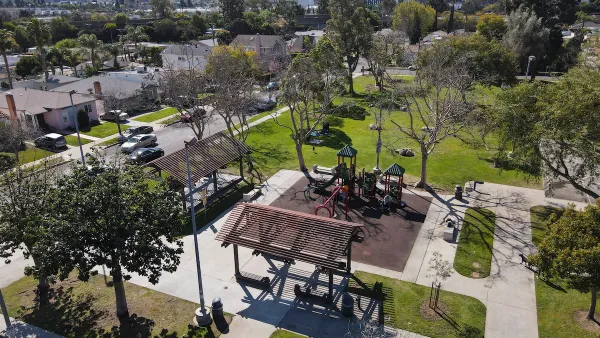
LA County Releases Funding for Parkland Acquisition in Underserved Communities
Los Angeles County has released $14.5 million in Measure A grant funds to support parkland acquisition in high-need areas, aiming to create additional green spaces and advance environmental justice and equity.

Healing Neighborhoods Through Park Equity
Learn more about ways to improve park equity with Norma García-González, the director of the Los Angeles County Department of Parks and Recreation, and Catherine Nagel, the executive director of the City Parks Alliance.

The state-sanctioned urbicide of Austin
People don’t kill cities. Freeways do.

US to reduce Colorado River water deliveries to Mexico
A new Colorado Treaty amendment reduces Mexico’s Colorado River water allocation by 250,000 acre feet.

New Jersey’s second-largest city bans standalone data centers
Jersey City will continue to allow co-location facilities, such as those meant for research institutions that store their own data.

Amtrak not solely to blame for New Jersey commuter rail's unreliability, report finds
A new study from the Garden State Initiative found that NJ Transit’s budget grew 20% across a 4 year period, but reliability declined significantly over the same period.

EPA erases limits on planet-warming pollution from power plants
Under Monday’s plan, power plants would still have some limits on how much mercury, arsenic and other contaminants they can emit.

Phoenix announces new on-demand transit service, more frequent RAPID buses
Both new services will launch in October, and are part of Phoenix's Project Effective Access Solutions for Easing Congestion.

FREE Course: Walkable City 1: Why Walkability?
After describing his path towards focusing on walkability as the essence of good planning, Jeff Speck marches through his five principal reasons for making more walkable places.
Reinventing Malls: Planning Alchemy—Turning Gray Fields Into Gold
The course focuses on the opportunities and imperatives that shape reinvention of mall sites.

Eagle County Government
Harvard University Graduate School of Design
Nashville Planning Department
The Architects Foundation
University of Cincinnati Online
The Pocatello Development Authority
The Urban Renewal Agency of the City of Pocatello
Journal of the American Planning Association