Facing a budget deficit, the Sunset Empire Transportation District ended its services on Sunday, leaving transit-dependent riders with few options.



Oregon’s Sunset Empire Transportation District, which provides transit service to Clatsop County and between Astoria and Portland, suspended service last weekend as the agency struggles with a massive financial shortfall. As Ethan Myers reports for The Astorian in an article republished in Mass Transit, “The transit district's board voted unanimously on Thursday afternoon to discontinue operations indefinitely and furlough employees.”
“The message is we will not be offering any public transportation services effective Saturday due to the financial situation that we're in. We will get it restarted as soon as we have a financial package in place. And we'll get the process to restart up and running as soon as possible,” said executive director Jeff Hazen.
The loss of service will likely have a significant negative impact on local residents, many of whom used the system to get to work, run errands, and access medical appointments. According to Hazen, ridership rose by 11 percent this year.
Read the full story: OR: Sunset Empire Transportation District to suspend operations

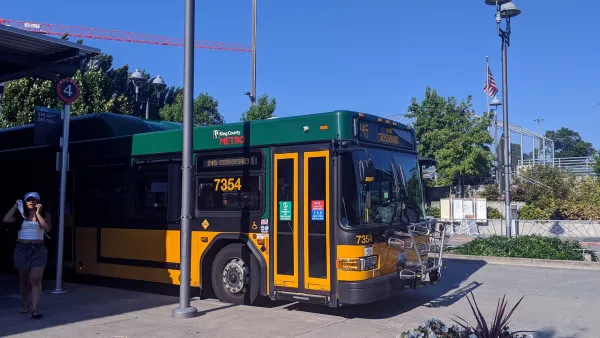
King County Metro adds 3,000 weekly bus trips, more connections to rail
King County Metro and Sound Transit are both making major adjustments to their bus networks to improve light rail connectivity across the region.
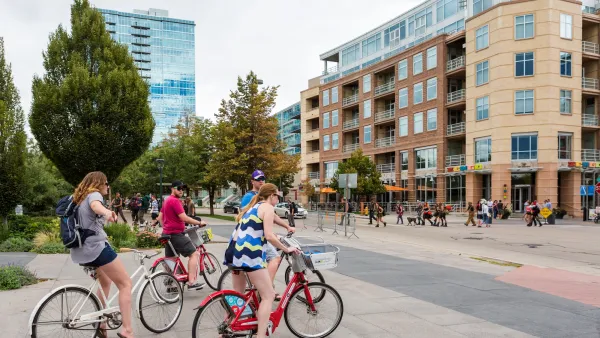
Denver mayor announces 'Mile High Line' vision for interconnected bike and transit routes
The mayor emphasized building more housing near transit lines and bike paths, but failed to address planned transit service cuts.
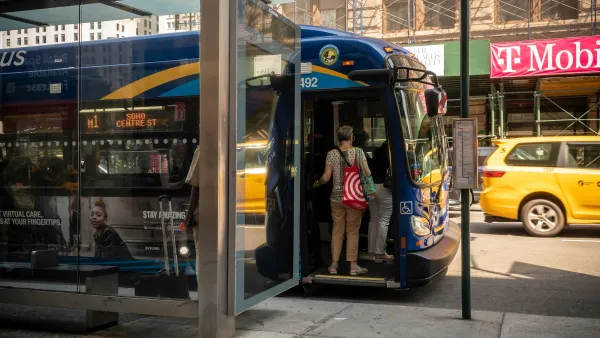
New NYC plan promises to speed up buses by up to 20%
Although the mayor's plan to make buses fare-free faces an uphill battle, a new proposal could make them significantly faster.

Planetizen Federal Action Tracker
A weekly monitor of how Trump’s orders and actions are impacting planners and planning in America.

The state-sanctioned urbicide of Austin
People don’t kill cities. Freeways do.

US to reduce Colorado River water deliveries to Mexico
A new Colorado Treaty amendment reduces Mexico’s Colorado River water allocation by 250,000 acre feet.

Nation's most wind-powered state turns to coal as data centers increase energy demand
For the first time in decades, Iowa has increased its generation of coal power.

NYC cools commuters with city's first rain garden above a bus stop
New York City officials say the plants in the rain garden can absorb 16 gallons of rainwater during heavy storms.

Brightline West’s future may rely on $6 billion federal loan
The company has until Nov. 2 to make a $400 million equity investment into its proposed high-speed rail line.

FREE Course: Walkable City 1: Why Walkability?
After describing his path towards focusing on walkability as the essence of good planning, Jeff Speck marches through his five principal reasons for making more walkable places.
Reinventing Malls: Planning Alchemy—Turning Gray Fields Into Gold
The course focuses on the opportunities and imperatives that shape reinvention of mall sites.

Greater Baltimore Committee
Eagle County Government
Harvard University Graduate School of Design
The Architects Foundation
University of Cincinnati Online
The Pocatello Development Authority
The Urban Renewal Agency of the City of Pocatello
Journal of the American Planning Association